
Buying guide
Food Truck vs Food Trailer: Mobility, Towing, Space and Cost Drivers
A food truck has its own engine and drives to the pitch as one vehicle. A food trailer has none, so it needs a tow vehicle, and your driving licence and the tow vehicle set how heavy the loaded trailer can be. Neither is cheaper by default. A truck carries the cost of a chassis and engine, while a trailer needs a vehicle rated to pull it once the kitchen is full.
By Ozan Food TruckPublished 10 min read
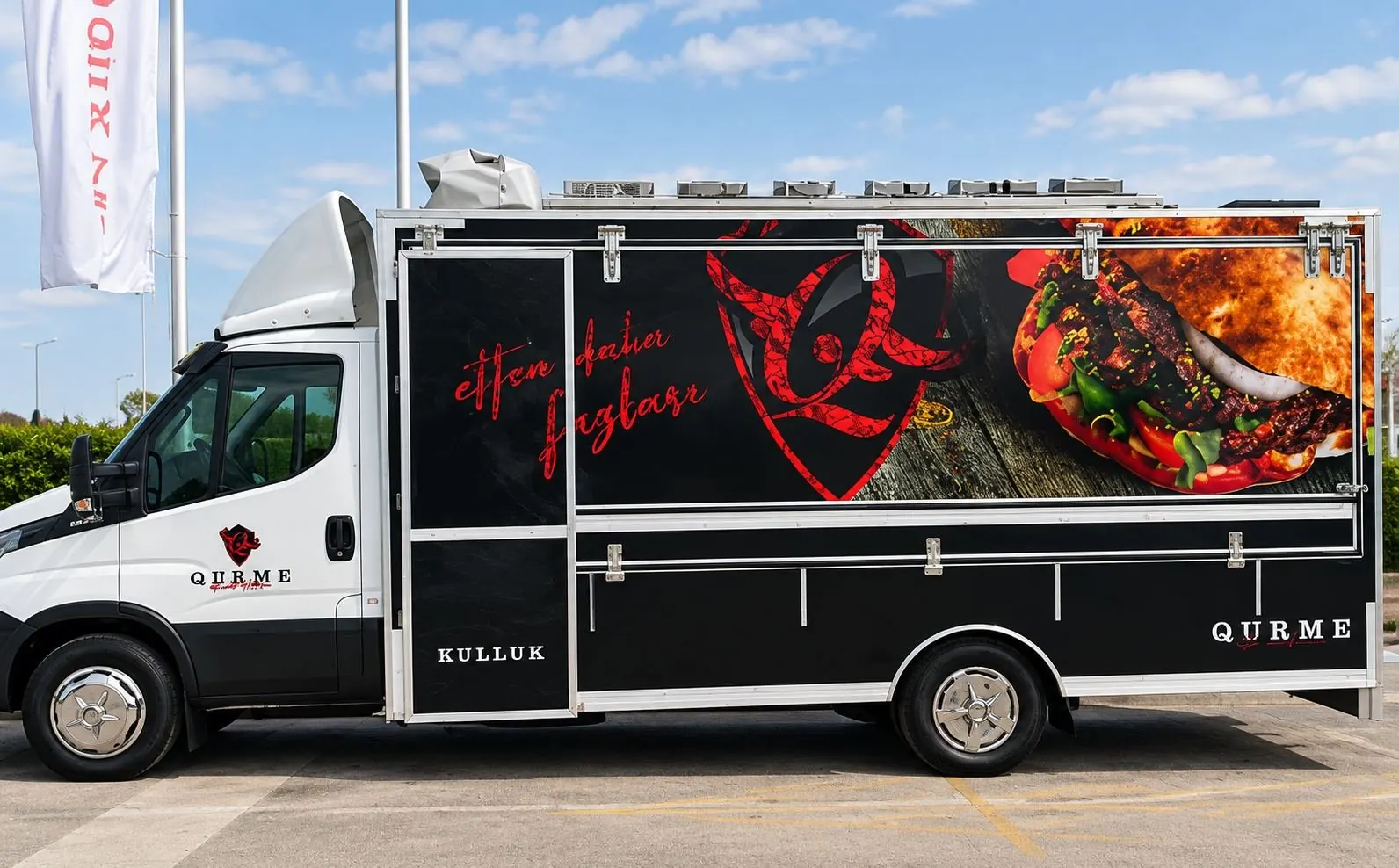
This guide puts the two side by side for buyers in the UK, the EU and the US. The licence and towing figures come from GOV.UK, EU law and US federal rules, and every source is listed at the end. Local authorities add conditions of their own, so confirm your case with your licensing authority before you order.
Checked on 28 September 2026.
The difference in one table
| Food truck | Food trailer | |
|---|---|---|
| Engine and chassis | Part of the vehicle | None, a tow vehicle pulls it |
| What decides your licence | The truck's own maximum mass | The trailer's maximum mass and the combined weight |
| Road equipment to check | The chassis and its test | Brakes, breakaway cable, towbar, towing mirrors |
| Hygiene rules | The same for both | The same for both |
The rest of this page explains each row, with the rule behind it.
Mobility: one vehicle or two
With a truck you drive, park and open the hatch. With a trailer you hitch up, tow, then unhitch. Our reading: the trailer route frees the tow vehicle for supply runs once the kitchen is set up, but it adds a hitching step every time you move. Where you may leave a trailer standing on its own is a question for the local council or the site owner.
Speed matters too. On long runs between events, it adds up. A car towing a trailer in Great Britain is limited to 50 mph on single carriageways and 60 mph on dual carriageways and motorways. Goods vehicles up to 7.5 tonnes have the same 50 and 60 mph limits, but 70 mph on motorways. GOV.UK adds that most vans follow the goods vehicle limits for their weight. Our reading: a van-based food truck will usually sit in that goods vehicle row. How your vehicle is classed is DVLA's decision, so check it.
Plates and labels differ as well. A UK trailer shows the same number plate as the car towing it. A US trailer carries its own certification label on the front half of the left side, stating its gross vehicle weight rating (GVWR).
Towing and licences
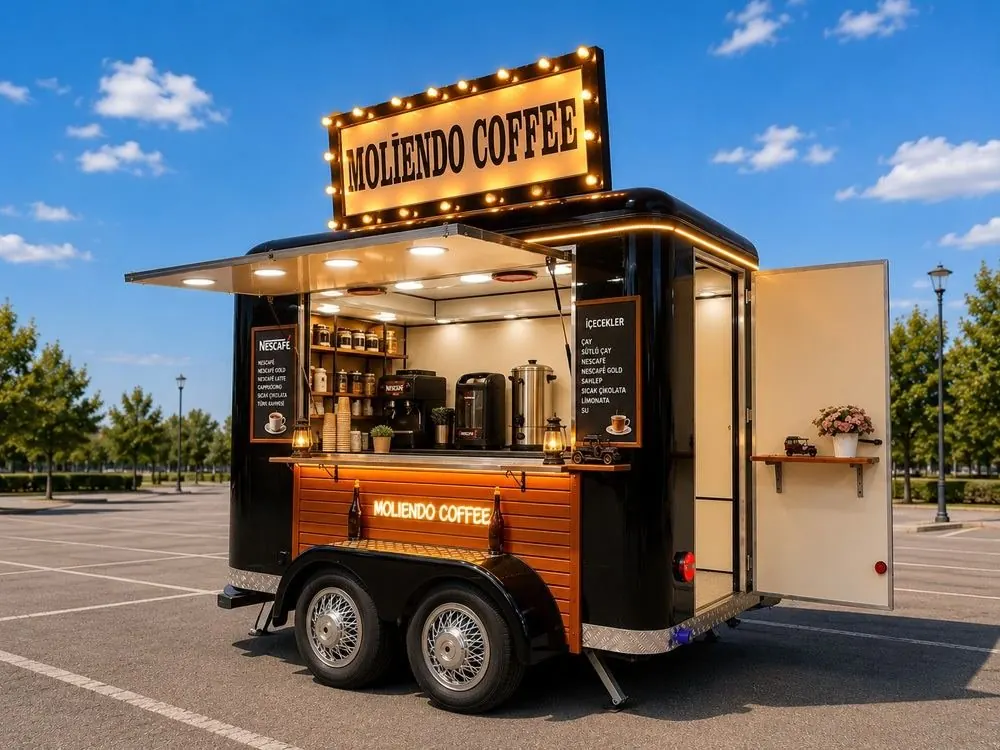
This is where the two differ most, and the rules change by country.
UK
GOV.UK says that if you passed your car test on or after 1 January 1997, you can tow a trailer of up to 3,500 kg maximum authorised mass (MAM). The licence categories page adds that the car and trailer together must not go over 7,000 kg. If you passed before 1997, you can usually drive a vehicle and trailer with a combined MAM of up to 8,250 kg. Check your own licence record online.
Your car has limits of its own. The towing capacity is usually in the handbook. The gross train weight, meaning the loaded car plus the loaded trailer, may be listed on the VIN plate and must not be exceeded. GOV.UK is direct about this: if the plate lists no train weight, you should not use the vehicle for towing.
For the trailer itself:
- It needs a working brake system if it weighs over 750 kg loaded.
- It always needs a breakaway cable or secondary coupling.
- It can be no wider than 2.55 metres.
- Behind a tow vehicle of 3,500 kg MAM or less, it can be no longer than 7 metres, not counting the A-frame.
A towbar on a car first used from 1 August 1998 must be type approved. If the trailer is wider than the back of your car, you need towing mirrors.
A petrol or diesel food truck of up to 3,500 kg MAM can be driven on a category B licence. Between 3,500 and 7,500 kg you need category C1. Stainless worktops, cooking equipment and full water tanks all add weight. Ask the builder for the plated MAM before you order, not the empty weight.
EU
The EU driving licence directive (2006/126/EC) sets the figures in force today. A category B vehicle can be up to 3,500 kg and can tow a trailer of up to 750 kg. A heavier trailer is allowed if the combination stays at or under 4,250 kg. Above 3,500 kg for the combination, member states require training or a test, recorded as code 96. Category BE covers a B vehicle with a trailer of up to 3,500 kg. A petrol or diesel food truck between 3,500 and 7,500 kg needs C1.
A new directive, (EU) 2025/2205, repeals 2006/126/EC with effect from 26 November 2029, the date from which member states apply most of its rules. For a petrol or diesel car, its text keeps the same numbers for trailers: 750 kg, 3,500 kg, the 4,250 kg combination and code 96. The details still go through national law, so confirm them with your national licensing authority.
US
US licence classes are set by each state. Federal rules add one layer on top: the weight lines for a commercial driver's licence (CDL). Under FMCSA rules for vehicles used in commerce, a combination with a gross combination weight rating of 26,001 lb or more needs a Group A CDL when the towed vehicle is rated over 10,000 lb. A single vehicle rated at 26,001 lb or more is Group B. These rules apply to intrastate commerce as well as interstate.
Below those lines, your state's ordinary licence classes decide. California is one example. There, a Class C licence may tow a single vehicle with a GVWR of 10,000 lb or less. Other states may draw the lines differently. Check with your state DMV before you settle on a trailer size.
Space: where the kitchen length goes
Our reading: on UK roads a trailer can be no wider than 2.55 m, so extra room has to come from length. On a truck, the cab takes part of the overall length and the kitchen sits behind it. A trailer's whole body can be kitchen, but the A-frame and the tow vehicle make the combination longer on the road, and the UK 7 m limit caps the body behind a light tow vehicle.
We build on three bases for a food truck or food trailer: a box body on a chassis cab, a converted panel van, or a towable trailer. The base is chosen for where you trade and how often you move. For a custom food truck the insulated box body goes on the chassis you choose, or on one we source for you.
Length and weight grow together. A longer kitchen usually carries more equipment and more water, so plan the layout against the MAM your licence allows.
Hygiene: the same rules for both
The hygiene rules we checked do not separate the two. The FDA Food Code defines a mobile food establishment as one operated from a "movable, motor-driven, mechanically, electrically, manually, or otherwise propelled vehicle". Its servicing area, the base a mobile establishment returns to for refilling water, emptying waste and cleaning equipment, applies to both. The Food Code is a model that state and local regulators use to write their own rules, so your local health department's version is the one that counts.
EU Regulation 852/2004 sets its hygiene points for "mobile sales vehicles". Our reading: the chapter makes no distinction between a towed vehicle and a motorised one, so handwashing, drinking water, waste storage and temperature control are planned the same way for both.
What drives the cost
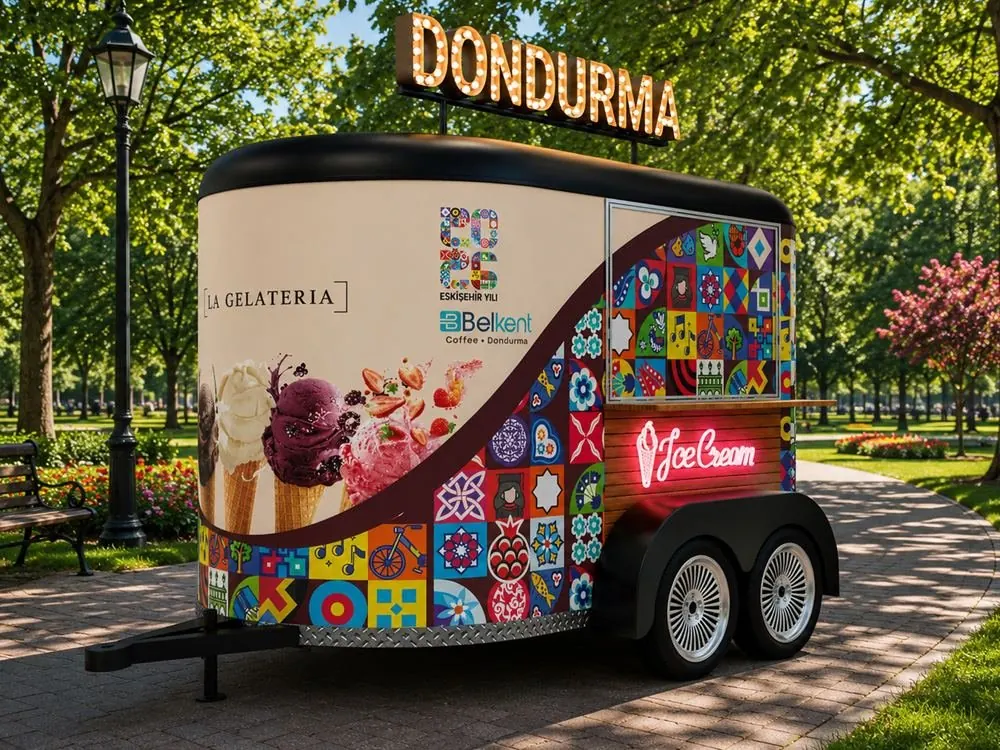
We do not publish prices, because every build is quoted to its scope. Our own quote factors show where the two differ. The vehicle type and body size come first: "The chassis and the body size affect the price directly." After that come the kitchen equipment, the power and water systems, and branding and delivery. Those last factors apply to a truck and a trailer alike.
On the truck side, look at these:
- The chassis and engine are part of the build, whether you choose the chassis or we source one.
- In Great Britain a goods vehicle of up to 3,500 kg needs its first MOT at three years, and lorries take an annual test instead. The MOT does not cover the condition of the engine, clutch or gearbox, so that upkeep is a separate line.
- For a petrol or diesel truck between 3,500 and 7,500 kg, drivers need a C1 entitlement in the UK and the EU.
On the trailer side, the list is different:
- You need a tow vehicle with enough towing capacity and gross train weight for the loaded trailer.
- A UK trailer over 750 kg loaded needs working brakes, and the car may need a towbar and towing mirrors.
- A heavy combination can mean extra training or a test in the EU (code 96) or, in the US, a Group A CDL above the federal line.
Our reading: downtime is a cost as well. If a truck's engine is in the workshop, the kitchen is off the road with it. A trailer can be moved by any other vehicle that is rated and licensed to tow it.
There is a third option for fixed venues. Our vintage food trucks are built on a steel frame with no engine, and each one is delivered and positioned on site at hotels, resorts and events. For coffee, our coffee trailers come as a single or tandem-axle trailer, a fixed kiosk or a small vehicle, chosen for where the cafe will stand.
Questions to settle before you choose
- Where will you trade, and how often will you move?
- Which licence categories do you and your staff hold?
- Do you already own a tow vehicle, and what are its towing capacity and gross train weight?
- What will the kitchen weigh when it is loaded and the tanks are full?
- Who will you ask locally about parking, pitches and permits?
Frequently asked questions
Is a food truck or trailer cheaper?
It depends on what you already have. A truck includes the chassis and engine in its price. A trailer does not, but it needs a tow vehicle rated for the loaded weight, plus brakes above 750 kg in the UK. Whether you already own a suitable tow vehicle changes the answer. Compare full quotes for the same kitchen on both bases.
What is the average cost of a food trailer?
We found no official statistic for it, so we do not quote an average. The price follows the body size, the kitchen equipment, the power and water systems, and the branding. Send your menu and destination and you will get a quote for your own scope.
What are the disadvantages of a food truck?
Two come straight from the licence rules. A petrol or diesel truck over 3,500 kg needs at least a C1 licence in the UK and the EU, and a US truck rated at 26,001 lb or more needs a CDL when it is used in commerce. Our reading: the third is downtime, because the kitchen goes off the road whenever the engine or gearbox does.
Can I tow a 3,500 kg trailer?
Yes in the UK, if you passed your car test on or after 1 January 1997 and the car and trailer together stay within 7,000 kg MAM. Your car's towing capacity and gross train weight must also allow it. Under EU law, category BE covers a trailer of up to 3,500 kg behind a B vehicle. Check your national licensing authority for the details.
If you are still weighing up the two, tell us your menu, where you will trade and what licence your drivers hold in the quote form. We reply with questions first, then drawings and a quote, for a food truck or a food trailer.
Related guides
- New vs Used Food Truck: What to Check Before You Buy
- Taco Trucks: Kitchen Line, Holding and Service Window Planning
- How Much Does a Food Truck Cost to Build? The Parts That Drive the Price
- Hot Dog Carts vs Hot Dog Trailers: What Changes for the Buyer
Sources
- GOV.UK, Towing with a car
- GOV.UK, Towing weight and width limits
- GOV.UK, Trailers, caravans and towing equipment
- GOV.UK, Driving licence categories
- GOV.UK, Speed limits
- GOV.UK, Getting an MOT
- Directive 2006/126/EC on driving licences, Article 4 and Annex I
- Directive (EU) 2025/2205 on driving licences, Articles 6, 29 and 30
- Regulation (EU) 2018/858, Article 4 (trailer categories O1 and O2)
- 49 CFR Part 383 (FMCSA, commercial driver's licence), sections 383.3, 383.5 and 383.91
- 49 CFR Part 567, Certification
- California DMV, Driver's Licenses
- FDA Food Code 2026
- Regulation (EC) No 852/2004, Annex II, Chapter III

By
Ozan Food Truck
This guide is based on the laws, regulations, official guidance and manufacturer documents linked in the text. It is general information, not legal or engineering advice. Rules differ by country, state and city, so confirm the details with your local authority before you build or buy.