
Buying guide
New vs Used Food Truck: What to Check Before You Buy
Whether a used food truck is a good buy depends on two histories you can check before paying: the vehicle's and the kitchen's. A new build starts with plans your health department can review before anything is fitted, while a used truck arrives with a title record, possible open recalls and a kitchen that was approved for someone else's menu, if it was approved at all.
By Ozan Food TruckPublished 10 min read
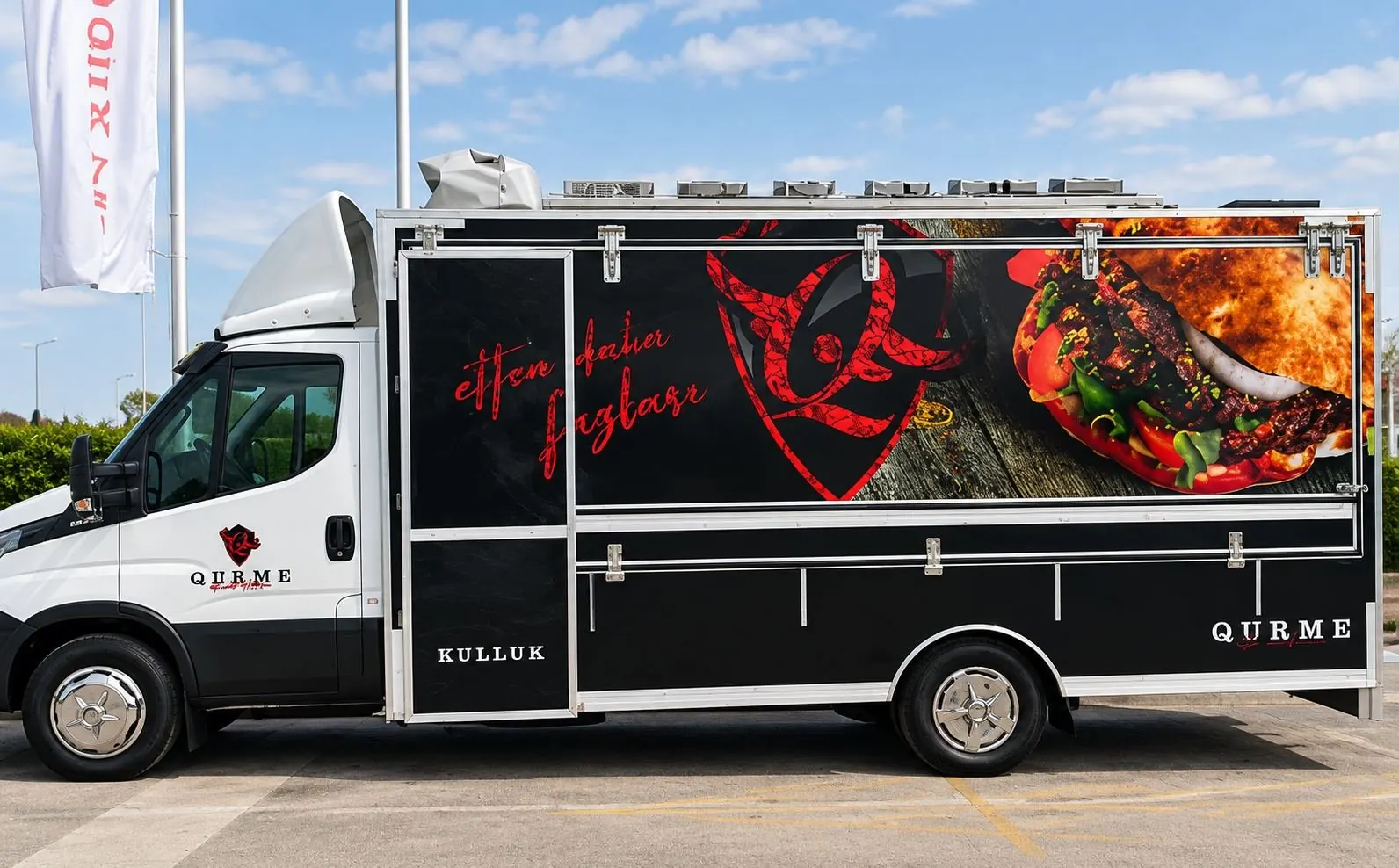
This guide covers the checks you can run yourself in the US and the UK, and how health departments treat a truck that changes hands, with each rule linked to its official source. Local rules differ a lot, so confirm your case with your health department and your vehicle registration office before you pay.
Checked on 28 September 2026.
What really changes between new and used
| Used truck or trailer | New build | |
|---|---|---|
| Vehicle history | Title, brands, odometer and recalls need checking | Starts clean, with the maker's labels |
| Health permit | The old permit does not pass to you | You apply as a new business |
| Kitchen approval | Inspected before your permit; older equipment may have to be replaced | Plans can be reviewed before building |
| Layout | Built for the last owner's menu | Built for yours |
Price is left out on purpose. We don't publish prices. Our reading: part of the cost of a used truck can arrive later, since the authority may order older equipment replaced when ownership changes.
Checking a used truck in the US
Title and brand history: NMVTIS
The National Motor Vehicle Title Information System is run under the oversight of the US Department of Justice. Its report is short by design. It covers five things:
- the current state of title and the last title date,
- brand history,
- the odometer reading,
- total loss history,
- salvage history.
A brand is a label a state titling agency puts on a vehicle, such as "junk," "salvage" or "flood." NMVTIS keeps the brands applied by any state, and state agencies, insurers, junk yards, salvage yards and auto recyclers are required by federal law to report to it. You buy a report through one of the approved data providers listed on the site.
Two limits matter for food trucks. NMVTIS lists the vehicle types it covers as automobiles, buses, trucks, motorcycles, recreational vehicles, motor homes and tractors. It also says commercial vehicles may be missing where a state keeps them in a separate database. Our reading: a blank report on a food trailer or a commercially titled truck does not prove a clean past. NMVTIS itself says that when nothing comes back, it is likely that no participating state has reported brand, odometer or title data for that vehicle.
The report also leaves out repair history, and NMVTIS advises an independent inspection as well.
Liens
Liens are not among the five NMVTIS items. Our reading: a history report is not a lien check. In California, for example, the certificate of title names the lienholder when money is owed on the vehicle, and a change of lienholder must be reported to the DMV within 10 days. Ask the seller for the title itself and, if a loan was paid off, the lien release. For a full title record, NMVTIS points you to the state titling agency.
VIN decoding: NHTSA vPIC
NHTSA's VIN decoder shows what the manufacturer reported for that VIN, including the build plant. It covers model years from 1981. Our reading: it decodes the chassis or trailer as it left the factory, so a kitchen fitted later will not show. Use it to check that the make, model year and body type on the seller's papers match the VIN.
Open recalls: NHTSA
A search by VIN or plate on nhtsa.gov/recalls tells you whether a vehicle has an unrepaired safety recall from certain manufacturers. It will not show recalls older than 15 years (unless the manufacturer offers more coverage), some very recent ones, or recalls run by small manufacturers, which NHTSA says include "specialty applications." Manufacturers must fix a safety recall by repairing, replacing, refunding or, rarely, buying the vehicle back.
Our reading: a small trailer builder or body converter may not appear in the VIN search. Ask who built the body, then search by that maker, model and year as well.
Labels left by the conversion
Federal rules say a business that alters a certified vehicle before its first sale to an end user must leave the original certification label in place and add its own. That label names the alterer and the month the work was finished. If the weight ratings changed, the new ones go on it. A truck finished on an incomplete chassis has a final-stage manufacturer who certifies it. On a used truck, find the certification labels and read the GVWR. If there is only the chassis label, ask who fitted the kitchen and when.
Buying from a dealer
Under the FTC Used Car Rule, a dealer must display a Buyers Guide on a used vehicle before offering it for sale. The guide shows whether it is sold "as is." The rule's definition of a vehicle is limited to motorized vehicles under 8,500 lb GVWR, with further limits on curb weight and frontal area. Our reading: a towed trailer, and a truck rated at 8,500 lb or more, falls outside this federal rule, so it can be sold without that guide. Put any warranty into the written contract.
Checking a used van or trailer in the UK
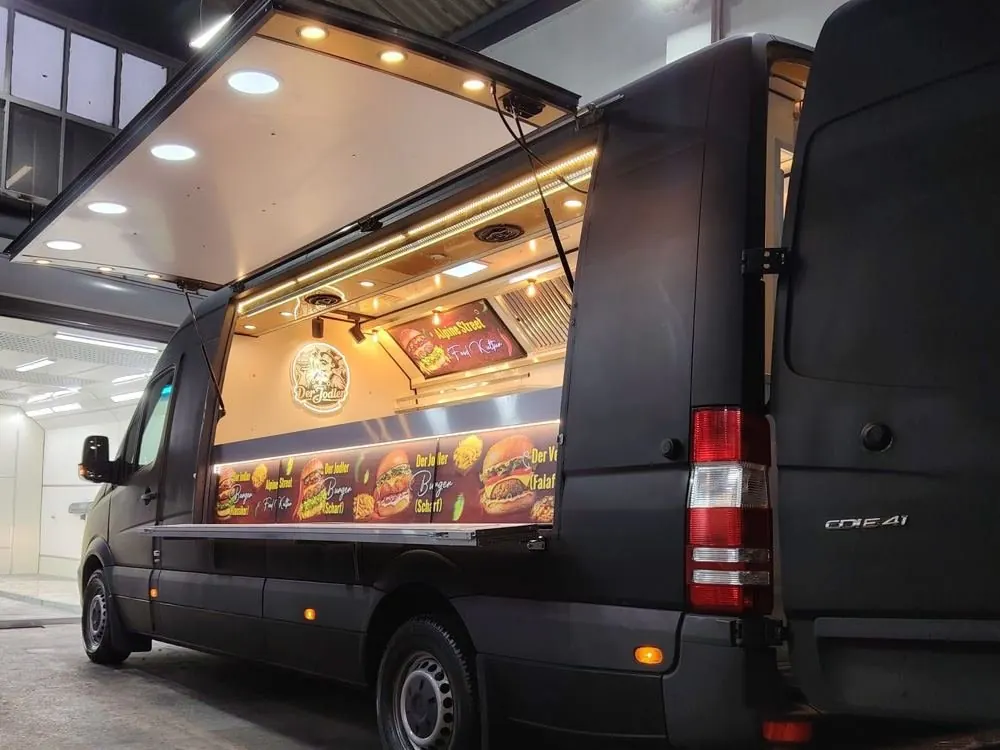
GOV.UK has three official checks worth running:
- DVLA vehicle information shows the tax status, when the MOT expires, the date of first registration, the date the last log book (V5C) was issued, the type approval category and the weight.
- MOT history shows each pass or fail, the mileage at each test and, in Great Britain, which parts failed or had minor problems. Results for vans go back to 2005. For HGVs and trailers they start in 2018.
- The recall check covers cars by plate, and lorries, caravans, tyres and parts by make and model.
The MOT does not cover the engine, clutch or gearbox. A clean MOT history is not a mechanical inspection. If the seller has no log book, you apply to DVLA for a V5C with form V62. Vehicle tax does not pass to you when you buy, so you must tax the van before you drive it.
On the food side, the Food Standards Agency says a business trading from a van or a stall must register with the local authority. In England, Wales and Northern Ireland that means at least 28 days before trading. In Scotland, ask your local authority. Our reading: the registration belongs to the business, so plan to register your own before you open the hatch. If the van has LPG, HSE guidance says gas work in mobile catering must be done by a Gas Safe-registered business. Have one check the installation before you trade.
The kitchen: why a permit does not come with the truck
Many US states and counties base their rules on the FDA Food Code, often with local changes. Where your authority uses it, these sections bear on how a used truck is treated.
A permit cannot be transferred from one person to another (8-304.20). The authority may issue a permit to a new owner once the application is approved, the fees are paid and an inspection shows the truck complies (8-303.20). Equipment that was already in use before the Code took effect is judged on whether it is in good repair and easy to keep clean, whether food-contact surfaces meet the code, and whether cooling, heating and holding capacity is enough (8-101.10). The authority can order that older equipment replaced because of a change of ownership (8-304.11).
Then there is plan review. The Food Code asks for plans before a food establishment is built or converted, and before a remodel if the authority decides plans are needed. The plans can cover the menu, the layout and every piece of equipment down to its model number. So if you buy a used truck and change the menu or the line, ask your health department whether the change needs new plans.
Two counties show how much this varies:
- Los Angeles County runs a separate "change of ownership" route for a vehicle that was previously owned. You submit a permit application, operating procedures with your menu, a commissary contract and ownership documents. The county then evaluates the truck and the commissary before it issues the permit sticker. A new build goes through plan check first, and construction follows once the plans are approved.
- Tacoma-Pierce County, Washington will not issue a permit until the state Department of Labor and Industries has approved and inspected the vehicle and fitted its plaque. Its permit page also lists minimums, such as a 35-gallon fresh water tank and a 42-gallon waste water tank, and you need a permit in each county you trade in. Our reading: a used truck without that plaque is a problem there.
Your county may do it differently, so call your health department with the truck's details before you sign.
Buying new: what to ask for
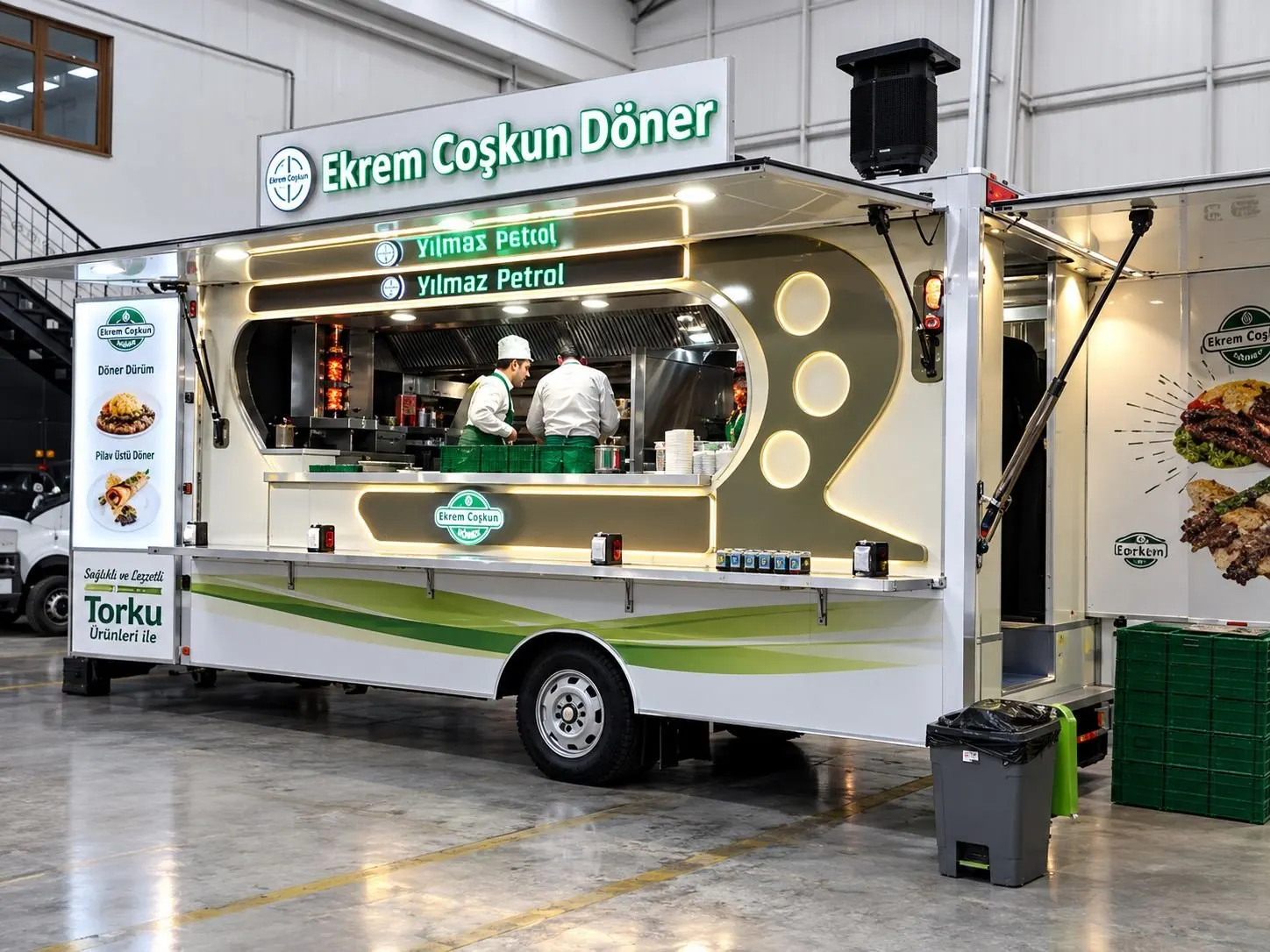
With a new build, the paperwork comes first. Ask the builder for a scaled layout, an equipment list with makes and model numbers, and material and finish specifications. That is what Food Code plan review can ask for, and it lets your health department comment while the design is still on paper. If the truck is for the US, ask who acts as final-stage manufacturer and who fits the certification label. A custom food truck is where this matters most, because the body and kitchen are designed from scratch.
This is how we work too. You send your menu, the base you have in mind and where the truck will trade, and we reply with questions first, then drawings and a quote. The layout, exterior design and equipment list go to you for approval before manufacturing starts, and every food truck and food trailer is built in our own factory.
A short checklist for a used truck
- Get the VIN from the vehicle itself, not only from the advert.
- Decode it on vPIC and compare it with the title.
- Order an NMVTIS report, and read a blank result with care.
- Ask for the title and any lien release, and check with your state titling agency.
- Run the NHTSA recall search, then check the body maker by name.
- Find the certification labels and read the GVWR.
- In the UK, run the DVLA, MOT history and recall checks, and ask for the V5C.
- Have the vehicle and any gas system inspected by someone independent.
- Call your health department before paying, with the truck's details and your menu.
Frequently asked questions
Should I buy a new or used food truck for my business?
Start with your health department. A permit does not pass from the old owner to you under the FDA Food Code, and the authority can order older equipment replaced when ownership changes. A new build lets you get the plans reviewed before it is built. Ask your county which route applies before you choose.
What are the pros and cons of a new vs used food truck?
A used truck has a history you can check with the US or UK tools above, and a kitchen laid out for someone else's menu. A new truck can be designed around your menu, with plans ready for review.
Can I use the previous owner's health permit?
No, not where the Food Code applies. Section 8-304.20 says a permit may not be transferred from one person to another. You apply as a new owner, and in Los Angeles County that means the change-of-ownership route with an evaluation of the truck.
Does a vehicle history report show liens?
The NMVTIS report covers title, brands, odometer, total loss and salvage. Liens are not on that list. Check the title itself and ask your state titling agency.
If you are weighing a used truck against a new one, send us your menu and where you plan to trade through the quote form. We will reply with questions first, then drawings.
Related guides
- Taco Trucks: Kitchen Line, Holding and Service Window Planning
- How Much Does a Food Truck Cost to Build? The Parts That Drive the Price
- Hot Dog Carts vs Hot Dog Trailers: What Changes for the Buyer
- How to Choose a Food Truck or Food Trailer Builder: What to Check Before You Order
Sources
- NMVTIS, home and consumer pages (US Department of Justice, Bureau of Justice Assistance)
- NMVTIS, Understanding an NMVTIS Vehicle History Report
- NMVTIS, Frequently Asked Questions
- NMVTIS, Used Car Buying Tips
- California DMV, Titles
- California DMV, Title transfers and changes
- NHTSA, VIN Decoder (vPIC)
- NHTSA, Product Information Catalog and Vehicle Listing
- NHTSA, Check for Recalls
- 49 CFR 567.3 and 567.7, certification and altered vehicles
- 49 CFR Part 568, vehicles manufactured in two or more stages
- 16 CFR Part 455, FTC Used Motor Vehicle Trade Regulation Rule
- GOV.UK, Get vehicle information from DVLA
- GOV.UK, Check the MOT history of a vehicle
- GOV.UK, Check if a vehicle, part or accessory has been recalled
- GOV.UK, Getting an MOT
- GOV.UK, Tell DVLA you've sold, transferred or bought a vehicle
- Food Standards Agency, Food business registration
- HSE, Catering Information Sheet 23, Gas safety in catering and hospitality
- FDA Food Code (2026 edition), sections 8-101.10, 8-201.11, 8-201.12, 8-303.20, 8-304.11, 8-304.20
- Los Angeles County Public Health, Food Service Trucks, Trailers, and Boats
- Los Angeles County Public Health, Lease or Change of Ownership Permitting Process Roadmap
- Los Angeles County Public Health, New Construction Permitting Process Roadmap
- Tacoma-Pierce County Health Department, Mobile food permits

By
Ozan Food Truck
This guide is based on the laws, regulations, official guidance and manufacturer documents linked in the text. It is general information, not legal or engineering advice. Rules differ by country, state and city, so confirm the details with your local authority before you build or buy.