
Buying guide
How to Choose a Food Truck or Food Trailer Builder: What to Check Before You Order
A food truck builder does more than weld a body and fit a kitchen. The builder also produces the plates, labels and papers that decide whether the vehicle can be registered where you plan to trade, and the layout decides whether it passes a health inspection. So before you compare prices, check three things: the approval paperwork for your country, the kitchen layout against the hygiene rules your inspector uses, and the written contract.
By Ozan Food TruckPublished 8 min read
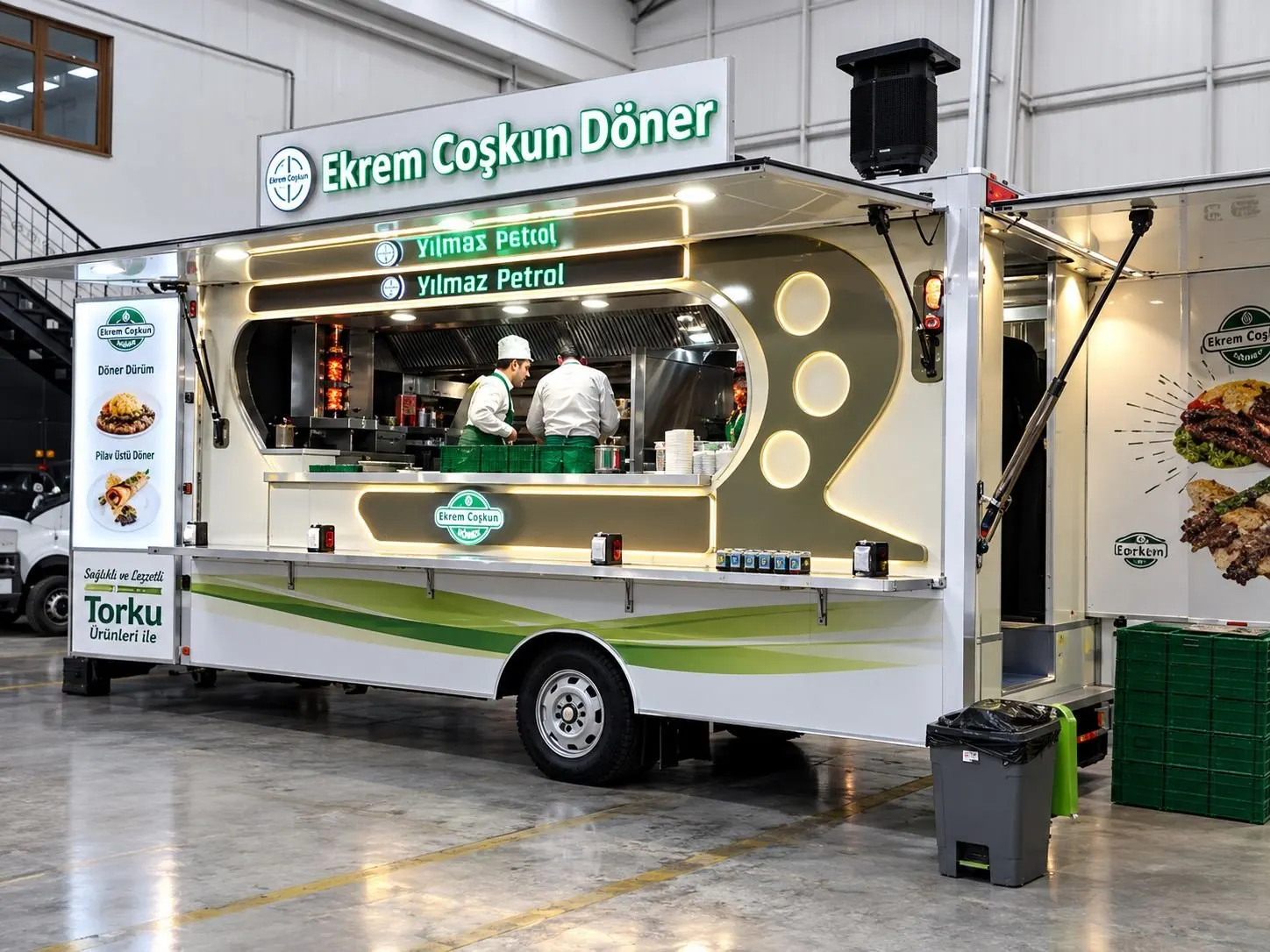
This guide lists what to ask, region by region, and links every rule to its source. Rules change and local authorities add their own, so confirm the details with them before you order.
Legal references were checked on 28 September 2026.
Start with where the truck will trade
No builder can make one vehicle that is approved everywhere. Approval is granted by the authority in the destination country, and each system asks for different documents. Tell the builder the destination country at the first contact, because it changes what has to be drawn, labelled and supplied.
If you are in the EU
EU Regulation 2018/858 sorts trailers by maximum mass. Category O1 covers trailers up to 0.75 tonnes, and O2 covers trailers over 0.75 tonnes and up to 3.5 tonnes. Ask the builder to state the maximum mass, and so the category, in writing before you order.
The next question is about approval. If a builder holds EU type-approval for a model, the regulation requires a certificate of conformity to "accompany each vehicle" and to be delivered free of charge with it. A vehicle of a type-approved model can only be registered with a valid certificate. If the model is not type-approved, one route is an individual vehicle approval. The owner, the manufacturer or the importer can apply, and the authority works from "information provided by the applicant". That information comes from the builder.
Two details are worth knowing:
- A national individual approval is valid only in the member state that granted it.
- For national approval, the authority accepts systems and components that are already type-approved.
Ask for the approval marks and certificates of the lights, couplings, axles and brakes the builder fits. They can support your application.
A good question to put in writing: "Do you hold EU type-approval for this model and will you supply a certificate of conformity? If not, which approval route do you expect, and which documents will you provide for it?"
If you are in the UK
The UK runs its own Individual Vehicle Approval (IVA) scheme for vehicles and trailers "imported, assembled or manufactured in very small numbers or as individual vehicles". The DVSA guide lists every trailer category from O1 to O4 as in scope. A motor vehicle without a manufacturer's VIN stamped on the chassis needs one assigned by DVLA before the IVA inspection. We did not find a gov.uk weight limit below which a new trailer needs no approval, so check your case with DVSA.
Towing rules shape the size of a food trailer:
- If you passed your driving test on or after 1 January 1997, you can tow a trailer up to 3,500 kg maximum authorised mass (MAM).
- The maximum trailer width is 2.55 metres.
- If the towing vehicle's MAM is 3,500 kg or less, the trailer cannot be longer than 7 metres, not counting the A-frame.
- A trailer that weighs over 750 kg when loaded needs working brakes, and every trailer needs a breakaway cable or secondary coupling.
Ask the builder for the loaded MAM, not only the empty weight. The gov.uk limits are set on MAM, and a fitted kitchen adds a lot of weight.
Gas is the other UK point. According to HSE, gas work on catering equipment, mobile catering included, falls under the Gas Safety (Installation and Use) Regulations 1998 and must be done by a Gas Safe-registered business. HSE also summarises the vehicle rules for LPG: the vehicle must be adequately ventilated, and pilot lights must not be lit while it moves. Our reading: a builder outside Great Britain is not on the GB Gas Safe Register, so plan for a UK Gas Safe engineer to inspect or commission the gas system before you trade.
If you are in the US
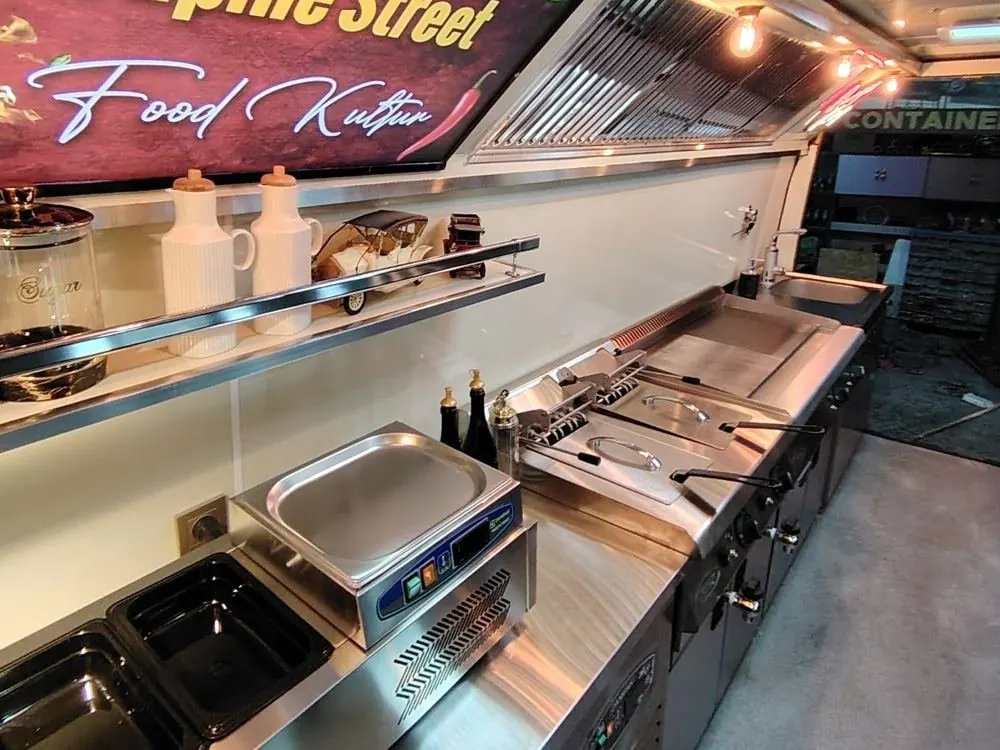
The US system works through labels and identifiers that the manufacturer supplies:
- VIN. Trailers need a 17-character VIN assigned by the manufacturer and marked permanently on the vehicle (49 CFR Part 565).
- Manufacturer identifier. The manufacturer must obtain a World Manufacturer Identifier and send NHTSA the information needed to decode its VINs, at least 60 days before it affixes the first VIN (Part 565).
- NHTSA registration. Every vehicle manufacturer has to identify itself to NHTSA, and for trailers the description must show the intended use (Part 566).
- US agent. A foreign manufacturer cannot import into the US until it appoints an agent there (Part 551).
- Certification label. The label goes on the front half of the left side of a trailer. It shows the manufacturer, the date of manufacture, the GVWR, the GAWR for each axle, the VIN and a statement that the vehicle conforms to the applicable federal motor vehicle safety standards (Part 567).
If the builder fits out a truck chassis, as with a custom food truck, the vehicle is built in more than one stage, and a final-stage manufacturer has to complete and certify it (Part 568). Ask who takes that role. When the vehicle arrives, the importer declares that it conforms and carries the manufacturer's certification label (Part 591, the HS-7 declaration). The declaration relies on that label, so check it before the vehicle ships.
The questions to ask an overseas builder selling into the US: "Are you registered with NHTSA, do you have a World Manufacturer Identifier, and who is your US agent?"
Licence and weight in the EU
Under the EU driving licence directive (2006/126/EC), a category B licence covers a trailer up to 750 kg. A heavier trailer is allowed if the combination stays at or under 4,250 kg. Above 3,500 kg, member states require training or a test, recorded as code 96 on the licence. Category BE covers a B vehicle with a trailer up to 3,500 kg. A petrol or diesel food truck heavier than 3,500 kg needs a C1 licence. A newer directive, (EU) 2025/2205, repeals 2006/126/EC with effect from 26 November 2029 and keeps the same trailer figures for a petrol or diesel car. The details go through national law, so confirm them with your national licensing authority.
The kitchen: design to the rules your inspector uses
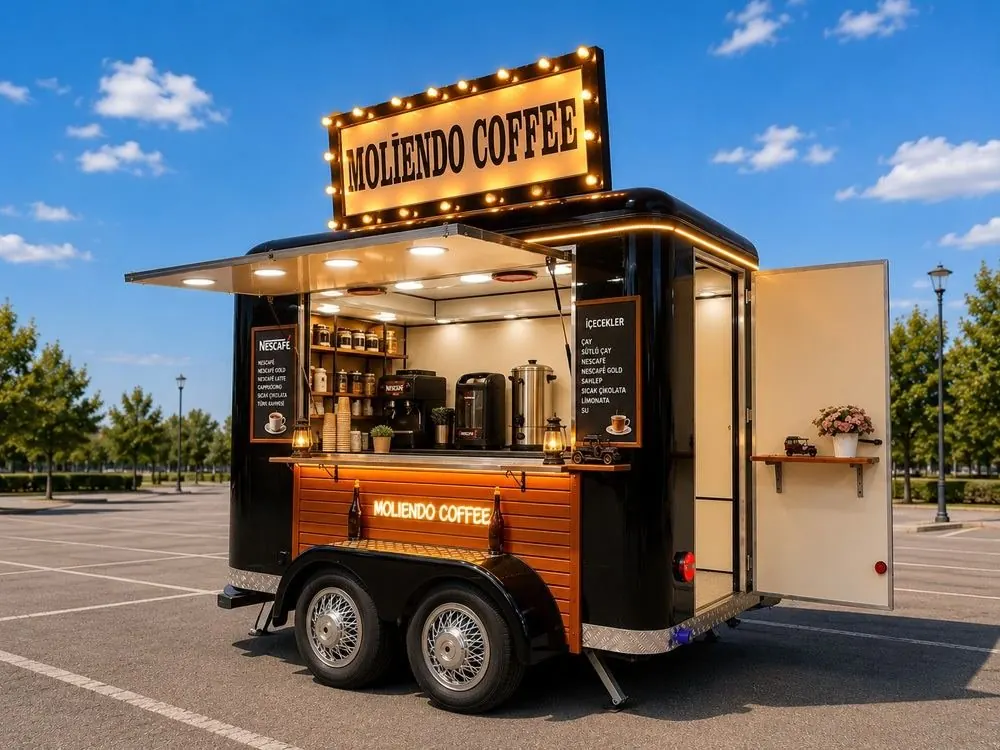
EU. Regulation 852/2004, Annex II, Chapter III covers "mobile sales vehicles", from food trucks to coffee trailers. Where necessary, it requires:
- facilities to wash and dry hands,
- smooth, washable, corrosion-resistant and non-toxic food-contact surfaces,
- a way to clean and disinfect equipment,
- hot and/or cold drinking water,
- storage and disposal of liquid and solid waste,
- a way to keep and monitor food temperatures.
It sets no sink counts or tank sizes. Those come from national or local rules.
US. The FDA Food Code is a model that state and local regulators use to write their own rules. The 2026 edition is the latest, but FDA's own 2024 report says only 11 agencies in 7 states had adopted the 2022 version. Where the code applies, it asks for handwashing sinks placed for convenient use in food preparation, food dispensing and warewashing areas. It also specifies these tank rules for a mobile food establishment:
- a waste tank 15 percent larger than the water supply tank,
- a water tank inlet of 19.1 mm (three-fourths of an inch) or less.
It also requires plans and specifications, including equipment models, to be submitted for review before construction.
That last rule matters when you order from a builder. Ask for a scaled layout, an equipment list with model numbers, and material and finish specifications before the build starts, so you can get plan approval first. Changing a finished kitchen usually costs far more than changing a drawing.
The contract
In a cross-border order, the written contract carries more weight than usual. Under the UK Sale of Goods Act 1979, goods sold in the course of a business carry an implied term of satisfactory quality. They must also be reasonably fit for a purpose the buyer makes known. Our reading: these terms help you only if UK law governs the contract. The Unfair Contract Terms Act 1977 says its limits on excluding liability do not apply to international supply contracts. Put these in writing:
- what the warranty covers and for how long,
- who pays to ship replacement parts,
- how and where the acceptance inspection is done,
- which country's law governs the contract.
Ten questions to ask any builder
- What is the loaded maximum mass, and which category does that make the trailer or truck?
- Which approval route do you expect for my country, and which documents will you supply for it?
- Is there a stamped VIN and a manufacturer's plate showing the masses?
- Can you provide approval certificates for the lights, couplings, axles and brakes?
- For the US: are you registered with NHTSA, do you have a WMI, and who is your US agent?
- Where will the certification label go, and what will it state?
- Can I have a scaled layout and an equipment list with model numbers before you start building?
- How are the handwash sink, the fresh water tank and the waste tank sized and placed?
- Who installs and certifies the gas system, and what will need checking when it arrives?
- What do the warranty and the acceptance inspection cover in writing?
A builder who answers these in writing before taking a deposit is showing you how the rest of the project will go. If you would like to go through them for your own project, tell us the destination country in the quote form and we will start from there. You can see what we build, from food trailers to shipping container restaurants, on our What We Build page.
Related guides
- New vs Used Food Truck: What to Check Before You Buy
- Taco Trucks: Kitchen Line, Holding and Service Window Planning
- How Much Does a Food Truck Cost to Build? The Parts That Drive the Price
- Hot Dog Carts vs Hot Dog Trailers: What Changes for the Buyer
Sources
- Regulation (EU) 2018/858, Articles 4, 36, 44–46, 48
- Directive 2006/126/EC on driving licences, Article 4 and Annex I
- Directive (EU) 2025/2205 on driving licences, Articles 6, 29 and 30
- Regulation (EC) No 852/2004, Annex II, Chapter III
- GOV.UK, Individual vehicle approval
- DVSA, Individual Vehicle Approval scheme guide
- GOV.UK, Towing with a car
- GOV.UK, Towing weight and width limits
- GOV.UK, Trailer and towing equipment
- HSE, Catering Information Sheet 23, Gas safety in catering and hospitality
- 49 CFR Part 565, Vehicle Identification Number requirements
- 49 CFR Part 566, Manufacturer identification
- 49 CFR Part 551, Subpart D (agents of foreign manufacturers)
- 49 CFR Part 567, Certification
- 49 CFR Part 568, Vehicles manufactured in two or more stages
- 49 CFR Part 591, Importation of vehicles
- FDA Food Code
- FDA, Adoption of the FDA Food Code
- UK Sale of Goods Act 1979, section 14
- UK Unfair Contract Terms Act 1977, section 26

By
Ozan Food Truck
This guide is based on the laws, regulations, official guidance and manufacturer documents linked in the text. It is general information, not legal or engineering advice. Rules differ by country, state and city, so confirm the details with your local authority before you build or buy.