
Buying guide
Buying a Food Trailer from Overseas: Approval, Documents and Shipping Checks
Yes, you can buy a food trailer from a builder in China, Turkey or any other country and ship it home. What decides whether you can use it is not where it was built but whether it clears customs and meets the vehicle rules of the country where it will trade. Much of that depends on what the builder puts on the trailer and in the paperwork before it leaves the factory.
By Ozan Food TruckPublished 10 min read
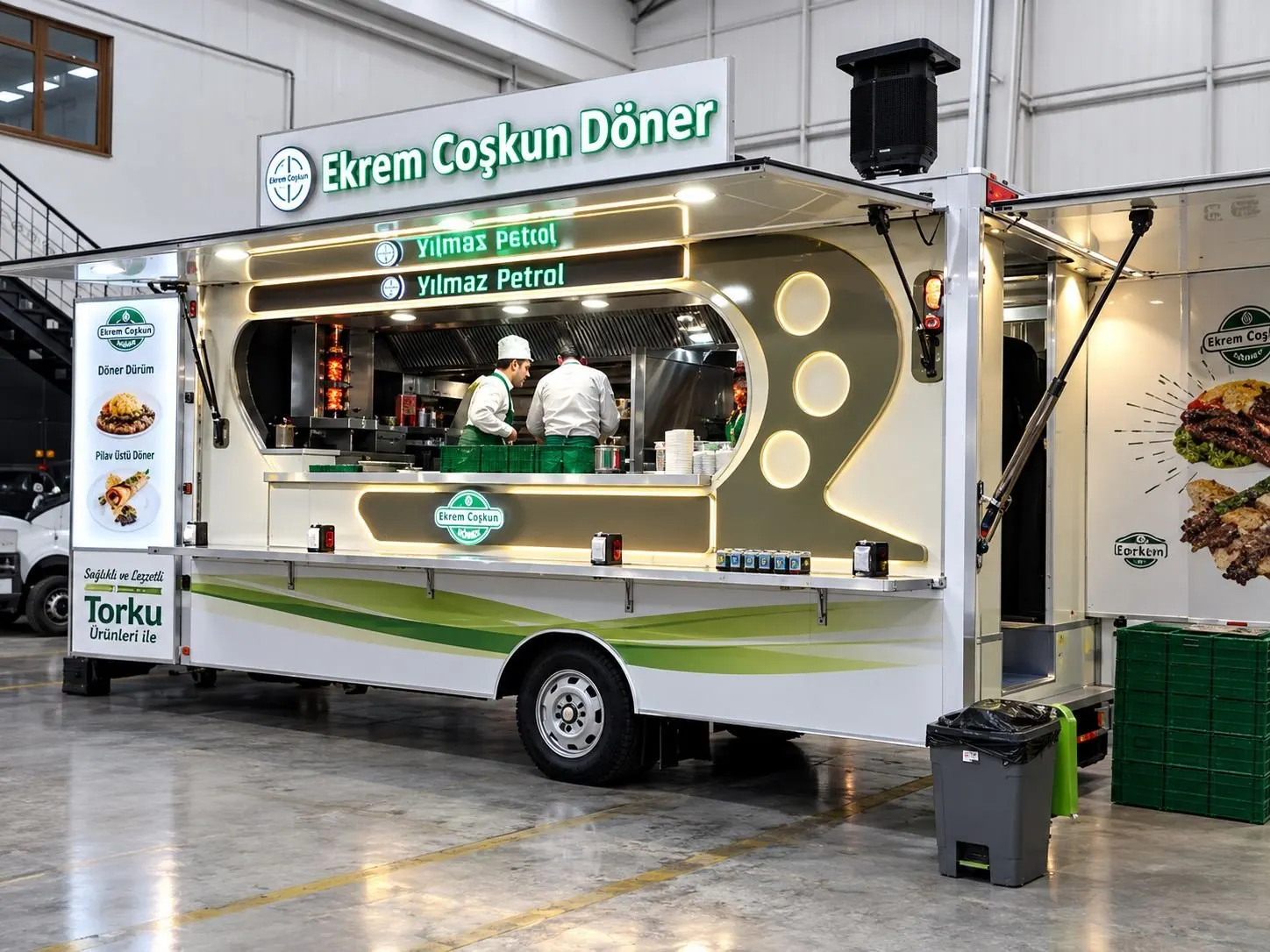
This guide follows a trailer from the factory gate to the road in the US, the UK and the EU, using customs and vehicle-approval pages from the authorities themselves. Treat every document list here as the national baseline. Your authority may ask for more, so confirm with them before you pay a deposit.
Checked on 28 September 2026.
Three gates, not one
A trailer from abroad has to pass three separate checks when it arrives:
- Customs. It is declared, and any duty and VAT is paid.
- Vehicle rules. It is certified or approved as meeting the safety standards of the destination.
- Registration or road use. It gets whatever plates or records the local authority requires.
In the UK, approval comes after the import declaration. In the US, the safety declaration is filed when the trailer is offered for import. Either way, the vehicle rules are the ones to plan around first.
Importing into the United States
In federal law a trailer counts as a motor vehicle. 49 CFR 571.3 defines it as "a motor vehicle with or without motive power, designed for carrying persons or property and for being drawn by another motor vehicle." That brings it inside the import rules written for cars and trucks.
The core rule sits in 49 U.S.C. 30112. Nobody may import a motor vehicle unless it "complies with the standard and is covered by a certification". The manufacturer certifies the vehicle itself, and under 30115 that certification "must be shown by a label or tag permanently fixed to the vehicle." On a trailer, that label goes on the front half of the left side and states the manufacturer, the date, the GVWR, the axle ratings, the VIN and a statement that the trailer conforms to all applicable federal motor vehicle safety standards (FMVSS). Those standards reach trailers directly. FMVSS 108 on lamps and reflectors, for example, names trailers in its scope.
At the port, the importer files DOT form HS-7. For a new trailer, the usual declaration is that the vehicle conforms and "bears a certification label or tag to that effect permanently affixed by the original manufacturer" (49 CFR 591.5). The HS-7 is only as good as that label. If the label is missing, CBP says the vehicle is treated as nonconforming. It then has to go through a DOT-registered importer to be modified and certified.
CBP lists what it expects for vehicle clearance: the shipper's or carrier's original bill of lading, the bill of sale, and "any other documents covering the vehicle", plus the HS-7 and EPA form 3520-1. The EPA form deals with emissions. Ask your broker whether it applies to a trailer without an engine.
CBP's page carries a warning worth reading twice: "Be skeptical of claims by a foreign dealer or other seller that a vehicle meets these standards." Non-conforming vehicles "must be brought into compliance, exported, or destroyed." That applies to any overseas builder, us included. Ask for a photo of the finished certification label before the trailer ships. Ask too whether the builder is registered with NHTSA, has a manufacturer identifier and has named a US agent. Federal rules (49 CFR Parts 566, 565 and 551) require a foreign manufacturer to do all three, and it cannot import until it has named the agent.
A few more points from the same CBP page:
- CBP officers cannot make an entry for you, but you may hire a commercial customs broker.
- The entire contents of an imported car must be declared. Our reading: list every loose item packed inside the trailer, or ship the trailer empty.
- USDA requires the undercarriage of imported cars to be free of foreign soil. Our reading: ask the builder to wash the chassis before loading.
- Registration is a state matter. CBP tells importers to ask their state DMV what documents it will want from CBP.
Importing into the United Kingdom
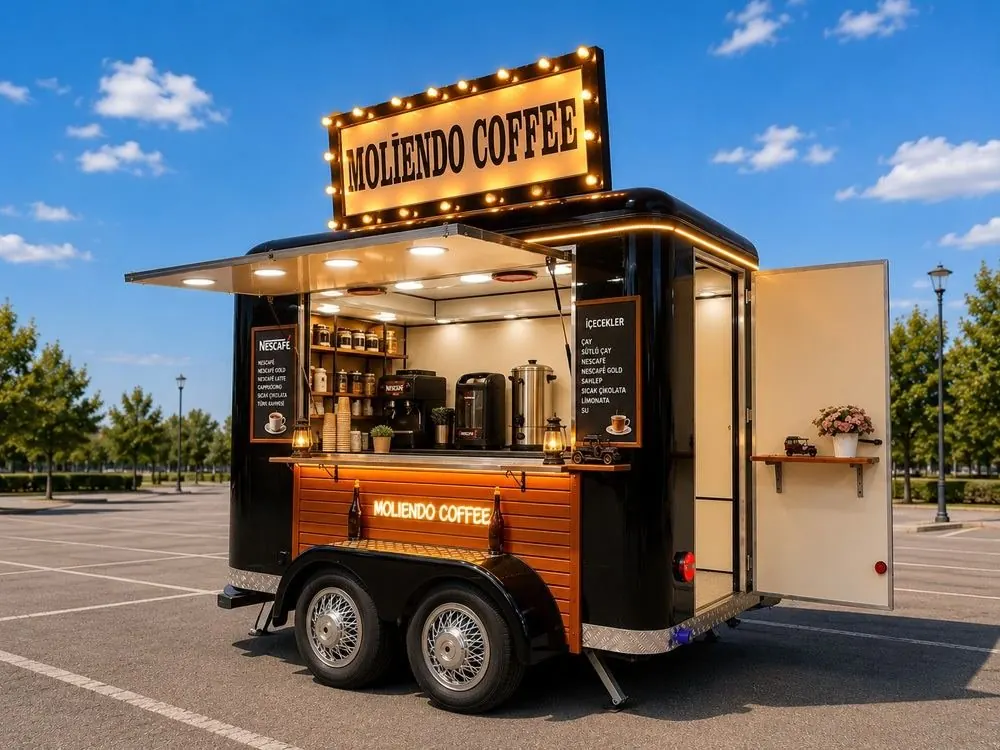
For customs, you need a GB EORI number to import goods into England, Scotland or Wales. The import declaration carries the commodity code and the value of the goods, which set the duty and VAT. GOV.UK says most businesses use a transporter or customs agent for this, and for a shipped vehicle you must pay a shipping company or customs agent to make the declaration. The builder may also need to make an export declaration in its own country. GOV.UK lists goods that need extra licences, among them "products containing F gas". If the fridges or air conditioning use fluorinated refrigerant, raise it with your customs agent.
Approval comes next. GOV.UK sends vehicles that are not registered in the EU to Individual Vehicle Approval (IVA), and IVA explicitly covers trailers. Basic IVA is listed only for passenger cars and light goods vehicles. Other vehicles take normal IVA, which means "a more detailed inspection" and documentary evidence. Our reading: a food trailer will usually need normal IVA, so the builder's technical documents matter. The online IVA application asks for the VIN or chassis number, and when a trailer passes, DVSA issues its plating documents. On the road, a trailer towed by a car shows the towing car's number plate.
A food truck follows the full motor-vehicle route on GOV.UK:
- The shipping company or customs agent makes the import declaration, and VAT and duty are paid at the border.
- You tell HMRC within 14 days through NOVA. You cannot register the vehicle until this is done.
- You get vehicle approval.
- You register and tax it with DVLA, sending proof of approval, form V267 for a new vehicle and evidence of the collection date, such as the supplier's invoice.
Using the vehicle on a public road before these steps are done can lead to prosecution, except for a drive to a pre-booked approval test.
How DVLA treats a newly imported trailer is not spelled out on the pages we read, so check with DVSA and DVLA. For gas, HSE says gas work on catering equipment must be done by a Gas Safe-registered business. Our reading: plan for a UK Gas Safe engineer to check the installation on arrival.
Importing into the European Union
Every customs operation in the EU, imports included, needs an EORI number. The customs authority of the EU country where your business is established issues it. A business with no EU establishment gets one from the country where it makes its first customs declaration.
Approval runs under Regulation (EU) 2018/858. A food trailer up to 3.5 tonnes falls into category O1 (up to 0.75 tonnes) or O2 (over 0.75 and up to 3.5 tonnes). If the builder holds EU type-approval for the model, a certificate of conformity must travel with each trailer, and the importer must make sure it does. Without it, the regulation offers EU or national individual approval. The owner, the manufacturer or the importer can apply, and instead of destructive tests the authority uses "any relevant information provided by the applicant". A national individual approval is valid only in the member state that granted it, although the applicant can ask another member state to accept it.
Our reading: for a one-off food trailer from outside the EU, individual approval is the likely route, and the builder supplies most of the evidence. Ask your national approval authority which documents it wants before the build starts, then send that list to the builder.
Agree who ships, insures and clears it
Incoterms are the ICC's eleven three-letter trade terms. They set out "the tasks, costs and risks involved in the delivery of goods from sellers to buyers." The current edition, Incoterms 2020, came into force on 1 January 2020. Write the chosen term into the contract, because it settles who arranges transport and at which point the costs and risks pass to you.
Three points from the ICC's own pages help here:
- The rules "do not affect tariff rates or customs procedures". They only decide who deals with them.
- CIF is reserved for sea transport, and its default insurance cover is Institute Cargo Clauses (C). CIP requires the higher Clauses (A) level.
- Under DAP the seller does not unload the goods. Under DPU it does.
If the seller is to insure the trailer, ask which level of cover applies. The ICC publishes a free checklist and flowchart for choosing a rule.
Documents to collect before the trailer ships
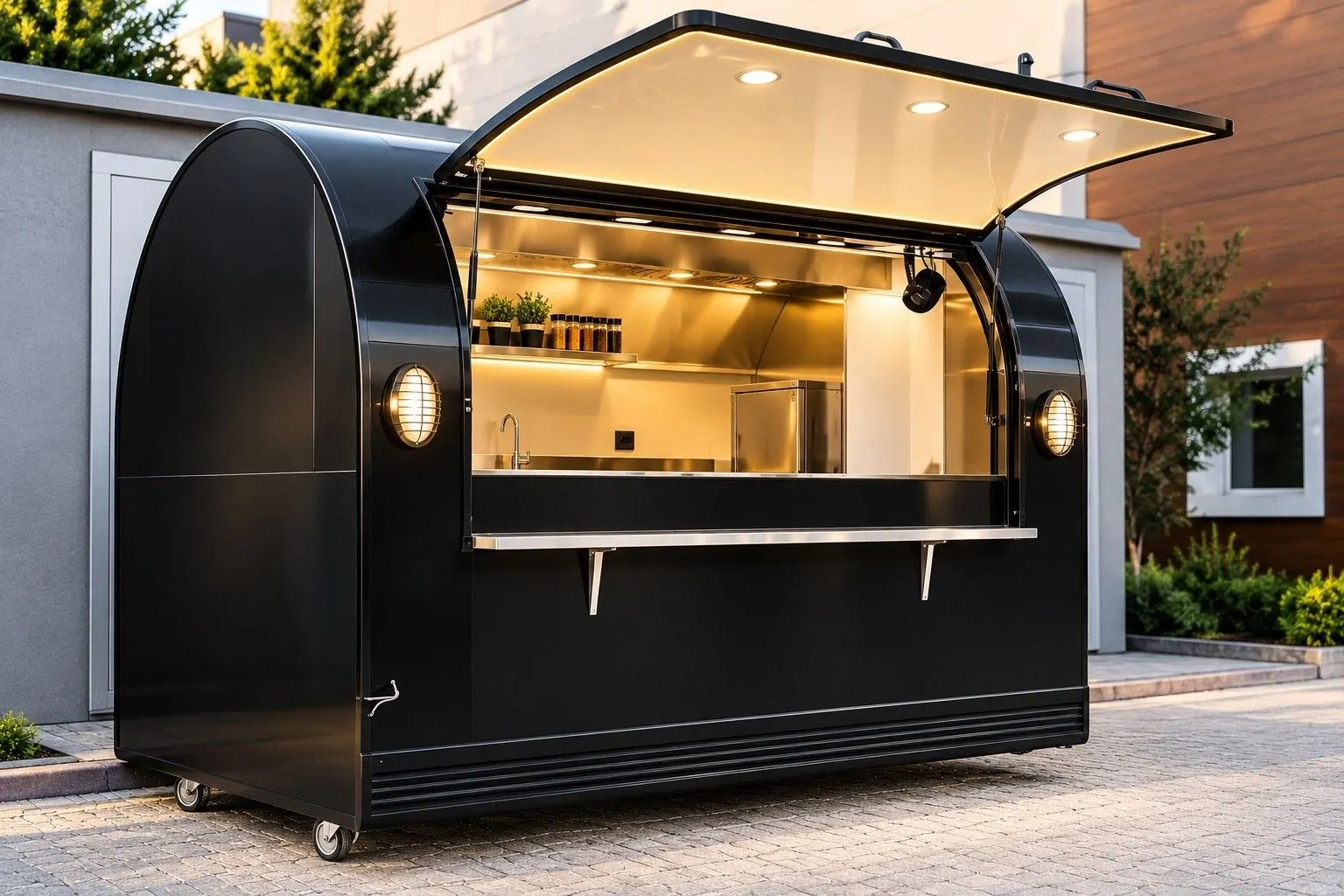
| Document | Why you need it |
|---|---|
| Commercial invoice or bill of sale | US clearance, UK NOVA and DVLA, customs value |
| Original bill of lading | US clearance |
| VIN or chassis number marked on the trailer | US certification label, UK IVA application |
| Photo of the certification label (US) or manufacturer's plate | HS-7 declaration, approval |
| Technical documents the approval authority asks for, such as masses and component approvals | UK normal IVA, EU individual approval |
| Certificate of conformity, if the model is EU type-approved | EU registration |
| List of loose items packed inside | Customs declaration |
Ask the shipping company before loading whether gas cylinders can travel with the trailer. Don't assume they can.
How we handle export builds
Ozan Food Truck has built food trucks and food trailers in Konya, Turkey since 1995 and exports them worldwide. For export projects, each build is engineered to the electrical and gas standards of the destination country, and shipping is planned by road or sea. That is why the quote form asks for the delivery country. We cannot grant approval. Only the authority in your country can. What we do on every export project is assess the destination's technical and legal requirements at the design stage. You can see the range on our food trucks and trailers page, including coffee trailers, and read more about the company.
Frequently asked questions
Can I buy a food trailer from China?
Yes. The rules in this guide are set by the destination country, and none of them names a country of origin. What changes is paperwork and duty: in the US the trailer needs the manufacturer's FMVSS certification label, in the UK it goes through IVA, and in the EU it needs a certificate of conformity or individual approval. Duty can depend on origin. GOV.UK notes that a trade agreement can lower customs duty.
Can I import a food truck instead of a trailer?
Yes, with more steps. In the UK a food truck follows the full import route: import declaration, NOVA within 14 days, vehicle approval, then DVLA registration. In the US, CBP's page adds EPA emission requirements, and a vehicle that does not meet them must go through an independent commercial importer unless it is exempt. If the kitchen is built onto a truck chassis, the vehicle is made in more than one stage, and 49 CFR Part 568 requires a final-stage manufacturer to complete and certify it.
Do I need a customs broker?
In the US, CBP officers cannot make an entry for you, but you may hire a broker. In the UK, a shipped vehicle's import declaration must be made by a shipping company or customs agent, and GOV.UK says most importing businesses use one.
Who pays for shipping and insurance?
That depends on the Incoterms rule in your contract. Choose one before you sign, and check the insurance level if the term is CIF or CIP.
If you want to go through the approval route for your country, tell us the destination in the quote form so its requirements are considered at the design stage.
Related guides
- New vs Used Food Truck: What to Check Before You Buy
- Taco Trucks: Kitchen Line, Holding and Service Window Planning
- How Much Does a Food Truck Cost to Build? The Parts That Drive the Price
- Hot Dog Carts vs Hot Dog Trailers: What Changes for the Buyer
Sources
- 49 CFR 571.3 (definition of trailer) and 571.108 (FMVSS 108 application)
- 49 U.S.C. 30112, prohibition on importing noncomplying vehicles
- 49 U.S.C. 30115, certification of compliance
- 49 CFR Part 567, Certification
- 49 CFR Part 568, Vehicles manufactured in two or more stages
- 49 CFR Part 591, Importation of vehicles (HS-7 declaration)
- 49 CFR Parts 551, 565, 566 (US agent, VIN, manufacturer identification)
- U.S. Customs and Border Protection, Importing a Motor Vehicle
- GOV.UK, Import goods into the UK: step by step
- GOV.UK, Get an EORI number
- GOV.UK, Importing vehicles into the UK
- GOV.UK, Vehicle approval
- GOV.UK, Apply for Individual Vehicle Approval (IVA)
- DVSA, Individual Vehicle Approval scheme guide
- GOV.UK, Trailer and towing equipment
- HSE, Catering Information Sheet 23, Gas safety in catering and hospitality
- European Commission, EORI number
- Regulation (EU) 2018/858, Articles 4, 16, 36, 44–46
- ICC, Incoterms rules
- ICC, Incoterms 2020
- ICC, Using the Incoterms 2020 rules to manage tariff risk

By
Ozan Food Truck
This guide is based on the laws, regulations, official guidance and manufacturer documents linked in the text. It is general information, not legal or engineering advice. Rules differ by country, state and city, so confirm the details with your local authority before you build or buy.