
Buying guide
Juice and Smoothie Bar Trailers: Blenders, Power and Cold Storage
A juice bar trailer is planned around its blenders, its juicer and its cold storage, and in the example below the blenders take most of the electrical load. Two 16-amp commercial blenders draw more current than a 30-amp, 120 V shore cord supplies, before you count the juicer, the fridges or the ice machine. The other early decision is how you sell. Juice poured by the glass, juice bottled on board and juice sold on to other businesses fall under different US rules.
By Ozan Food TruckPublished 10 min read
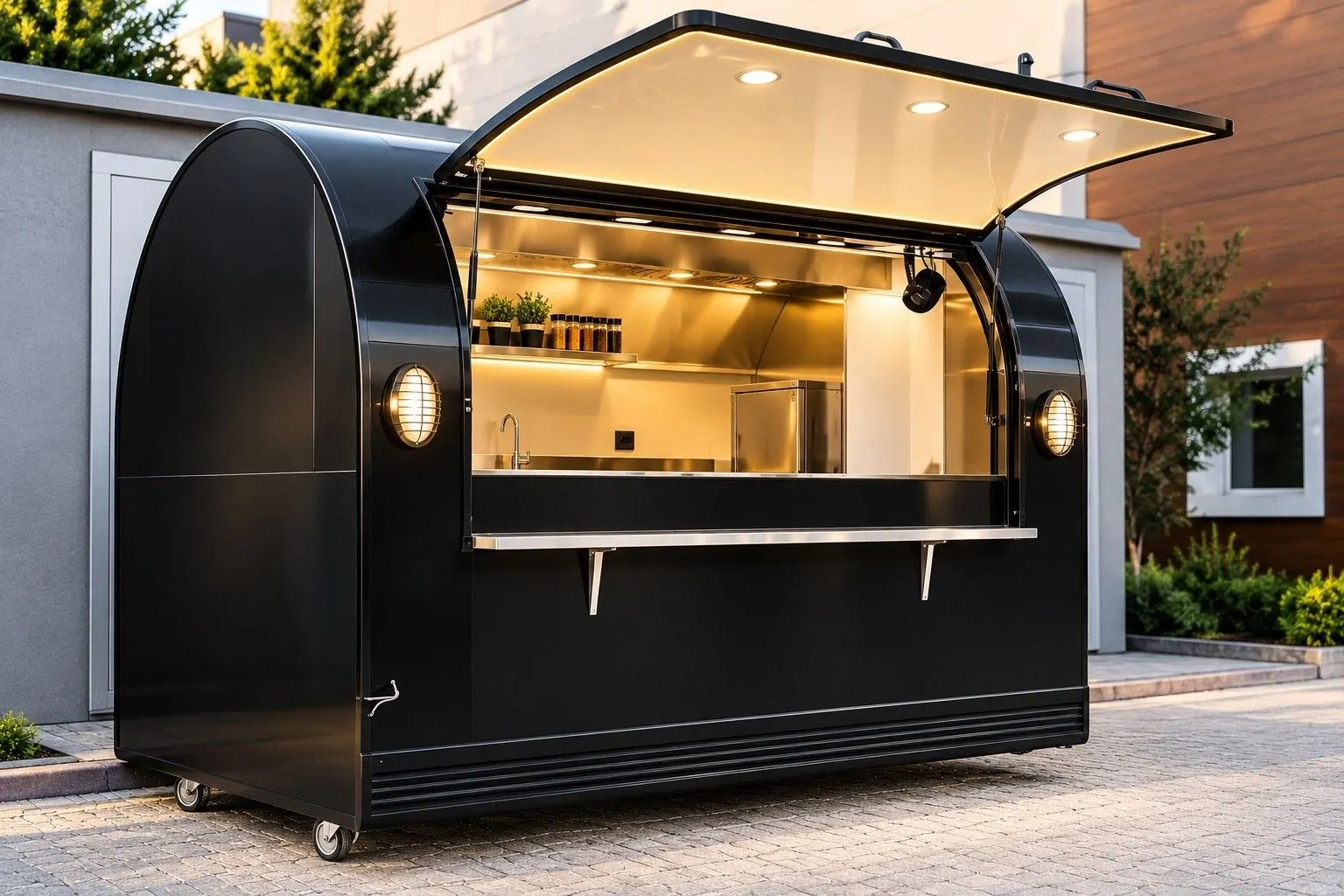
This guide uses maker spec sheets and manuals for the machines, the US juice rule in 21 CFR Part 120 as published on eCFR, FDA guidance on juice, and the FDA Food Code 2026, a model code that states and localities adopt in their own versions. We name models to show what the sheets say. We do not recommend any of them.
Checked on 29 September 2026.
What makes a juice trailer different
On a juice and smoothie menu the machines are mostly motors and refrigeration: blenders that draw up to 16 A for programs as short as 12 seconds, a juicer, fridges, a freezer for frozen fruit, and ice. Produce is washed before it is cut, so water enters the plan early too. Our food truck equipment guide covers the general kitchen.
So the first questions are electrical. How many blenders run at once, and from what supply?
Blenders: amps, circuits and noise
| Model | Electrical (maker's figure) | What else the maker states |
|---|---|---|
| Vitamix Quick & Quiet | 120 V, 16.0 A | needs a 20 A receptacle; 40 oz container |
| Vitamix The Quiet One | 120 V, 15.0 A | 48 oz container; 3 peak HP |
| Vitamix Vita-Prep 3 | 120 V, 13.0 A | 64 oz container; 3 peak output HP |
| Blendtec Stealth 885 | 1,800 W, 15 A; 120 V or 240 V versions | recommended daily blends: 200 |
| Santos #62 brushless | 1,010 W input, 8 A max; 100 to 120 V or 220 to 240 V | 63 dB(A) at 1 m; 60 s on, 60 s off |
Read the manual as well as the sheet. The Quick & Quiet manual says a dedicated 20 amp GFCI outlet per appliance is required, and it forbids adapters, extension cords and a 20 A to 15 A plug change. The Quiet One manual recommends a 20 amp circuit per machine at 120 V. For the #62, Santos asks for a differential circuit breaker and a 16 A fuse.
One line needs a direct answer from the maker. The Quick & Quiet manual says never to use the blender outdoors or on moving vehicles or boats. A trailer serves while parked, but the manual does not say how Vitamix treats that. Ask Vitamix in writing before you order, and keep the reply with your build file.
If noise matters where you trade, compare the figures. Santos gives 63 dB(A) for the #62, measured 1 m from the machine. Blendtec says the Stealth's enclosure lets it run at the sound level of a normal conversation. We found no decibel figure on the Vitamix or Blendtec pages and sheets we read, so ask for a measured one.
Juicers: output, duty cycle and weight
| Model | Electrical (maker's figure) | Output and noise | Duty |
|---|---|---|---|
| Santos #50 centrifugal | 110 to 120 V: 0.8 kW, 8.5 A. 220 to 240 V: 0.6 kW, 3.5 A | up to 140 l/h; 65 dB(A) | 2 min on, 4 min off |
| Santos #68 centrifugal | 100/120 V: 1.3 kW, 14.5 A. 220 to 240 V: 1.3 kW, 7 A | 180 l/h; 70 dB | unclear in the manual |
| Zumex Minex (oranges) | 100 to 240 V; 44 W; 0.45 A | 13 fruits a minute; below 65 dB | not stated |
| Zumex Speed Up (citrus) | at 120 V: 320 W, 2.7 A | 40 fruits a minute; below 65 dB | not stated |
The Speed Up sheet prints voltages, watts and amps as separate lists, so its 120 V figures above are our reading of their order. Check the rating plate.
Santos states that the #50 is intended for intermittent use, 2 minutes on and 4 minutes off. Our reading: if your busiest hour needs a juicer running most of the time, ask the maker which model is rated for that load before the counter is drawn.
Weight counts too. The Zumex Speed Up table-top model weighs 76.7 kg (169.2 lb) net, and the Minex 19.5 kg (43 lb). The Santos #50 manual says not to share its power outlet with other appliances.
Power: add the plates before you choose a generator
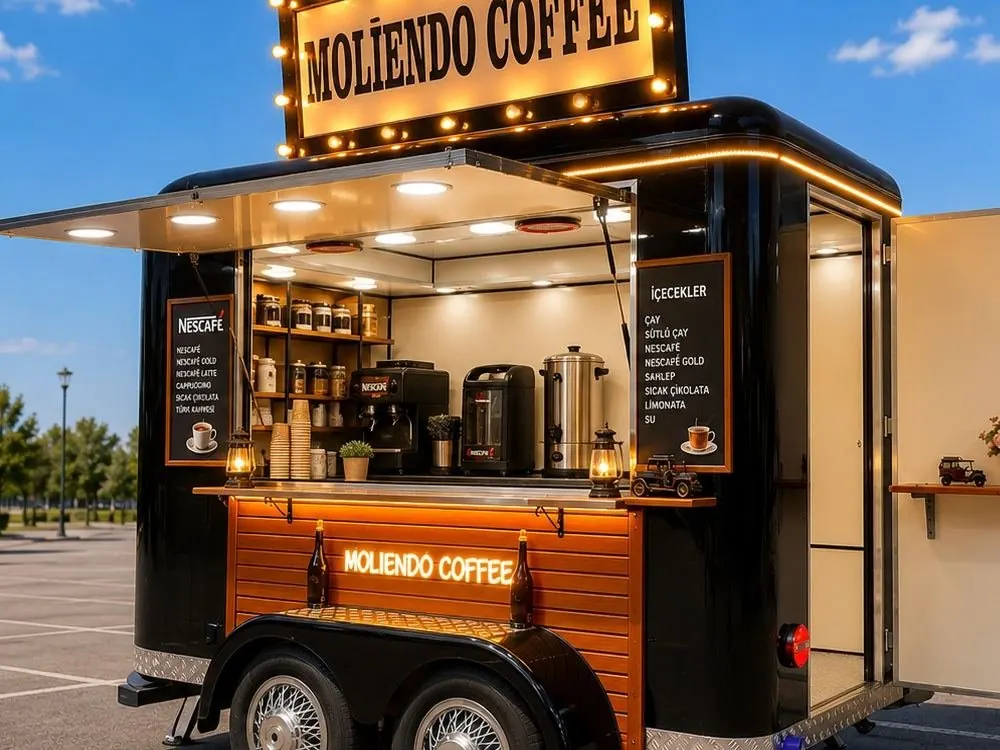
Here is one example line-up at 120 V, using the makers' current figures:
- two Vitamix Quick & Quiet blenders: 2 x 16.0 A = 32.0 A
- one Santos #50 juicer: 8.5 A
- one True TUC-27-HC undercounter fridge: 2.0 A
- one True TUC-27F-HC undercounter freezer: 2.3 A
- one Hoshizaki KM-301BAK ice machine: 5.7 A
That is 50.5 A. Volts times amps gives watts, so at 120 V this is about 6,060 W. The two blenders alone come to 3,840 W. Cummins puts a 30-amp shore cord at 120 V at 3,600 W and a 50-amp cord at 240 V at 12,000 W. Our reading: this line-up does not fit a 30-amp, 120 V cord. It fits within the 12,000 W of a 50-amp, 240 V cord, with starting loads still to add.
Motors also need a burst of power to start. Generac adds the largest single starting figure to the running total. None of the sheets we read gives a starting current, so ask each maker for it, and start the big motors one at a time.
Then count outlets. The Vitamix manual wants a dedicated 20 A GFCI outlet per blender, and each True sheet asks for a 15 amp dedicated outlet. Our reading: this example needs six outlets before lights, the water pump and the till, and four of them are dedicated in the makers' own words. Our guide to sizing a food truck generator goes through the whole method.
Cold storage
Where the Food Code applies, food that needs temperature control is held cold at 5°C (41°F) or below. The code's list of such foods includes cut melons, cut leafy greens and cut tomatoes, and animal food that is raw or heat-treated. Our reading: milk and yogurt for smoothies belong in that group.
Fridges must have enough capacity to keep those temperatures. Each fridge holding such food needs a thermometer you can read easily, with the sensor in the warmest part.
True's TUC-27-HC fridge measures 27 5/8 x 30 1/8 x 29 7/8 in and holds 33 to 38°F. The TUC-27F-HC freezer is almost the same size and holds -10°F. Both sheets say they are NSF/ANSI Standard 7 compliant for open food, and both breathe from the front.
How long freshly pressed juice may stand at the counter is a question for your health department. The code text we read does not name juice in its list.
Ice
Ice counts as food under the code. It must be made from drinking water, and bought ice comes from a source that complies with the law, like any other food. Ice used to cool the outside of bottles or cans may not then go into a drink. Whole fruit may be kept in ice or water.
If you make ice on board, check the water and power it takes. At the maker's rated conditions, the Hoshizaki KM-301BAK uses 31 gallons of water and 6.0 kWh per 100 lb of ice. It makes up to 285 lb a day, stores up to 100 lb and rejects 5,200 BTU of heat an hour. Our reading: ice made on board takes more from your fresh tank than the ice weighs, and the rest goes to the waste tank.
Washing produce
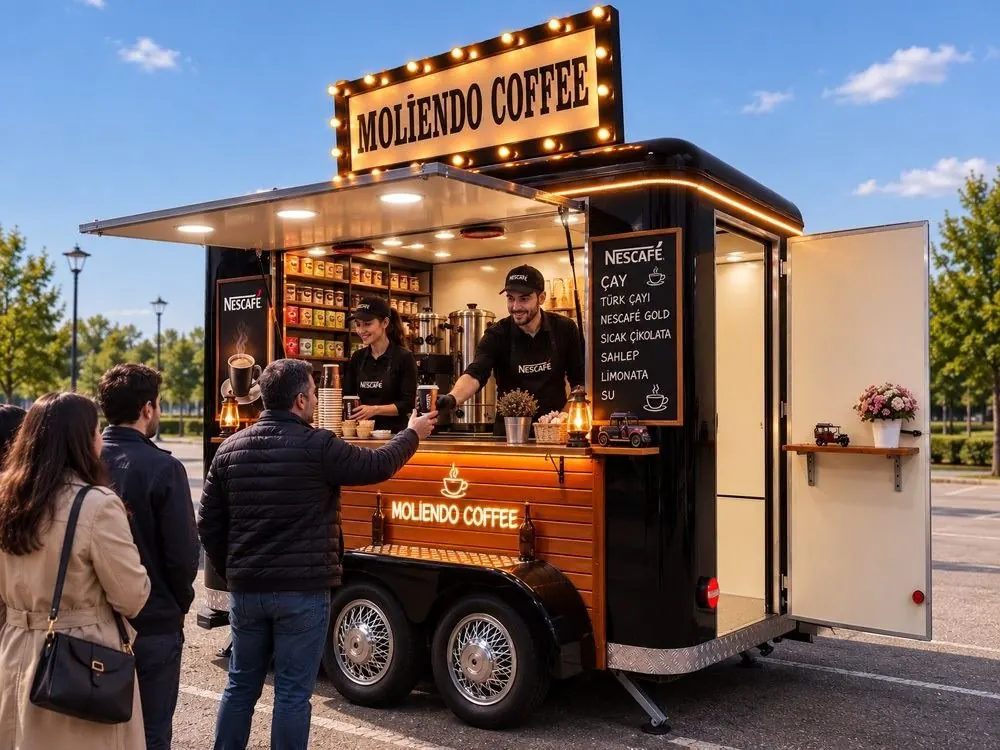
The Food Code says raw fruit and vegetables are washed thoroughly in water to remove soil and other contaminants before they are cut or served. Chemical washes are allowed only as the code specifies.
The FDA's notes add practical points. Keep wash water 10°F warmer than the produce. Avoid soaking or submerging it. Scrub only firm produce such as carrots, cucumbers and citrus. Avoid soap and detergent.
If produce is washed in the warewashing sink, the sink must be cleaned and sanitized before and after. Our reading: a separate prep sink saves that step at every rush. Ask your health department whether it requires one.
The rest of the water system follows the usual mobile rules. The waste tank is 15 percent larger than the fresh tank. A handwashing sink gives water at 29.4°C (85°F) or more and sits where drinks are made and served and where equipment is washed.
US juice rules: by the glass, bottled, or sold on
The juice rule in 21 CFR Part 120 requires a HACCP plan and a 5-log pathogen reduction from juice processors. Its definition of juice includes purées of fruit or vegetables used in drinks. Processing, it says, does not include the operation of a retail establishment. A retail establishment provides juice directly to consumers and does not also sell or distribute it to other businesses.
| How you sell | What the sources say |
|---|---|
| By the glass or cup | FDA does not require warning labels for juice sold by the glass, and names juice bars. The Food Code notes say unpackaged juice at a juice bar needs no 5-log reduction and no warning. |
| Bottled on board, sold only to your customers | The Food Code says juice packaged in a food establishment is treated under a HACCP plan to a 5-log reduction, or labelled with the FDA warning. |
| Also sold to cafes, gyms or shops | You are outside the retail definition. FDA's guide says only retail establishments are exempt, so Part 120 applies to you as a processor. |
The warning text is set by 21 CFR 101.17(g). It begins "WARNING: This product has not been pasteurized", with WARNING in capitals and bold, in a box.
FDA's small business guide adds that if someone else processes juice for you, that processor must work under HACCP.
Our reading: a smoothie made from blended fruit fits the purée wording. Ask your health department how it treats your smoothies.
Where the Food Code applies and a trailer serves a highly susceptible population, such as people at a hospital, nursing home or day care centre, unpackaged juice made on site must be processed under a HACCP plan. Juice carrying the warning label may not be served there. Ask the health department before you take such bookings.
What to send for a quote
- where you will trade, and in which country, state or county,
- your menu, and whether you will sell by the glass, bottle juice, or supply other businesses,
- the blenders and juicers you have chosen, how many run at once, and their manuals,
- whether you want fresh fruit only, or frozen fruit, milk and yogurt too,
- your ice plan: made on board or bought in,
- how many staff work inside and your busiest hour,
- the power on site, or whether you need a generator or shore power,
- anything your health department has already asked for.
Frequently asked questions
What exactly is a juice bar?
The FDA uses juice bars as its example of a retail establishment where packaged juice is made and only sold directly to consumers. It also names juice bars among the places that sell juice by the glass.
What equipment is needed for a juice bar?
The machines in this guide are a juicer, one or more commercial blenders, a fridge rated for open food, a freezer if you use frozen fruit, and ice. Where the Food Code applies you also need a handwashing sink and a warewashing sink. Take each electrical value from the manual of the exact model.
Does a juice bar trailer need a HACCP plan?
Under 21 CFR Part 120, a retail establishment that sells only to consumers is not a juice processor. Bottling juice on board brings in the Food Code's HACCP-or-warning-label rule. Selling to other businesses brings in Part 120 itself. Your health department has the final say on your setup.
Send your menu, your machine list and where the trailer will stand through the quote form. Our coffee trailers and mobile cafes are built as a single or tandem-axle trailer, a fixed kiosk or a small vehicle, chosen for where the cafe will stand.
Related guides
- New vs Used Food Truck: What to Check Before You Buy
- Taco Trucks: Kitchen Line, Holding and Service Window Planning
- How Much Does a Food Truck Cost to Build? The Parts That Drive the Price
- Hot Dog Carts vs Hot Dog Trailers: What Changes for the Buyer
Sources
- eCFR, 21 CFR Part 120, Hazard Analysis and Critical Control Point (HACCP) Systems (sections 120.1, 120.3, 120.24)
- eCFR, 21 CFR 101.17(g), juice warning statement
- FDA, Guidance for Industry: Exemptions from the Warning Label Requirement for Juice (October 2002)
- FDA, Small Entity Compliance Guide: Juice HACCP (April 2003)
- FDA, What You Need to Know About Juice Safety
- FDA, Juice HACCP
- FDA Food Code 2026 (PDF), sections 1-201.10, 3-201.11, 3-202.16, 3-302.15, 3-303.11, 3-303.12, 3-404.11, 3-501.16, 3-801.11, 4-204.112, 4-301.11, 4-501.16, 5-202.12, 5-204.11, 5-401.11 and Annex 3
- Vitamix, Quick & Quiet sell sheet
- Vitamix, Quick & Quiet manual
- Vitamix, The Quiet One
- Vitamix, The Quiet One manual
- Vitamix, Vita-Prep 3 sell sheet
- Blendtec, Stealth 885 spec sheet
- Santos, #62 blender manual
- Santos, #50 juice extractor manual
- Santos, #50 sales leaflet
- Santos, #28 and #68 manual
- Santos, #68 Miracle Edition
- Zumex, Minex data sheet
- Zumex, Speed Up data sheet
- True Manufacturing, TUC-27-HC spec sheet
- True Manufacturing, TUC-27F-HC spec sheet
- Hoshizaki America, KM-301BAK
- Cummins, RV Generator Power Basics
- Generac, What Size Generator Do I Need?

By
Ozan Food Truck
This guide is based on the laws, regulations, official guidance and manufacturer documents linked in the text. It is general information, not legal or engineering advice. Rules differ by country, state and city, so confirm the details with your local authority before you build or buy.