
Buying guide
Ice Cream Van or Ice Cream Trailer: What to Specify Before You Buy
Before you pick an ice cream van for sale, decide what you will serve and where you will trade. Soft serve or scooped ice cream decides the power, cooling and weight. The place decides whether a van that moves from stop to stop or a trailer parked on one pitch makes more sense, because in England and Wales the street trading and chime rules are written around how you trade.
By Ozan Food TruckPublished 10 min read
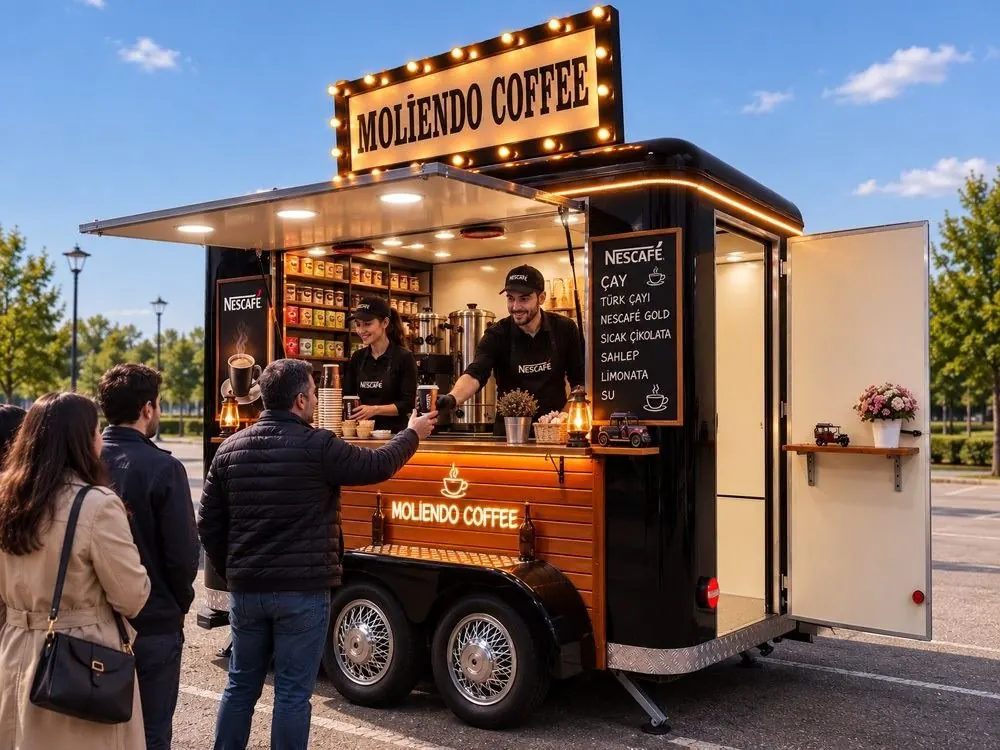
Machine and freezer figures below come from the makers' spec sheets. The rules come from legislation.gov.uk, GOV.UK and the Food Standards Agency, and the street trading and chime rules are for England and Wales. Councils apply them differently, so confirm the details with yours before you order.
Checked on 29 September 2026.
Soft serve, scooped or both
A soft-serve machine puts a freezing cylinder, a refrigeration system and a beater motor in one cabinet, and it needs its own power supply and room to breathe. Scooped ice cream needs a display freezer that holds pans at serving temperature.
Each machine or freezer in the examples below weighs 95 kg to 245 kg. Choose both and you carry both, so settle the menu before you compare vehicles.
Soft-serve machines: power, cooling and weight
Three maker spec sheets, for 50 Hz versions:
| Machine | Supply | Fuse / circuit | Power | Cooling | Net weight |
|---|---|---|---|---|---|
| Carpigiani 161 T G SP (countertop, gravity) | 230 V, 50 Hz, single phase | 16 A fuse | 2.3 kW | Air | 95 kg |
| Carpigiani 191 Classic (pump or gravity) | 230 V, 50 Hz, single phase | 16 A fuse | 2.4 kW | Air, water option | 130 to 140 kg |
| Taylor C709 (heat treatment) | 220 to 240 V, 50 Hz, single phase | 20 A max fuse, 17 A min circuit | not stated | Air | 187.8 kg |
The C709 also comes in a 380 to 415 V three-phase version, air or water cooled, with an 8 A maximum fuse. Taylor asks for one dedicated, permanent electrical connection. Carpigiani offers other voltages on request and rates the 161 T G SP at 15 kg per hour, noting that output depends on the mix and the room temperature.
Cooling needs space. Taylor asks for at least 152 mm (6 inches) of clearance on both sides of an air-cooled C709, with the back against a wall "to prevent recirculation of warm air". An optional chute sends the hot air upward instead. A water-cooled version needs a water inlet and a drain at the rear.
Our reading: an air-cooled machine pushes its heat into the serving space, so ask the builder to show the clearances and the air path on the drawing.
The C709 also runs a daily heating and cooling cycle that, according to Taylor, keeps dairy mix safe for up to 28 days before a full strip-down and clean. Both Carpigiani models list self-pasteurisation as a feature or an option. Our reading: ask which you are getting, because it changes how often the machine comes apart and how much water you carry.
Scooped ice cream: the display freezer
Display freezers take real floor space and weight. Two examples from maker data:
- Tecfrigo Alba 12 VD: 12 basins of 5 litres, held at -15 to -18 °C. It measures 1124 x 1060 x 1383 mm, weighs 245 kg net and draws 1.27 kW (6 A) at 230 V. Climate class 4, which the sheet ties to 30 °C and 55 % humidity.
- ISA Millennium (120 cm gelato version): 12 pans of 5 litres, product held at -16 to -10 °C. Climate class 7, rated at 35 °C and 75 % humidity. It draws 1050 W in normal running and 1400 W during defrost. The 155 cm version goes from 1690 W to 2340 W in defrost.
Two numbers matter. The first is the climate class, the room condition the freezer is rated for. Our reading: a closed body on a hot day can be warmer than the street, so ask for the class and plan ventilation around it.
The second is the defrost figure. Our reading: size your generator or battery system on the higher number. Our generator sizing guide shows how to add up an equipment list.
ISA also sells a scoop-washer console with a water tap. If you fit one, size the water tanks for it.
The hygiene baseline
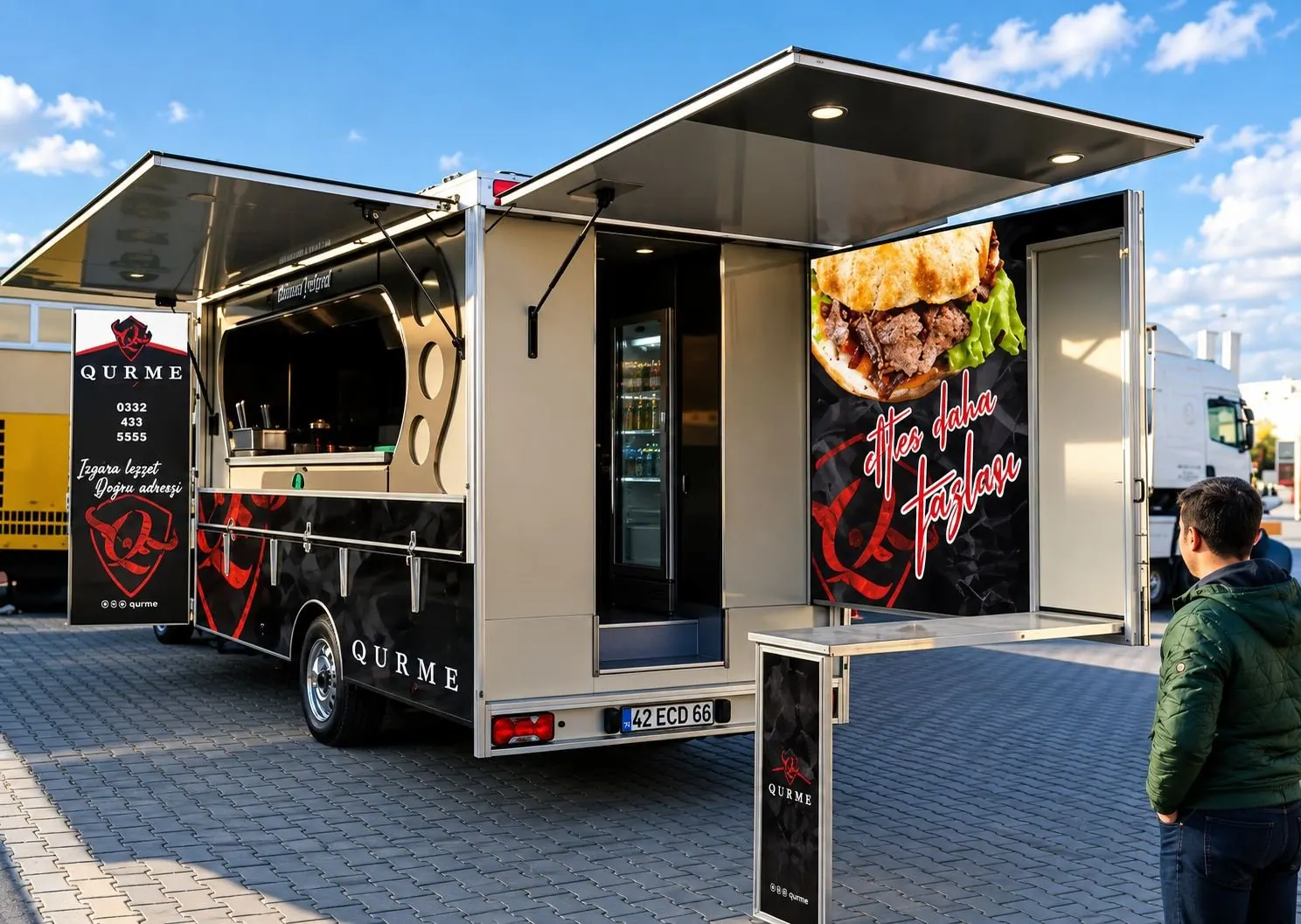
UK food hygiene law (assimilated Regulation 852/2004, Annex II, Chapter III) names "mobile sales vehicles" directly. Where necessary, a van or trailer must have:
- a way to wash and dry hands hygienically,
- food-contact surfaces that are smooth, washable, corrosion-resistant and non-toxic,
- a way to clean and disinfect utensils and equipment,
- an adequate supply of hot and/or cold drinking water,
- storage and disposal for liquid and solid waste,
- a way to keep and monitor food temperatures.
It sets no sink count or tank size, so ask your council's environmental health team what they expect before the builder draws the water system.
You also have to register. The FSA says to register with your local authority at least 28 days before you start trading, and it lists mobile traders among the businesses that must do so. Registration is free and cannot be refused. That page covers England, Wales and Northern Ireland; in Scotland, check with your council.
Street trading consent
In England and Wales, street trading is controlled by Schedule 4 of the Local Government (Miscellaneous Provisions) Act 1982, but only where the council has adopted it. A council can mark each street as prohibited, licence or consent. "Street" here includes any road, footway, beach or other area the public can reach without paying.
For a van, read the consent street rule closely. The Act says a consent holder may not trade in a consent street from a van or other vehicle unless the council has written that permission into the consent. If it does, it can set where you may stand and at what times. A consent lasts up to 12 months and can be revoked at any time. It cannot be granted to anyone under 17.
In a licence street, you name the street, days, times and any stall or container, and the licence can fix its size and type. GOV.UK adds that the council can refuse, or give fewer days and times than you asked for. There may be a waiting list.
Two cautions. The Schedule says selling "as a roundsman" is not street trading, but does not define the term, so ask your council how it treats a van that moves between stops. Several cities, including Manchester, Leeds and Nottingham, apply the Schedule with changes under local Acts. For London, Scotland and Northern Ireland, check with your council.
Chimes
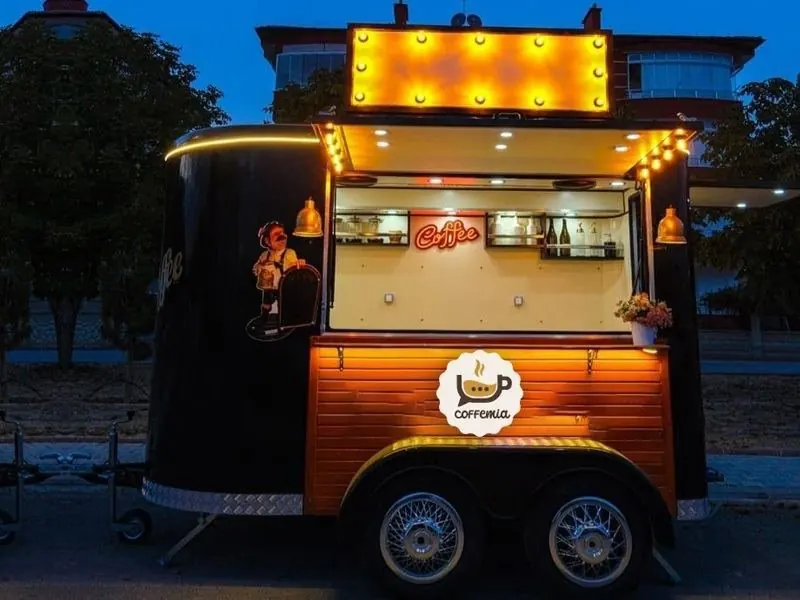
Section 62 of the Control of Pollution Act 1974 bans loudspeakers in the street between 9 pm and 8 am, and at other times for advertising a trade or business. For ice cream sellers, the exception that matters is subsection (3). A loudspeaker fixed to a vehicle carrying perishable food may be used between noon and 7 pm. It may only tell people the food is on sale, without words, and must not give reasonable cause for annoyance.
In England, DEFRA's Code of Practice on Noise from Ice-Cream Van Chimes Etc. 2013 adds the detail. The code has no force of law by itself, but councils and magistrates must have regard to it when judging "best practicable means". Its main points:
- no more than 12 seconds at a time, and a timed cut-out should be used where the mechanism has one,
- once on the approach to a stop and once when stationary, never less than 2 minutes apart,
- no more than once every 2 hours in the same length of street (up to 500 m),
- not louder than LAmax 80 dB at 7.5 metres,
- not within 50 metres of a hospital, a school during school hours, or a place of worship on its day of worship,
- not in sight of another van that is trading.
The code also asks owners to display its main points inside the vehicle. Noise from "a vehicle, machinery or equipment in a street" can also be a statutory nuisance under section 79 of the Environmental Protection Act 1990.
Our reading: ask for chimes with adjustable volume and a 12-second cut-out, and a quiet power source, because section 79 is not limited to chimes.
Van or trailer
| Ice cream van | Ice cream trailer | |
|---|---|---|
| Licence | Car licence up to 3,500 kg MAM (petrol or diesel); C1 from 3,500 to 7,500 kg | Tow up to 3,500 kg MAM if you got your licence from 1 January 1997 |
| Trading style | Moves between stops | Parked on a pitch or event site |
| Street trading | Consent must allow trading from a vehicle in a consent street | Ask the council; the Act names vans, carts and other vehicles |
| Chimes | Section 62 exception is written for a vehicle carrying the goods | Ask your council |
| Road rules | MOT by the third anniversary of registration for goods vehicles up to 3,500 kg; ask DVSA about heavier vans | Brakes if over 750 kg loaded; 2.55 m max width; 7 m max length behind a vehicle of 3,500 kg MAM or less; 50 mph single carriageway, 60 mph dual carriageway and motorway |
Our reading: a van suits a route with many short stops, which is the pattern the chime code describes. A trailer suits a fixed pitch, a park or an event, where it stays put all day. We cover the wider trade-offs in food truck vs food trailer.
Either way, ask for the loaded weight with your chosen equipment, because the limits above are set on MAM. For a trailer or vehicle made or imported singly, GOV.UK points to the Individual Vehicle Approval scheme. Our guide to buying a food trailer from overseas covers that step.
Our coffee trailer and mobile cafe page shows La Gelateria, a rounded tandem-axle ice cream trailer whose serving window opens onto a counter with an ice cream display. Our vintage food trucks have no engine and a steel frame. One of them, Hemingway, is an ice cream and bubble tea truck with a display freezer inside.
Frequently asked questions
Can I start my own ice cream van business?
Yes, but plan the permissions first. In England, Wales and Northern Ireland, register with your local authority at least 28 days before trading, then ask the council where street trading is allowed and whether your consent can include trading from a vehicle. In England, follow the chime code as well.
How much does an ice cream van cost?
It depends on the specification, so we give no figure here. The main drivers are soft serve versus scooped (or both), the machine's supply and cooling, the display freezer size, the power system and whether you choose a van or a trailer.
How profitable is an ice cream van?
We found no official figure. What you can check before buying is how many days and places the council will grant you, and whether the chime rules fit your planned route.
What to send for a quote
Put these in your first message:
- Van or trailer, and the towing vehicle if it is a trailer.
- Soft serve, scooped or both, with the machine make and model if you have chosen one.
- The supply you will have: single or three phase, generator, battery system or site hook-up.
- Air or water cooling for the soft-serve machine.
- Display freezer size, number of pans and the climate class you need.
- Handwash, scoop washer, fresh water and waste tanks.
- Chime system, if you trade from a van.
- Where you will trade (town, events, a fixed pitch) and what your council has told you.
- The target loaded weight and licence of the driver.
Send the list through our quote form and we will come back with questions on anything still open.
Related guides
- New vs Used Food Truck: What to Check Before You Buy
- Taco Trucks: Kitchen Line, Holding and Service Window Planning
- How Much Does a Food Truck Cost to Build? The Parts That Drive the Price
- Hot Dog Carts vs Hot Dog Trailers: What Changes for the Buyer
Sources
- Carpigiani 161 T G SP
- Carpigiani 191 Classic
- Taylor C709 spec sheet
- Tecfrigo Alba 12 VD
- ISA Millennium technical sheet
- Regulation (EC) No 852/2004, Annex II (UK version)
- Food Standards Agency, Starting a food business
- Local Government (Miscellaneous Provisions) Act 1982, section 3
- Local Government (Miscellaneous Provisions) Act 1982, Schedule 4
- GOV.UK, Street trading licence (England and Wales)
- Control of Pollution Act 1974, section 62
- DEFRA, Code of Practice on Noise from Ice-Cream Van Chimes Etc. in England 2013
- The Control of Noise (Code of Practice on Noise from Ice-Cream Van Chimes Etc.) (England) Order 2013
- Environmental Protection Act 1990, section 79
- GOV.UK, Driving licence categories
- GOV.UK, Towing with a car
- GOV.UK, Speed limits
- GOV.UK, Getting an MOT
- GOV.UK, Vehicle approval

By
Ozan Food Truck
This guide is based on the laws, regulations, official guidance and manufacturer documents linked in the text. It is general information, not legal or engineering advice. Rules differ by country, state and city, so confirm the details with your local authority before you build or buy.