
Markets
Food Trucks in Dubai and the UAE: Permits and Vehicle Questions for Buyers
Yes, food trucks can trade in Dubai and Abu Dhabi, but each emirate runs its own permit. In Dubai you need a licensed food business, a food truck permit for set locations, a Dubai Municipality food safety permit and an RTA-registered vehicle. Abu Dhabi runs its own permit through TAMM, with its own conditions on the vehicle.
By Ozan Food TruckPublished 9 min read
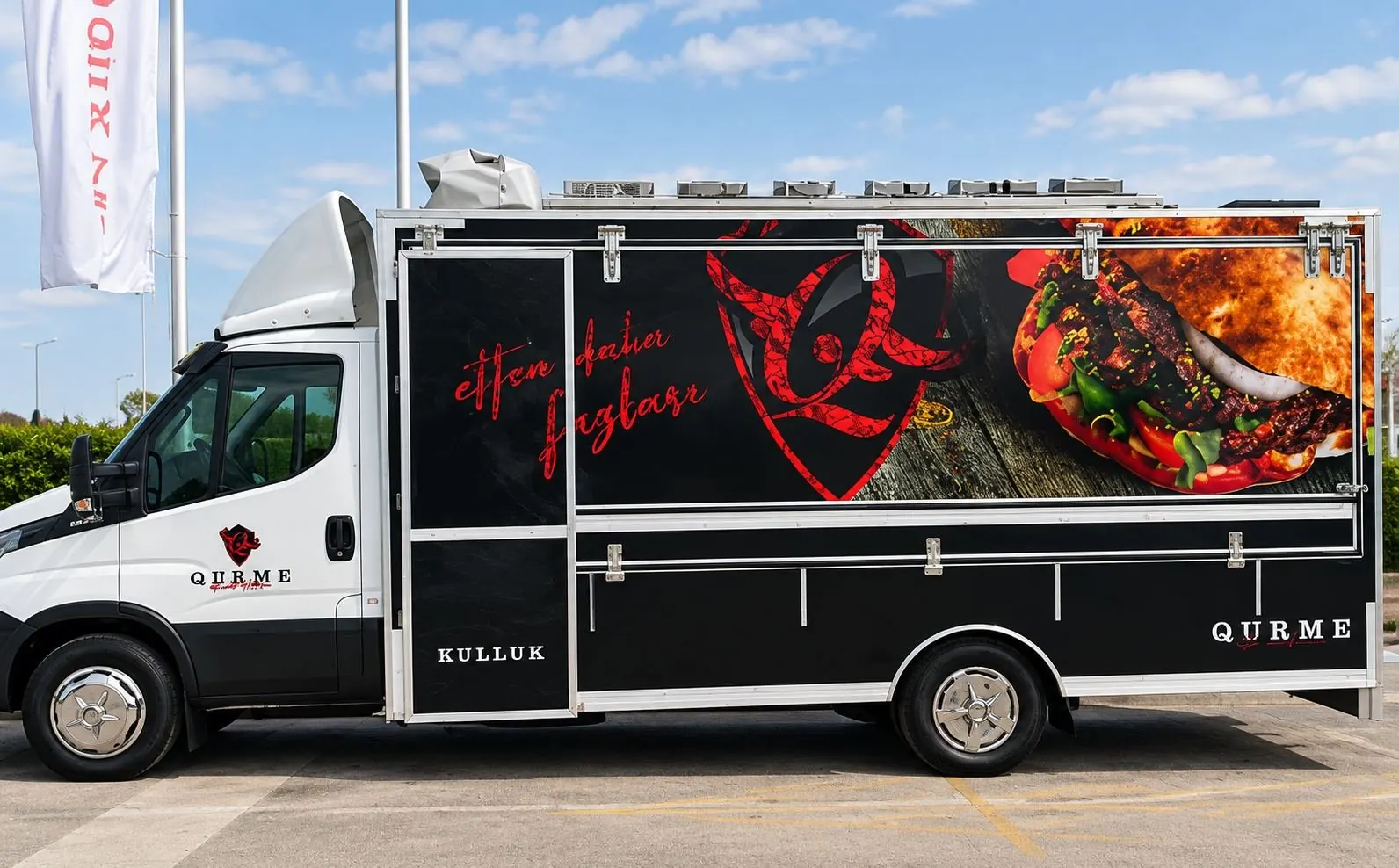
This guide covers Dubai and Abu Dhabi only, using Dubai Municipality, Invest in Dubai, RTA, u.ae and TAMM pages. We did not cover Sharjah, Ajman or the other emirates, so ask the local municipality and licensing office there. Treat every document list here as the baseline. Your authority may ask for more.
Checked on 29 September 2026.
Start with the business, not the truck
In Dubai the business comes first. Dubai Municipality's Food Code says every food establishment needs a valid trade licence before it opens, and the licence must state "the exact activity" the business carries out.
The Municipality's permit rules go further. Only licensed food establishments in Dubai with a food inspection grade of A, B or C, and no critical or major violations, can get the permit to supply or manage a food truck. The annual food truck permit is issued to an existing establishment that already holds a trade licence.
Our reading: if you have no licensed food business in Dubai yet, the first step is the licence. A truck ordered before that can sit waiting.
The two permits in Dubai
Dubai Municipality issues an annual food truck permit through its Food Safety Department. Its terms set the order: before you apply, "a food truck permit or license must be obtained from the licensing authority in Dubai for the specific location and business activity." The truck may only trade in the locations named in that permit.
The Municipality does not name which licensing authority that is. We found no Dubai Economy and Tourism (DET) or Invest in Dubai page describing a food truck permit. Ask DET or your free zone authority, and the Municipality's food permits team, before you commit to a site.
For the Municipality's annual permit you send:
- a trade licence issued by a Dubai licensing authority (listed for free zone businesses)
- the food truck permit from the licensing authority
- a scaled layout of the truck, with equipment details and staff facilities
Applications go through the Dubai Municipality website. The service page says they are usually processed within 1 working day after submission and payment. The fees are listed there too. The permit does not cover approvals from other government bodies, so those are separate.
Events are different. A food permit for an event must be requested at least 3 working days before it starts, covers only that event, and the layout must show handwashing stations.
One more check. RTA's service for a No Objection Certificate (NOC) for a new trade licence lists "Selling Goods via Mobile Trucks" among the activities it covers. Ask whether your licence activity needs an RTA NOC.
What the Food Code means for the build
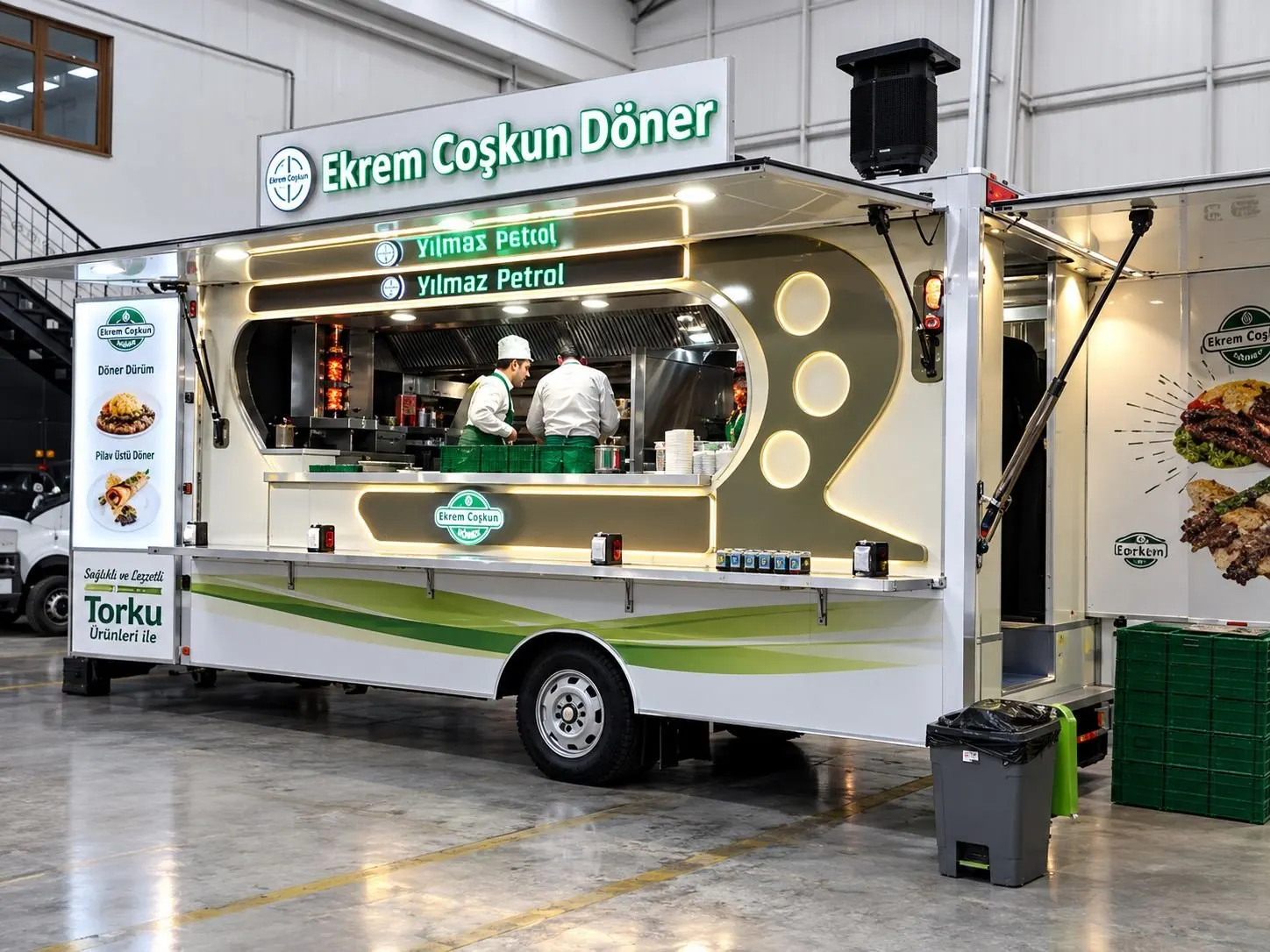
The Food Code's section on mobile vendors and catering trucks says they need prior approval and "should meet the relevant provisions of this Code depending on the type and extend of the activity." The section adds no separate design rules for trucks. Our reading: the Code's general rules apply as far as your activity calls for them, and that "scaled layout" is where the builder shows them.
For a new establishment the Code asks for a layout approved before construction, showing:
- food handling and cooking, cleaning and storage areas
- all windows and mechanical ventilation
- the layout of equipment
- entry and exit points
- pot and dish washing and handwashing facilities
Other rules shape the kitchen directly:
- Handwashing. At least one handwash station in each food preparation area, with liquid soap and paper towel dispensers and water at a suitable temperature.
- Water. Drinking water from a source approved by Dubai Municipality or DEWA, hot water for cleaning, and covered storage tanks.
- Ventilation. Mechanical or mixed mode ventilation, designed to the Municipality's Public Health and Safety requirements.
- Staff. At least one Person in Charge certified in food safety. Where high-risk or ready-to-eat food is prepared, one must be present on every shift.
The Code gives no tank sizes or sink counts for trucks. Our reading: get the layout checked by the Municipality before production starts, since the Code asks for approval before construction.
The vehicle: registration and inspection in Dubai
Every vehicle on UAE roads must be registered with the traffic authority of an emirate. In Dubai that is RTA.
For a company registering a new vehicle, RTA lists:
- a letter in Arabic from the company, signed by the authorised person
- that person's Emirates ID
- a copy of the valid trade licence
- the Memorandum of Association in a legalised Arabic translation
- the Electronic Customs Certificate
- the sale and purchase agreement
Several points matter before you order.
The truck will be inspected. RTA says imported vehicles need technical inspection. Its inspection terms add that vehicles "with special characteristics such as mobile kitchens or vehicles with modified bodies are transferred to the Technical Inspection Committee at the Licensing Department." Its FAQ adds that a vehicle pre-equipped and imported from outside the UAE is transferred to the technical committee.
Left-hand drive. RTA says a right-hand drive vehicle can't be registered in Dubai unless it has a classical plate. Tell your builder so the chassis is chosen for the UAE from the start.
Size. For a vehicle over 3 tonnes, RTA's FAQ gives a height of 4.2 m and a width of 2.6 m. Length depends on the vehicle type.
Gulf Specifications. For individual owners, RTA also asks for proof of compliance with the Gulf Specifications, from the Ministry of Industry and Advanced Technology, where the customs card doesn't show it. Our reading: ask your customs agent and RTA before shipping how the truck's compliance will be shown. Our guide to buying a food trailer from overseas covers customs checks and shipping documents in general.
If you choose a trailer
RTA inspects trailers at its centres. The chassis number is engraved, and the trailer is inspected before plates are issued. Its FAQ lists the conditions for locally built and imported trailers:
- height up to 4.2 m from the ground, width up to 2.6 m, total length up to 18 m
- side marker lights front and back on both sides if wider than 1.2 m
- front, rear and side reflectors, and lit number plates
- side and rear impact guards against under-running
- fenders or flaps on the rear wheels
- a parking brake, tyre repair tools, a tyre pressure monitoring system and an emergency kit
If you are still deciding between the two, see food truck vs food trailer.
Abu Dhabi: a different permit
In Abu Dhabi the food truck permit is issued by the Department of Economic Development through TAMM. It covers "a car or a specially manufactured and designated mobile trailer". Trading is limited to designated places: municipality sites, ADNOC locations, sites run by companies the municipality has allocated for food trucks, or events.
You apply with a detailed company letter, photos of the vehicle from all sides and a trademark registration certificate from the Ministry of Economy. The terms add conditions that reach the builder:
- Approval for the parking place comes first, from the Department of Municipalities and Transport, ADNOC or the site company.
- Each commercial licence can hold permits for up to 3 mobile vehicles.
- The trade name must be written in Arabic, no smaller than the English.
- The vehicle "must be originally manufactured to engage in food selling activity", with a vehicle specifications form and a letter from the manufacturer covering those specifications.
- No outdoor chairs or tables, no trading outside the set locations, and a separate event permit for events.
Our reading: the manufacturer's letter is part of your Abu Dhabi file, so ask for it in the contract. We could not read the Abu Dhabi food safety authority's (ADAFSA) site, so check its food safety requirements with ADAFSA directly.
What to send the builder for a UAE quote
Put these in your first message:
- The emirate, and whether you trade at set locations, events or both.
- Your licence status: an existing licensed food business, or a new one.
- Truck or trailer. For a truck, left-hand drive.
- Size: RTA gives 2.6 m wide and 4.2 m high for vehicles over 3 tonnes and for trailers, and up to 18 m long for a trailer.
- Your menu and cooking equipment, so the layout can show equipment, staff facilities and handwash stations.
- Water: drinking water tank, hot water for cleaning, covered tanks.
- Mechanical or mixed mode ventilation, designed to the Municipality's requirements.
- The trade name in Arabic and English, and any trademark you will put on the body.
- Documents from the builder: a scaled layout, a specifications letter, the invoice or sale agreement, and an engraved chassis number on a trailer.
Ozan Food Truck builds food trucks, panel van conversions and towable food trailers in its own factory in Konya, Turkey. For export projects, each build is engineered to the electrical and gas standards of the destination country, and the destination's technical and legal requirements are assessed at the design stage. Permits come from the UAE authorities, not from us. See our food trucks and trailers page for the types we build.
Frequently asked questions
Is a food truck allowed in the UAE?
Yes. Dubai Municipality issues an annual food truck permit, and Abu Dhabi's Department of Economic Development issues one through TAMM. Both limit trading to approved locations or events. For the other emirates, ask the local municipality.
How to start a food truck in Dubai?
Start with a licensed food business in Dubai. Then get a food truck permit for your location and activity from the licensing authority, and the Municipality's food truck permit with a scaled layout. The vehicle is registered with RTA, and a mobile kitchen goes to its Technical Inspection Committee.
How much does a food truck license cost in Dubai?
We don't quote fees, because they change and depend on the permit type. Dubai Municipality lists its permit fees on its service page, and RTA and TAMM do the same. The price of the truck itself follows the specification: base vehicle, body size, kitchen equipment, power and water, and branding and delivery.
Can I import a food truck into Dubai?
Yes, but plan for technical inspection and RTA's documents, including the Electronic Customs Certificate. RTA won't register a right-hand drive vehicle unless it has a classical plate, and it sends mobile kitchens to its Technical Inspection Committee.
If you are planning a food truck or trailer for Dubai or Abu Dhabi, send the checklist above through the quote form. We reply with questions first, then drawings and a quote.
Related guides
- Buying a Food Truck or Trailer for the UK: Registration, Gas and Council Rules
- Ordering a Food Truck from Turkey: Documents, Shipping and Approvals
- Shipping a Food Trailer Overseas: RoRo, Flat Rack or Container
- Food Trucks in Saudi Arabia: Licensing and Vehicle Questions for Buyers
Sources
- Dubai Municipality, Apply for a Permit for Food Related Activities (annual permit for food truck)
- Dubai Municipality, Food Code (sections 1.4, 1.6, 2.1, 2.2, 2.11, 2.13, 2.18, 2.23, 3.1.1)
- Dubai Municipality, For Food Traders and Establishments
- Invest in Dubai (DET), Request to issue a trade licence
- RTA, Apply for Registering a New Vehicle
- RTA, Apply for Vehicle Inspection
- RTA, Apply for an NOC for a New Trade Licence
- UAE Government portal, Registering vehicles
- TAMM, Issue Food Truck Permit (Department of Economic Development)
- TAMM, Cancel a Food Truck Location Permit (Department of Municipalities and Transport)

By
Ozan Food Truck
This guide is based on the laws, regulations, official guidance and manufacturer documents linked in the text. It is general information, not legal or engineering advice. Rules differ by country, state and city, so confirm the details with your local authority before you build or buy.