
Markets
Shipping a Food Trailer Overseas: RoRo, Flat Rack or Container
A food trailer goes overseas in one of three ways: rolled onto a RoRo ship, lashed to a flat rack, or pushed inside a closed container. Which one works comes down to two measurements, the trailer's widest point and its height on its wheels. Every general purpose container in Hapag-Lloyd's specification booklet, from 20 ft to 45 ft, has a door 2,340 mm wide.
By Ozan Food TruckPublished 10 min read
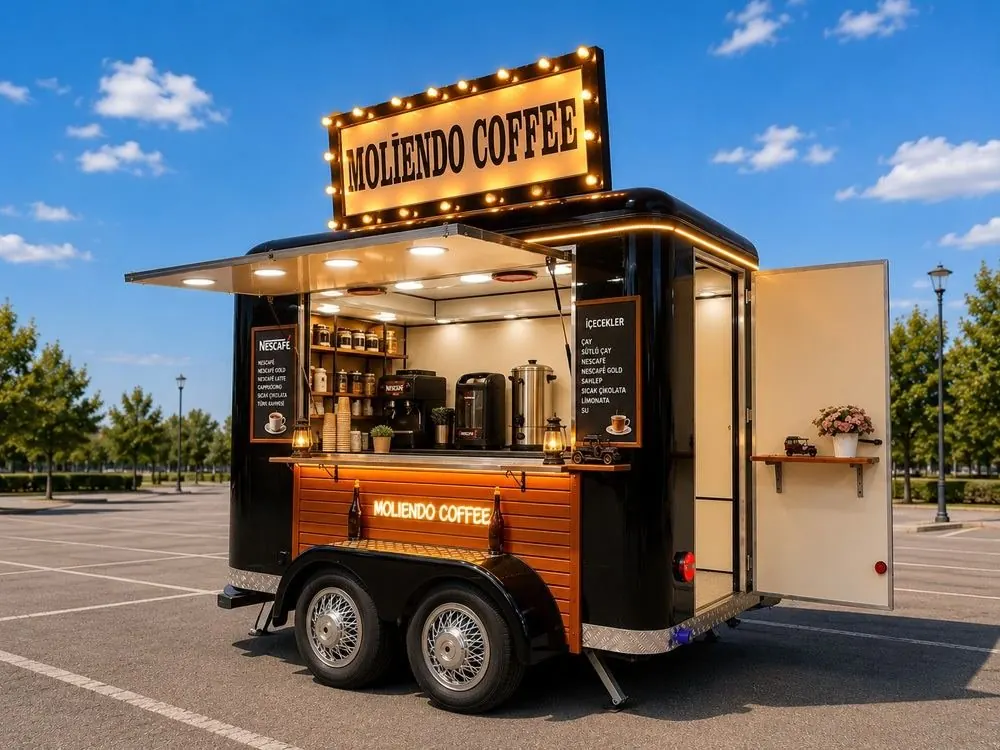
This guide compares the three using the carriers' own specification sheets and cargo rules from Hapag-Lloyd, Maersk, Höegh Autoliners and Wallenius Wilhelmsen. The paperwork is covered elsewhere: Turkish export documents in ordering a food truck from Turkey, and approval in your own country in buying a food trailer from overseas. Carrier rules differ and change, so confirm every point with your carrier at booking.
Checked on 29 September 2026.
What to decide before the trailer is finished
You need three answers, and the first one affects the design:
- The overall size in travel position. Width, height and length with hatches shut, awning folded, drawbar on. Höegh, for one, asks for actual dimensions before booking.
- The mode. If you want container shipping, say so while the trailer is still on the drawing board.
- What travels inside. Gas cylinders, batteries, food, loose equipment. Each one has its own carrier rule.
| Mode | The limit to check | Suits |
|---|---|---|
| Closed container | Door 2,340 mm wide, 2,292 mm high (2,597 mm high cube) | Trailers that pass the door on their wheels |
| Flat rack | Maersk treats cargo over 244 cm wide as out of gauge | Trailers too wide or tall for a door |
| RoRo | Real dimensions, weight and photos at booking | Trailers and trucks in working order that roll on and off |
Will it fit in a container?
These are Hapag-Lloyd's nominal figures for its general purpose boxes. The booklet warns that production tolerances apply.
| Container | Door opening (W × H) | Inside (L × W × H) |
|---|---|---|
| 20 ft standard | 2,340 × 2,292 mm (one series 2,280 high) | 5,900 × 2,352 × 2,393 mm |
| 40 ft standard | 2,340 × 2,292 mm | 12,032 × 2,352 × 2,395 mm |
| 40 ft high cube | 2,340 × 2,597 mm | 12,032 × 2,352 × 2,700 mm (some series 2,432 wide) |
The floor sits 170 mm above the ground.
The door sets the limit, not the inside. Road rules allow much wider trailers: 2.55 m in the EU and UK, and 102 inches on the US National Network (see our guide to food truck sizes and layout). A trailer built out to 2.55 m is 210 mm too wide for any of these doors.
Our reading: measure the widest point, including mudguards, hatch frames and lamps, and the highest point on the wheels, including roof vents or an air-conditioning box. The drawbar counts against the inside length.
Inside the box, Hapag-Lloyd rates each lashing point on the rails and corner posts at 1,000 kg. Our reading: a loaded trailer will need several of them.
Wallenius Wilhelmsen's FAQ adds a point on engines. It says that a product with a combustion engine is not regarded as hazardous cargo on a RoRo vessel. "For carrying such product inside a container, it will still be considered hazardous cargo (UN 3166, Class 9) unless a number of conditions can be met." Our reading: that affects a food truck, or a trailer with a built-in generator engine. Ask the carrier before you choose a container for either.
Flat rack: for trailers too wide or tall for a door
A flat rack is a container base with two end walls, which fold down on Hapag-Lloyd's racks. Hapag-Lloyd calls it "suitable for heavy loads and oversized cargo". Its 40 ft high cube flat rack measures 11,652 mm between the corner posts and roughly 2,150 to 2,230 mm between them across, depending on series. The floor itself is 648 mm high. On the 20 ft version the floor is 370 mm high and the length between posts is about 5,600 mm.
Maersk publishes in-gauge limits. A 40 ft flat rack takes cargo up to 1,163 × 244 × 194 cm, and the high cube version up to 226 cm high. Its lashing guide is plain: "Cargo more than 244cm wide on a flatrack is considered out of gauge."
Out of gauge is bookable. It just has to be declared properly:
- Over-width cargo should stay at least 30 cm from the front end of the flat rack. Otherwise it cannot go under deck and has to be loaded on deck.
- The declared size should include lashing equipment, dunnage and anything else that sticks out.
- Terminals can refuse to load cargo whose dimensions don't match the declaration. Maersk says even a few centimetres matter, and asks for updated figures after lashing.
Our reading: a trailer at or near 2.55 m wide will be over 244 cm, so book it as out of gauge from the start rather than hoping it passes.
RoRo: rolling it onto the ship
Höegh's car and truck carriers take trailers, motorhomes and caravans. The ships have wide ramps and hoistable decks for tall cargo, and Höegh takes oversized cargo. You provide "full dimensions, weight and photos" when asking for a quote.
Höegh's measuring standard sets the method. Dimensions go in metric, before booking, in the position the cargo will be stowed. They must include external items such as mirrors, antennas and air-conditioning equipment.
For trailers, Höegh asks for:
- fully inflated tyres in good condition
- brakes that work
- everything inside individually lashed and secured
- cargo compartments that can be opened for inspection
A used trailer also needs a "trailer horse" under its front end. Sidewall lashing bars or rails inside the trailer can't be used to tie down what you pack.
A food truck falls under Höegh's truck rules. Its truck FAQ says vehicles must be fully operational and able to drive on and off, and a non-running or towable vehicle is accepted only if brand new and requested by the original manufacturer. Its acceptance guide adds that used non-running high and heavy cargo goes only on a roll trailer. Wallenius Wilhelmsen loads used vehicles without brakes only if a towbar is used or they go on a cargo carrier.
For Europe, Grimaldi runs RoRo lines for lorries and semi-trailers from Ambarlı and Gemport in Turkey to Trieste, Bari and Patras. Our reading: road plus a RoRo crossing is one of the routes worth asking a forwarder about.
Securing: the shipper's side of the job

Carriers put preparation on you, the shipper. Wallenius Wilhelmsen writes that the shipper must make sure the cargo "is fit for the intended sea voyage and type of vessel", and that the master decides whether it is loaded. Höegh adds that the shipper must provide appropriate lashing points.
On a RoRo deck, Höegh secures trailers with lashing points and wheel chocks, with lashings at 45 to 60 degrees. Wallenius Wilhelmsen secures cargo against 1.0 g vertically, 0.8 g sideways and 0.4 g lengthways. Lifting points are not accepted as securing points.
On a flat rack, Maersk's lashing eyes have a safe working load of 5,000 kg. Cross lashing works best. Metal must not touch metal, so wood dunnage or rubber goes between the chassis and the rails. No welding or drilling on the rack is allowed, and lashings should be certified.
Our reading: ask the builder to fit and mark proper lashing points on the chassis and show them on the drawing.
Tanks, fridges and food traces
Fuel limits vary. Höegh allows at most a quarter tank for petrol, diesel and gas vehicles, and asks for an empty tank on used high and heavy cargo carried on roll trailers. Wallenius Wilhelmsen's rule for used vehicles is also a quarter tank, and the same limit applies to an emergency generator in a motorhome.
None of the carriers we read mentions fixed water tanks. Wallenius Wilhelmsen's list for motorhomes accepts an "empty water canister" and a portable toilet that is "clean & empty". Our reading: drain and clean the fresh and waste water tanks, and confirm with the carrier.
Wallenius Wilhelmsen does not accept used vehicles that need power during the voyage. Its clean cargo guide also says there should be "no evident traces of leftover or spilled food or drink", and the underside must be washed. The quarantine authority at the destination decides whether it is clean enough.
Our reading: the fridges travel switched off, so empty them, clean the kitchen as well as the chassis, and don't pack any food.
LPG cylinders: ask first
Wallenius Wilhelmsen's guide for used vehicles bans pressurised containers "of any kind". Even in motorhomes, gas cylinders are allowed only if they are securely fixed, on the equipment list and carry a valid gas-free certificate attached to the cylinder. Höegh lists "portable tanks" among items not accepted inside vehicles. Dangerous goods must be declared at booking, and Wallenius Wilhelmsen approves each case separately. Wrong classification leads to a short shipment, meaning the cargo is left off the ship.
We could not read the IMDG Code itself. So ask the carrier or forwarder whether cylinders can travel with the trailer at all, and on what terms. Our reading: if they can't, plan to buy cylinders at the destination.
Batteries
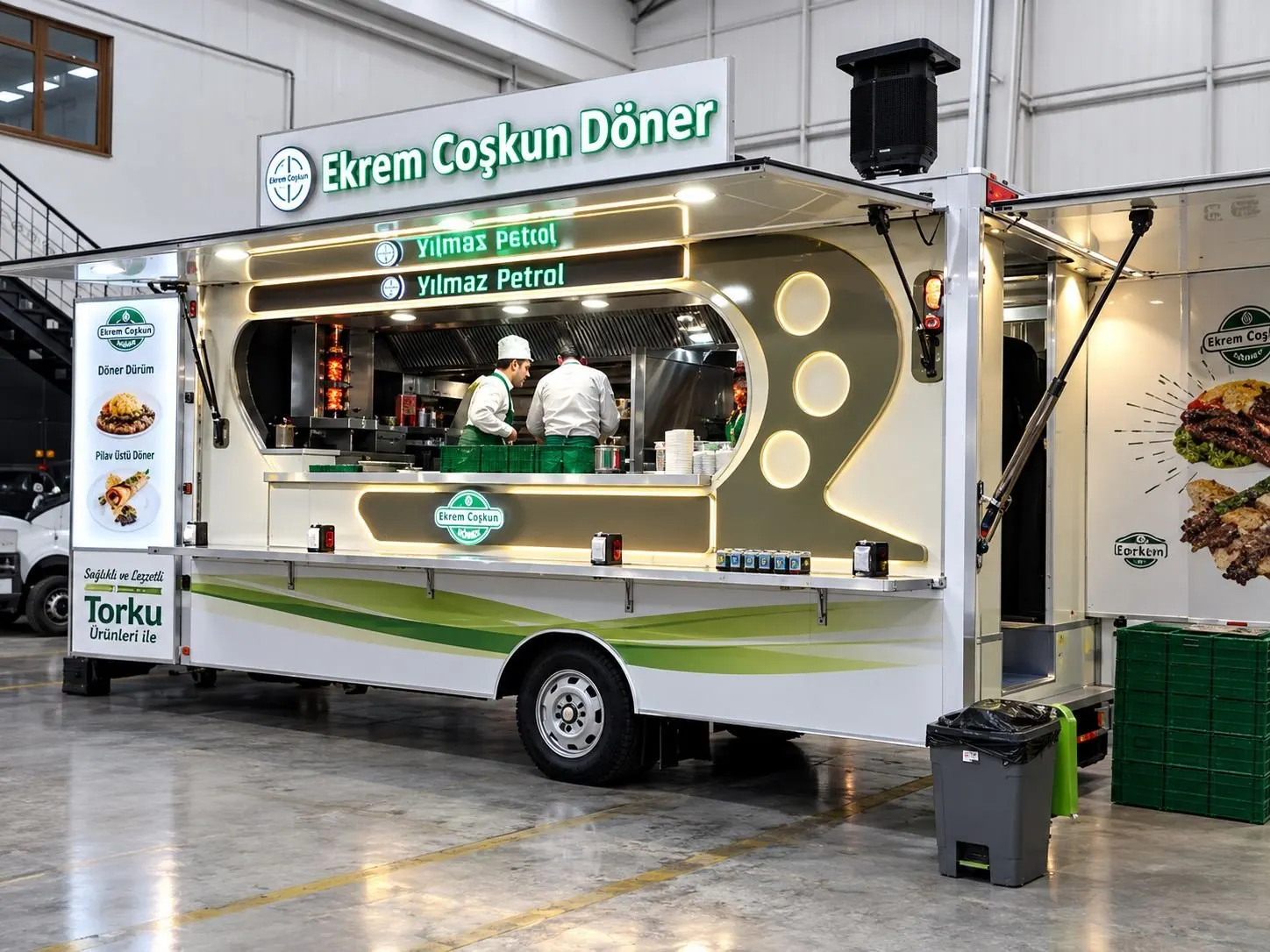
Höegh does not accept loose or extra batteries of any kind, or a damaged battery. For some cargo it asks for batteries to be disconnected or removed. Wallenius Wilhelmsen disconnects batteries on used vehicles, and lists lithium batteries among the items not allowed in motorhomes.
Our reading: if the trailer has a fixed battery bank, declare its type and capacity at booking and make the disconnection point easy to reach.
Insurance
Höegh says insurance is not included in the freight. Wallenius Wilhelmsen explains why it matters: "Carriers' liability is limited by maritime legislation and also by the terms and conditions of the transport document". It strongly recommends marine transport insurance.
Under Incoterms 2020, CIF defaults to Institute Cargo Clauses (C) and CIP requires the wider Clauses (A). Ask your broker which cover you have, from where to where, and whether it covers the trailer if it travels out of gauge or on deck.
How Ozan Food Truck handles export builds
Ozan Food Truck exports food trucks and food trailers worldwide. Each export build is engineered to the electrical and gas standards of the destination country, and shipping is planned by road or sea. Share the destination at the first meeting so its requirements are considered at the design stage. See our food trucks and trailers and read more about the company.
What to send for a quote
- Delivery country, city and nearest port.
- Truck or trailer, and quantity.
- Your preferred mode, if you have one. Say so early if the trailer must fit a container door.
- Whether you have a forwarder, and the Incoterms rule you want.
- Whether gas cylinders, batteries or loose equipment should travel with it.
- A request for in-stow dimensions, weight and photos (Höegh asks for all three), and marked lashing points.
Frequently asked questions
Can a food trailer fit in a shipping container?
Only if it passes the door: 2,340 mm wide and 2,292 mm high in Hapag-Lloyd's standard boxes, 2,597 mm high in a high cube. Measure it on its wheels.
Is RoRo or a flat rack better for a food trailer?
It depends on size and route. RoRo suits a trailer that rolls on and off in working order. A flat rack takes one too big for a door, but over 244 cm wide counts as out of gauge at Maersk. Ask your forwarder what serves your port.
Can I ship the trailer with equipment and gas inside?
Höegh accepts items inside a trailer if they are lashed and the compartments can be inspected. The carriers we read refuse loose personal items, food and loose batteries. Settle gas cylinders first with the carrier.
Do I need insurance to ship a food trailer?
The carriers we read say freight does not include insurance and their liability is limited. Ask your broker for marine transport cover.
To plan the build around the way it will ship, send the destination and your details through the quote form, or see our food trucks and trailers.
Related guides
- Buying a Food Truck or Trailer for the UK: Registration, Gas and Council Rules
- Food Trucks in Dubai and the UAE: Permits and Vehicle Questions for Buyers
- Food Trucks in Saudi Arabia: Licensing and Vehicle Questions for Buyers
- Importing a Food Van or Trailer into Australia: Approval and Compliance
Sources
- Hapag-Lloyd, Container Specification (general purpose, high cube, flat rack)
- Maersk, Out of Gauge cargo
- Maersk, Lashing Guide: Loading and Lashing Cargo
- Maersk FAQ, What if the dimensions only change by a few centimetres?
- Maersk FAQ, OOG declaration when dimensions are not known
- Höegh Autoliners, Trucks, Buses and Trailers Shipping
- Höegh Autoliners, Customer Guide for Acceptance of Light and High and Heavy Vehicles
- Höegh Autoliners, Cargo Measuring Standard
- Wallenius Wilhelmsen, customer guide for shipping used cargo (January 2026)
- Wallenius Wilhelmsen, Guidelines for shipping Dangerous Goods
- Wallenius Wilhelmsen, Customer guidelines for packing, marking and securing points
- Wallenius Wilhelmsen, How clean is your product? (clean cargo guide)
- Wallenius Wilhelmsen FAQ, Hazardous cargo and Insurance
- Grimaldi Lines Cargo, services and Turkey lines
- ICC, Incoterms 2020
- Commission Implementing Regulation (EU) 2021/535, Annex XIII (trailer width)
- GOV.UK, Towing with a car: weight and width limits
- 23 CFR 658.15, Width

By
Ozan Food Truck
This guide is based on the laws, regulations, official guidance and manufacturer documents linked in the text. It is general information, not legal or engineering advice. Rules differ by country, state and city, so confirm the details with your local authority before you build or buy.