
Markets
Buying a Food Truck or Trailer for the UK: Registration, Gas and Council Rules
Before you buy a food truck or food trailer for the UK, check four things: vehicle approval, gas work by a Gas Safe-registered engineer, food business registration with your council, and permission to trade on the street you have in mind. The council and gas rules are the same whether you buy from a UK listing or order from a builder abroad. The vehicle paperwork is what differs.
By Ozan Food TruckPublished 10 min read
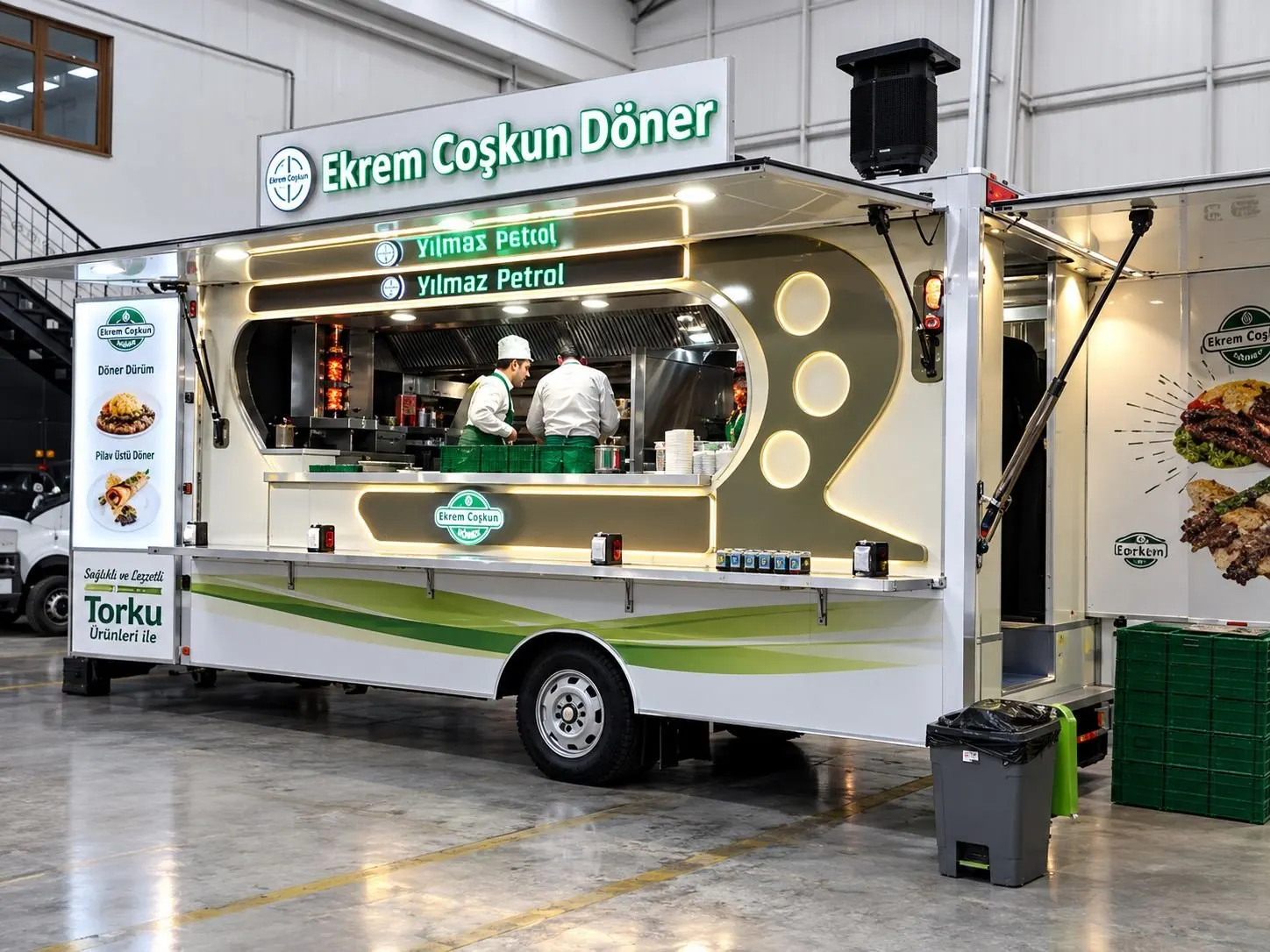
This guide works through each step using GOV.UK, DVSA, the Food Standards Agency, HSE and legislation.gov.uk. The vehicle and gas sections cover Great Britain. Treat every list here as the national baseline. Your council or DVSA may ask for more.
Checked on 29 September 2026.
Truck or trailer: two different routes
A food truck is a motor vehicle. A food trailer is towed. That choice decides which approval, licence and towing rules apply. Our food truck vs food trailer guide compares the two in more detail.
For a trailer, the towing rules on GOV.UK shape the build:
- If you got your licence from 1 January 1997, you can tow a trailer of up to 3,500 kg maximum authorised mass (MAM).
- The maximum trailer width is 2.55 metres. If the towing vehicle's MAM is 3,500 kg or less, the trailer can be no longer than 7 metres, not counting the A-frame.
- A trailer that weighs over 750 kg loaded needs a working brake system, and you must use a breakaway cable or secondary coupling.
- The trailer shows the same number plate as the towing car.
Check the car as well. If its VIN plate lists no gross train weight, GOV.UK says you should not use it for towing.
Vehicle approval and registration
GOV.UK says you must apply for vehicle approval if you have built or imported a vehicle, radically altered one, or modified a goods vehicle. A newly built or imported food truck or trailer is on that list. GOV.UK also lists exemptions, so check yours with DVSA.
For a single unregistered vehicle, GOV.UK points to Individual Vehicle Approval (IVA), run by DVSA. It covers goods vehicles and trailers. Basic IVA is limited to passenger cars and light goods vehicles in listed categories, such as personal imports or motor caravans. Everything else takes normal IVA: "a more detailed inspection", with documentary evidence. Our reading: plan for normal IVA, and ask the builder early which technical documents it can supply.
Three details to note:
- The IVA application asks for the VIN or chassis number. If a motor vehicle has no manufacturer's VIN stamped on the chassis, the DVSA guide says DVLA must assign one before the inspection.
- DVLA will not register a vehicle that needs approval unless you send proof of approval.
- IVA is not open to vehicles registered in the UK before. For those, GOV.UK points to voluntary IVA.
When a trailer passes IVA, its plating documents are issued. How DVLA then records a new trailer is not spelled out on the pages we read, so ask DVSA and DVLA before delivery.
If the truck is built abroad
GOV.UK sets out the order for a shipped vehicle. A shipping company or customs agent makes the import declaration, and VAT and duty are paid at the border. You tell HMRC through NOVA within 14 days, and you cannot register the vehicle until that is done. Then comes vehicle approval, then registration and tax with DVLA. For a new vehicle, DVLA wants proof of approval, form V267 and evidence of the collection date, such as the supplier's invoice.
Don't use it on a public road before those steps are complete. GOV.UK says you can be prosecuted, unless you are driving to a pre-booked approval test. Our guide to buying a food trailer from overseas covers the customs side.
Gas: GSIUR and Gas Safe
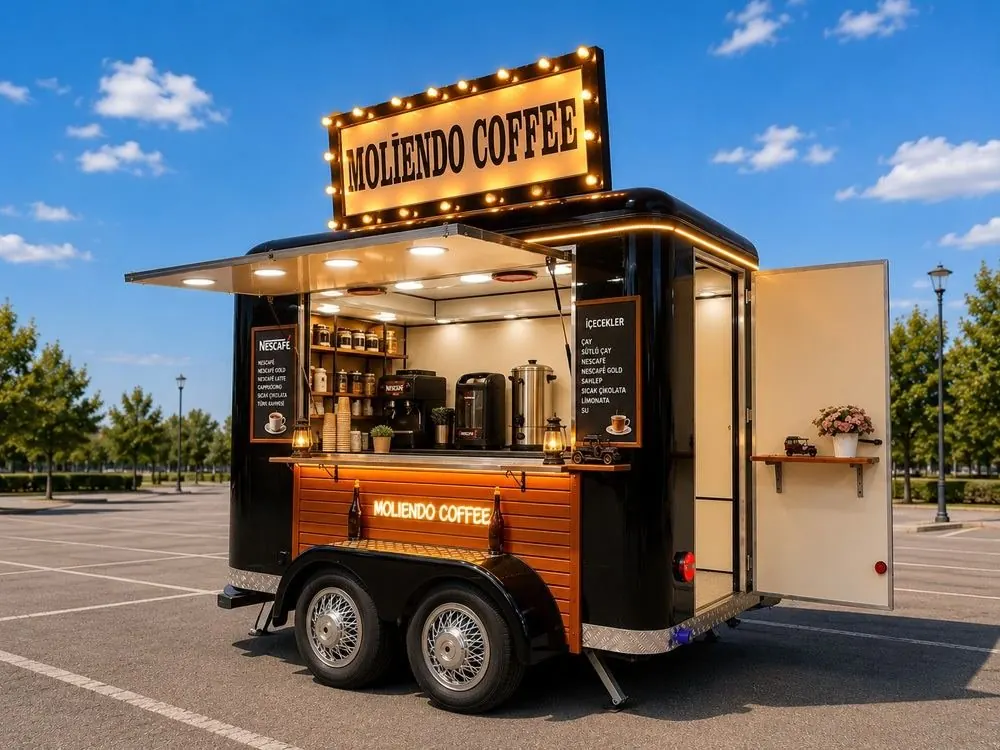
HSE notes that mobile caterers such as burger vans "usually use LPG supplied in cylinders". Its catering sheet says the Gas Safety (Installation and Use) Regulations 1998 cover gas work in mobile catering, and that whoever does the work "must be Gas Safe-registered".
The regulations exclude gas fittings on a self-propelled vehicle, with an exception for a vehicle "made available to members of the public in the course of a business carried on from that vehicle." Our reading: a food truck serving customers falls inside that exception, so this vehicle exclusion does not take it out of the regulations.
What HSE's guidance means for the specification:
- Only a Gas Safe-registered person should install and commission an appliance with a plug-in gas connection. Staff who are not registered can change LPG cylinders, but they must be competent.
- New equipment will have flame supervision devices, which shut off the gas if the flame goes out. Second-hand burners being installed should be fitted with them.
- The installer should interlock any mechanical ventilation with the gas, so that a ventilation failure shuts off the gas supply. Manual bypasses are not permitted.
- For LPG appliances in vehicles, HSE summarises the Road Vehicles (Construction and Use) Regulations 1986: the vehicle must be adequately ventilated, and pilot lights should not be lit while it moves.
As a general rule, HSE treats annual inspection as a reasonable minimum. Our reading: wherever it was built, plan for a Gas Safe engineer in Great Britain to check and commission the installation before you trade. Give that engineer the builder's appliance list and gas layout.
Registering as a food business
The FSA's registration guidance covers businesses trading from "a stall or van". In England, Wales and Northern Ireland you must register at least 28 days before trading. Registration is free and can't be refused. You must also register when you take over an existing business.
Which council? In England, FSA practice guidance says a mobile food business registers where it "is ordinarily kept or returns to between trading", for example the owner's home. The guidance recommends that councils where you trade do not ask you to register again.
The FSA advises against registering too early. Our reading: register once the delivery date is firm, not when you place the order.
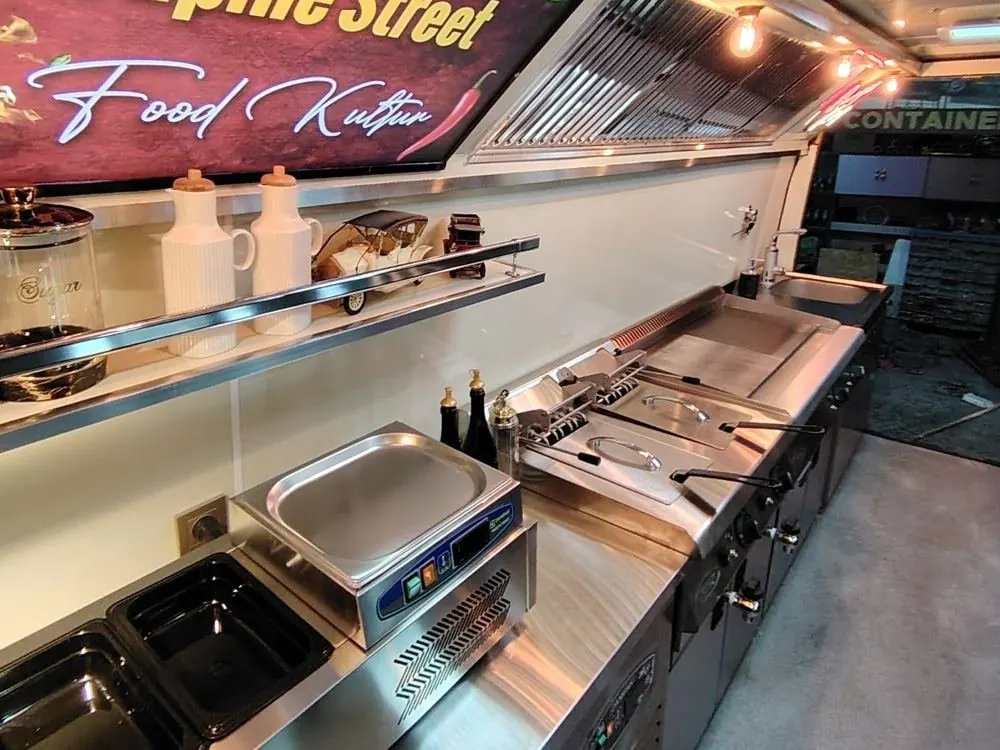
The FSA tells mobile traders to read its premises guidance, and that guidance sets rules the builder has to design in. You need enough washbasins with hot and cold running water. Equipment cleaning needs hot and cold water, and separate sinks for washing food where necessary. Openings to the outside need insect screens that come off for cleaning. Ventilation, lighting and drainage must be adequate. No sink count or tank size is given, so ask your council's food safety team what it expects for your menu.
The food hygiene rating
In England, Wales and Northern Ireland, a registered truck can expect an inspection and a rating from 0 to 5. Mobile food businesses are in the scheme, and as a general rule the council you registered with sets the rating. Higher-risk businesses are inspected first, and a first visit can be several months away.
One of the three things the officer checks is "the physical condition of your business", including "cleanliness, layout, lighting, ventilation, pest control and other facilities". Our reading: part of your first rating is fixed when the kitchen is drawn.
Display rules depend on where you trade. In England you can choose to display the sticker. In Wales and Northern Ireland you are legally required to display it at or near each customer entrance. Scotland runs a separate scheme, the Food Hygiene Information Scheme.
Street trading: licence or consent
You cannot simply pull up and trade. In England and Wales, a council can adopt Schedule 4 of the Local Government (Miscellaneous Provisions) Act 1982 and then mark any street as prohibited, as a licence street or as a consent street. "Street" includes any road, footway, beach or other area the public can reach without paying.
The consent rule matters for a food truck. A consent holder may not trade from a van or other vehicle unless the council adds permission to trade "from a stationary van, cart, barrow or other vehicle". Consents last up to 12 months and can carry conditions against obstruction and nuisance. Several cities, among them Leeds, Manchester and Liverpool, apply Schedule 4 with changes through their own Acts.
GOV.UK says to contact the council where you want to trade and tell it where and when. It can refuse, grant fewer days than you asked for, or keep a waiting list.
Scotland and Northern Ireland differ:
- Scotland. You need a street trader's licence. If you sell food from a vehicle, the licensing authority must refuse the application unless a food authority certifies that the vehicle meets requirements set by Scottish Ministers.
- Northern Ireland. A licence lasts 3 years, and your name and licence number must be shown clearly on the vehicle. Temporary licences of up to 7 days are normally for events and festivals.
Electrical safety
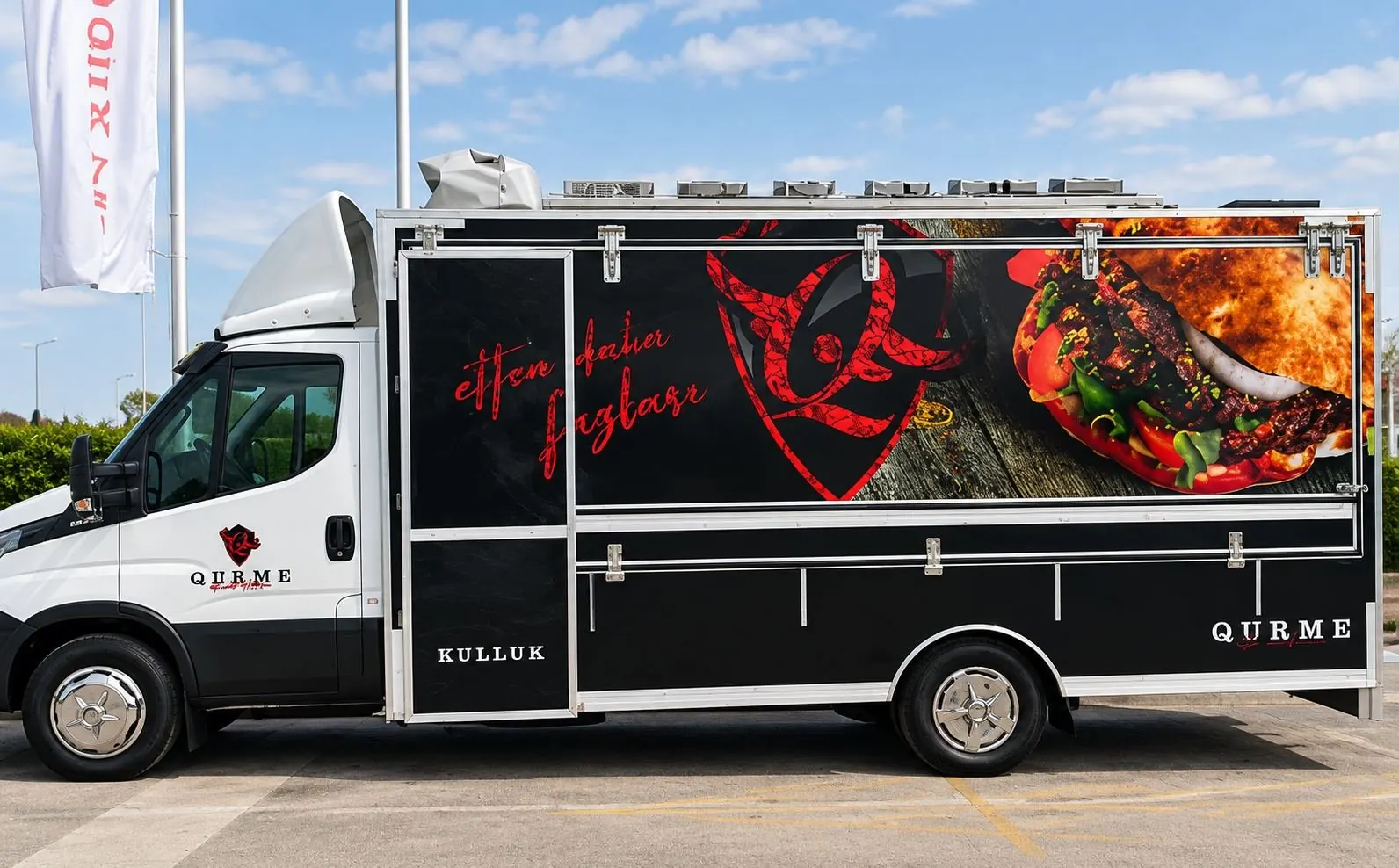
We found no official UK page that sets a wiring standard for food trucks. The general rule is in the Electricity at Work Regulations 1989: systems must be built and maintained to prevent danger, so far as is reasonably practicable. HSE's event guidance lists catering power, generators, earthing and "special power supplies for some equipment, eg non-UK equipment" among the points to plan. Our reading: tell the builder it will trade in the UK, and ask each event what supply it provides.
What to send the builder for a UK quote
Put these in your first message:
- Truck or trailer, and whether it will cook on LPG.
- For a trailer: the driver's licence date, and the towing vehicle's MAM and gross train weight.
- Width up to 2.55 m, and length up to 7 m (A-frame excluded) if the towing vehicle is 3,500 kg or less.
- A target laden weight, so you know whether brakes are needed above 750 kg.
- A stamped VIN, a manufacturer's plate with the masses, an invoice with the collection date, and the documents for normal IVA.
- Flame supervision devices on every burner and a ventilation-to-gas interlock.
- Washbasins with hot and cold running water, sinks for equipment and food, and removable insect screens.
- Your menu, where the truck or trailer will be kept, and where it will trade.
Ozan Food Truck builds food trucks, panel van conversions and towable food trailers in its own factory in Konya, Turkey. For export projects, each build is engineered to the electrical and gas standards of the destination country. We can't grant approval: that comes from DVSA, and trading permission from your council. See our food trucks and trailers page for the types we build.
Frequently asked questions
Do I need a licence to operate a food truck in the UK?
Usually more than one. In England, Wales and Northern Ireland, register your food business with the council at least 28 days before trading. Street trading needs a licence or consent where the council has designated the street, and in Scotland a street trader's licence. A new or imported vehicle needs approval and registration, and gas work needs a Gas Safe-registered engineer.
Can I park my food truck anywhere in the UK?
Not for trading without checking first. In England and Wales, a council can mark streets as prohibited, licence or consent streets. On a consent street you may trade from a vehicle only if the consent says so. Ask the council before you pick a pitch.
How much does it cost to buy a food truck in the UK?
We don't publish a figure, because the price follows the specification. The main drivers are the base (chassis cab, panel van or towed trailer), body size, kitchen equipment, power and water, and branding and delivery. For a UK build, allow for IVA and a Gas Safe check too.
Can I import a food truck into the UK?
Yes. In Great Britain it follows the GOV.UK import route: import declaration, NOVA within 14 days, vehicle approval, then DVLA registration. A trailer that passes IVA gets plating documents.
If you are planning a UK food truck or trailer, send the checklist above through the quote form. We reply with questions first, then drawings and a quote.
Related guides
- Ordering a Food Truck from Turkey: Documents, Shipping and Approvals
- Food Trucks in Dubai and the UAE: Permits and Vehicle Questions for Buyers
- Shipping a Food Trailer Overseas: RoRo, Flat Rack or Container
- Food Trucks in Saudi Arabia: Licensing and Vehicle Questions for Buyers
Sources
- GOV.UK, Vehicle approval (overview, exemptions, individual vehicle approval)
- GOV.UK, Apply for Individual Vehicle Approval (IVA)
- DVSA, Individual Vehicle Approval scheme guide
- GOV.UK, Importing vehicles into the UK
- GOV.UK, Towing with a car
- HSE, Catering Information Sheet 23, Gas safety in catering and hospitality
- The Gas Safety (Installation and Use) Regulations 1998, regulation 2
- Food Standards Agency, Food business registration
- Food Standards Agency, Starting a food business
- Food Standards Agency, Food Law Practice Guidance (England), section A2.5
- Food Standards Agency, Food Hygiene Rating Scheme: guidance for businesses
- Food Standards Agency, Food Hygiene Rating Scheme Brand Standard (Revision 8), Q&A 5
- Local Government (Miscellaneous Provisions) Act 1982, section 3
- Local Government (Miscellaneous Provisions) Act 1982, Schedule 4 (street trading)
- GOV.UK, Street trading licence (England and Wales)
- GOV.UK, Street trading licence (Northern Ireland)
- Civic Government (Scotland) Act 1982, section 39
- The Electricity at Work Regulations 1989, regulation 4
- HSE, Event safety: Electrical safety

By
Ozan Food Truck
This guide is based on the laws, regulations, official guidance and manufacturer documents linked in the text. It is general information, not legal or engineering advice. Rules differ by country, state and city, so confirm the details with your local authority before you build or buy.