
Markets
Food Trucks in Saudi Arabia: Licensing and Vehicle Questions for Buyers
A food truck in Saudi Arabia trades on a municipal mobile cart licence issued through Balady, and it needs Traffic Department approval as well. Before you order one, settle two things: who in the Kingdom will hold that licence, and whether the build meets the Ministry of Municipalities and Housing (MOMAH) rules on size, kitchen, power and safety.
By Ozan Food TruckPublished 10 min read
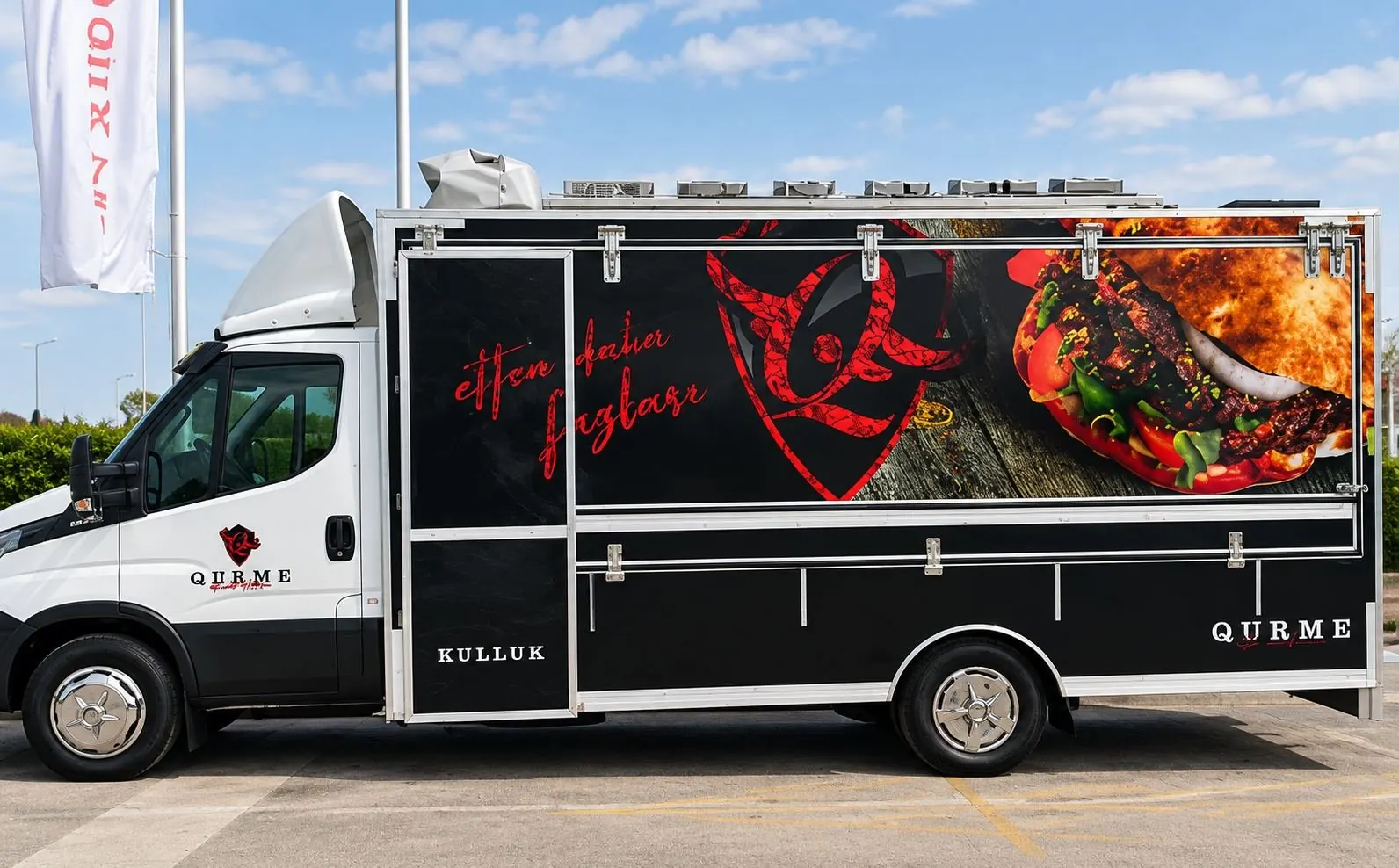
This guide reads the official texts: the Balady service pages, MOMAH's Municipal Requirements for Mobile Carts (1447H / 2025 edition) and two SASO technical regulations. Several are in Arabic. Where we quote them, the English is our own translation. Balady could not be opened directly from here, so its points come from the Internet Archive copies of its official pages dated 12 May 2026. Treat everything below as the national baseline. Your municipality may ask for more.
Checked on 29 September 2026.
Who holds the licence
Balady's Mobile Cart License Issuance service lets an individual start trading without a commercial registration. The applicant requirements it lists begin with nationality:
> "1- سعودي الجنسية. 2- عمره 18 سنة أو أكثر. 3- ليس موظف حكومي."
Our translation: "1. Saudi national. 2. Aged 18 or over. 3. Not a government employee." The applicant must also not already hold a mobile cart, sales outlet or commercial licence.
The same page says an individual can hold only one cart licence per national ID, the licence runs for one Hijri year, and it cannot be transferred to another person.
Businesses are covered too. MOMAH's requirements apply to carts, trailers and semi-trailers for establishments and individuals (our translation of section 1.3), and licensed commercial establishments must get a licence or permit for each cart or trailer.
Our reading: the licence holder is a Saudi national or a licensed establishment, not the overseas builder. If you are a hotel, a brand or an importer, check with your municipality or through Balady what your establishment needs before the order.
Truck or trailer: what Balady asks for
Balady recognises two types, vehicle and trailer. Its FAQ says:
> "السيارة تتطلب صورة استمارة و بيانات لوحة المركبة عكس المقطورة التي لا تتطلب ذلك."
Our translation: "A car requires a copy of the registration form and the vehicle's plate details, unlike a trailer, which does not." Traffic approval is needed either way. Balady says there is an electronic link between its platform and the Traffic Department. Our food truck vs food trailer guide covers the wider trade-offs.
The vehicle rules in the MOMAH requirements
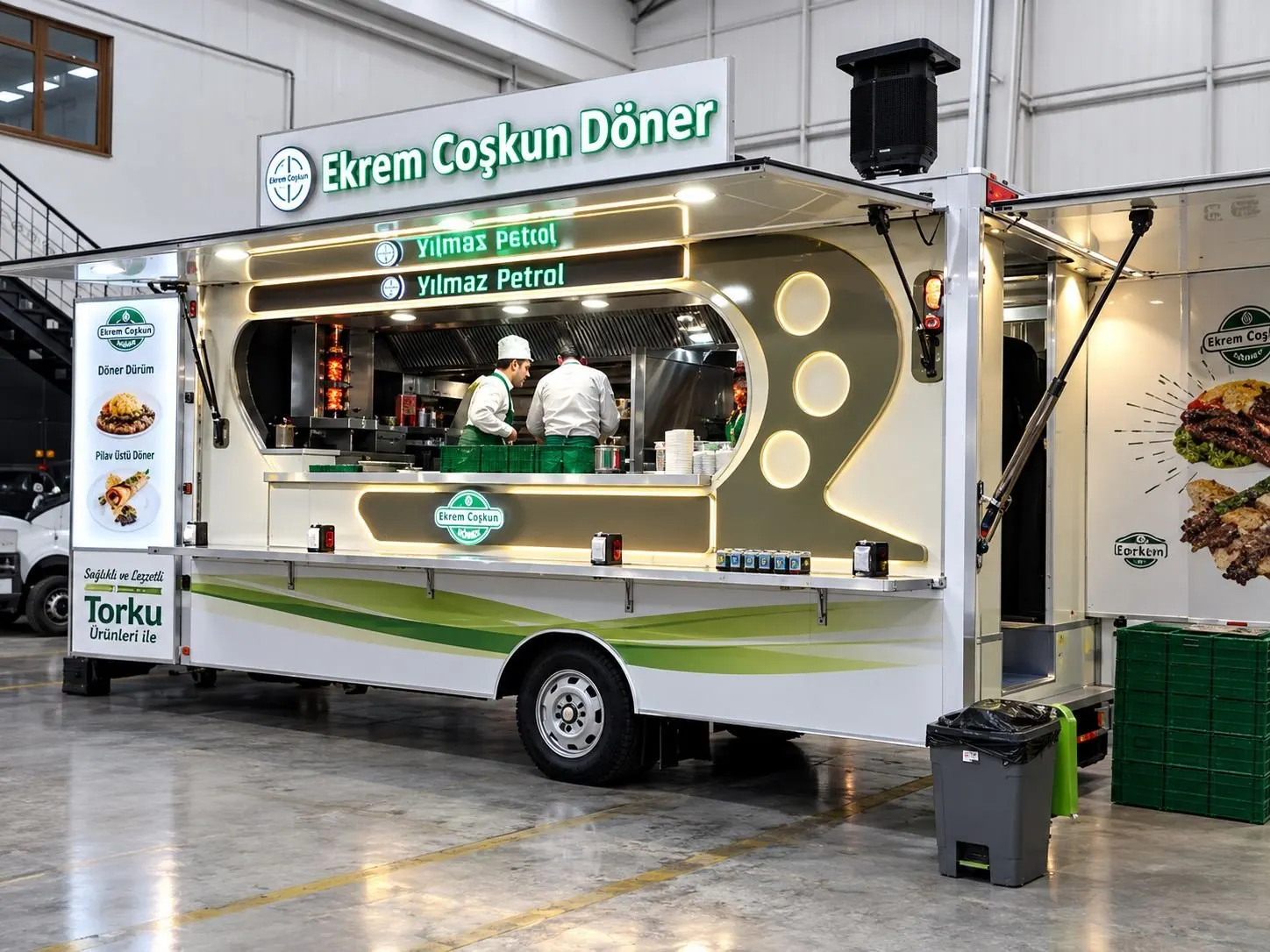
Section 4.3 is the one to hand your builder. It says carts and trailers must be made in factories registered with SASO, to SASO's trailer regulation. Then comes the exception for imports:
> "ويستثنى من ذلك للعربات والمقطورات والنصف مقطورة المستوردة, وهذا لا يعفيها من أن تكون وفق الاشتراطات الموضحة بالجدول أدناه."
Our translation: "Imported carts, trailers and semi-trailers are excepted from this, but that does not exempt them from meeting the requirements in the table below."
The table sets the envelope:
| Dimension | MOMAH limit (our translation) |
|---|---|
| Height | Not more than 4.50 m above the ground, including the sign |
| Width | Not more than 2.60 m |
| Length | Not less than 2.30 m and not more than 10 m |
A truck longer than the table allows needs an operating licence from the Transport General Authority. The cart must also be "designed and fully equipped for the purpose it is licensed for" and technically sound. Our sizes and layout guide explains how the kitchen fits inside limits like these.
Kitchen, ventilation and water
The general technical rules read like a build specification.
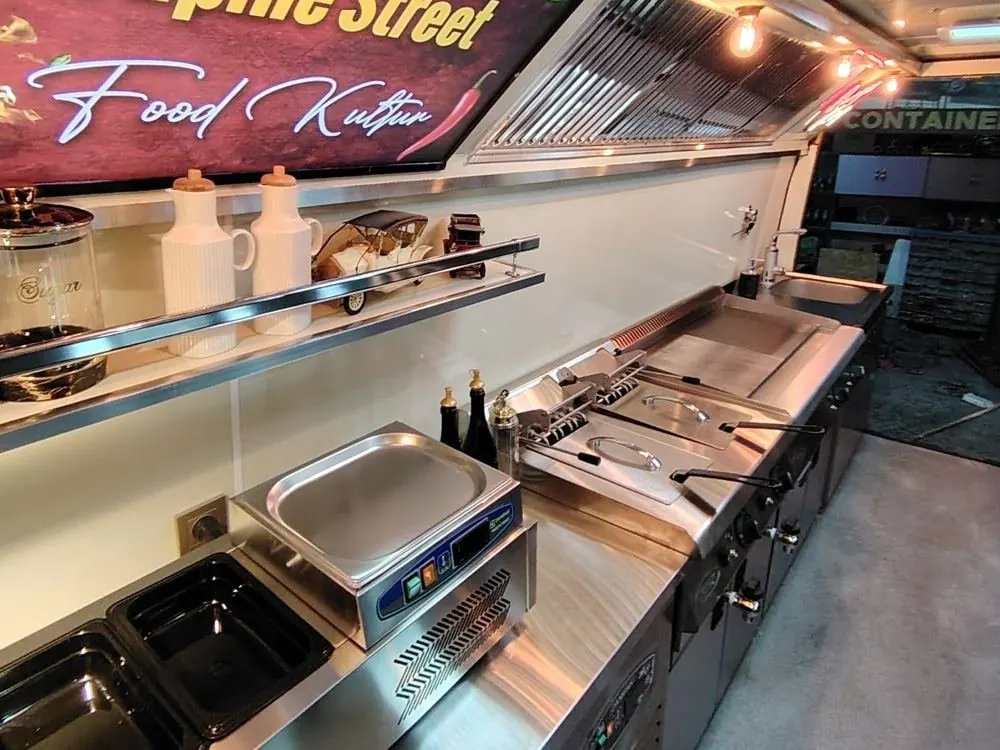
- A wash basin. Any fixed equipment connected to the water supply or to drainage must be linked to a drainage tank.
- A slip-resistant, impermeable, rust-resistant floor, such as stainless steel.
- Internal and external lighting that is part of the vehicle. Gas floodlights are prohibited.
- Vents covered outside with metal mesh against insects and rodents.
- Rust-resistant cabinets fixed to the vehicle. Wooden shelves are not allowed.
- Food contact surfaces that are smooth and non-porous. Stainless steel is the example given.
- Drinking water inside the cart, at suitable pressure and temperature.
The climate rule is the one that shapes the design most:
> "يجب ألا تزيد درجة الحرارة المحيطة عن (25) درجة مئوية مع ضمان عدم تكاثف الابخرة أو الغبار للأنشطة الغذائية."
Our translation: "For food activities, the ambient temperature must not exceed 25 °C, without condensation of vapours or dust." The cart must also be sealed and heat-insulated, doors and windows included, except the serving windows. Air conditioning sized to the working area is allowed.
Our reading: holding 25 °C inside a closed kitchen with a grill running means insulation and air conditioning belong in the first drawing, and in the power budget too.
Storage areas must hold chilled food at 0 to 4 °C, frozen food below −18 °C and ambient stock between 15 and 25 °C. Hot food is held at not less than 60 °C.
Menu rules that change the layout
Some rules depend on what you cook. Preparing meals outside the cart is prohibited. Charcoal or firewood cooking must happen in a separate cart, a trailer. The shawarma rule ends with "ويمنع الأفقي" ("horizontal is prohibited"), which we read as a ban on a horizontal spit. Mayonnaise and sauces cannot be made on board. Factory-made ones from licensed plants are allowed. If you prepare fresh fruit and vegetables on board, they need a dedicated sink.
Labels must be in Arabic, with any other language alongside. A visible board must list the meats used and where they come from. For the full rules on your activity, Balady's own route is its e-inquiry for commercial activities and municipal requirements. Search there by activity name or code.
Power, gas and fire safety
The power rules in section 5.9.2:
- The generator must conform to the approved standards and must not cause noise. It is switched off while refuelling.
- A detached generator stands away from exits, buildings, walkways and the public, inside a fence.
- A generator attached to the vehicle needs an exhaust pipe pointing up, 20 cm above the level of the cart.
- All wiring must be protected and made of conforming materials.
- Street lighting and public utilities may not be used for power. A direct mains connection needs approval from the Saudi Electricity Company or the authority supervising power.
Our generator sizing guide shows how to work out the load from the equipment list.
Section 5.9.1 asks for two 6 kg fire extinguishers. The Arabic says dry chemical powder while the bracket says "Wet Chemical", which is a different type. Confirm the type with your municipality or Civil Defense before the truck is fitted out.
LPG cooking appliances fall under SASO's regulation on gas appliances, apart from those made for industrial facilities. Its 2024 Arabic text says the supplier placing them on the market must obtain the Saudi Quality Mark. Instructions and warnings must be in Arabic, or in Arabic and English. Our reading: ask the builder which of its gas appliances already carry the mark, and budget time for any that do not.
If you order a trailer
SASO's Technical Regulation for Trailers and Semi-Trailers applies to every trailer, "locally manufactured or imported". We read SASO's English translation (Version 1, Amendment 1). The Arabic text is the legal one. For a food trailer, these requirements matter most:
- Brakes on a trailer with a load over 750 kg, and a device that stops it if it separates from the towing vehicle.
- With a light vehicle (3,500 kg or less), the car and trailer together may not exceed 3,500 kg.
- Marker lights on trailers more than 1.2 m wide, side reflectors, and rear and side protection barriers.
- A stamped chassis number, in English with letters at least 7 mm high, and a conformity data plate on the front of the chassis. The plate shows the manufacturer, country, model, axle and gross weights, and width, length and height.
- A certificate of conformity from a SASO-approved body under SASO's Type 3 model, with a technical file: supplier declaration, risk assessment, design documents and country of origin.
That Type 3 model is type approval based on quality assurance of the production process, and its annex includes "an assessment visit to the factory". Our reading: a trailer built abroad needs the builder's documents and cooperation for this step. Raise it before you place the order, not at the port.
We could not read how customs clearance and first registration work for an imported food truck on an official Saudi page, so we leave that to the authorities. Our guide to buying a food trailer from overseas covers the general import checks. Confirm the Saudi steps with the authorities, starting with SASO and the Traffic Department.
What to send the builder for a Saudi quote
Put these in your first message:
- Truck or trailer, and who will hold the licence: a Saudi national or your establishment.
- Target dimensions inside 4.50 m high, 2.60 m wide and 2.30 to 10 m long.
- For a trailer: the towing vehicle and its weight, the target laden weight, brakes above 750 kg, and the SASO certificate and plate documents.
- Your menu, especially charcoal, shawarma or on-board produce washing.
- Insulation and air conditioning sized to hold 25 °C inside.
- Wash basin, sinks, drinking-water supply and a drainage tank.
- Stainless food contact surfaces, fixed rust-resistant cabinets and no wooden shelving.
- Mesh-covered vents, built-in lighting, and no gas floodlights.
- Generator position and exhaust, or a planned mains connection.
- Gas appliances with the Saudi Quality Mark and Arabic instructions.
- Space for two 6 kg fire extinguishers and a first aid box, a side sticker with the QR code, and a top sign if you want one (side boards are not allowed).
Ozan Food Truck builds food trucks, panel van conversions and towable food trailers in its own factory in Konya, Turkey. For export projects, each build is engineered to the electrical and gas standards of the destination country. We don't issue licences or approvals. Those come from your municipality through Balady, the Traffic Department and SASO-approved bodies. See our food trucks and trailers page for the types we build.
Frequently asked questions
What are the requirements to open a food truck in Saudi Arabia?
You need a municipal mobile cart licence through Balady and a site permit before trading. Traffic Department approval is required, plus approval from any authority that supervises your activity. An individual applicant must be a Saudi national aged 18 or over. Licensed establishments get a licence for each vehicle. Food workers need health certificates.
How much does a truck cost in Saudi Arabia?
We don't publish a figure, because the price follows the specification. The main drivers are the base (chassis cab, panel van or towed trailer), body size, kitchen equipment, power and water, and branding and delivery. For Saudi Arabia, insulation and air conditioning for the 25 °C rule and the SASO paperwork add to the scope.
Can I import a food truck or trailer into Saudi Arabia?
Yes. MOMAH's requirements name imported carts and trailers, which are exempt from the SASO-registered factory rule but must still meet its dimension table. SASO's trailer regulation applies to imported trailers and asks for a certificate of conformity. Ask SASO and the Traffic Department about the import steps.
Where can food trucks park in Saudi Arabia?
On sites your municipality allows: municipal, government or private sites, public spaces, events, investment sites and municipal incubators. The rules exclude traffic lights, residential neighbourhoods and spots within 10 m of fuel stations or gas shops. Commercial car parks need the owner's and the municipality's approval.
If you are planning a food truck or trailer for Saudi Arabia, send the checklist above through the quote form. We reply with questions first, then drawings and a quote.
Related guides
- Buying a Food Truck or Trailer for the UK: Registration, Gas and Council Rules
- Ordering a Food Truck from Turkey: Documents, Shipping and Approvals
- Food Trucks in Dubai and the UAE: Permits and Vehicle Questions for Buyers
- Shipping a Food Trailer Overseas: RoRo, Flat Rack or Container
Sources
- Balady, Mobile Cart License Issuance (Arabic service page, archived 12 May 2026)
- Balady, Mobile Cart License Issuance (English service page, archived 12 May 2026)
- Balady, Requirements and government approvals (archived 12 May 2026)
- Ministry of Municipalities and Housing, Municipal Requirements for Mobile Carts (الاشتراطات البلدية للعربات المتنقلة), 1447H / 2025, listed at
- SASO, Technical Regulation for Trailers and Semi-Trailers (English translation, Version 1, Amendment 1)
- SASO, Technical Regulation for Gas Appliances and their Accessories (Arabic, Version 1, Amendment 3)

By
Ozan Food Truck
This guide is based on the laws, regulations, official guidance and manufacturer documents linked in the text. It is general information, not legal or engineering advice. Rules differ by country, state and city, so confirm the details with your local authority before you build or buy.