
Markets
Ordering a Food Truck from Turkey: Documents, Shipping and Approvals
When you order a food truck or food trailer from Turkey, two sets of paperwork are involved. The builder files the Turkish export declaration and any movement or origin certificate. Your own country then decides whether the vehicle can be registered and used, and that approval is the part to settle before the build starts.
By Ozan Food TruckPublished 10 min read
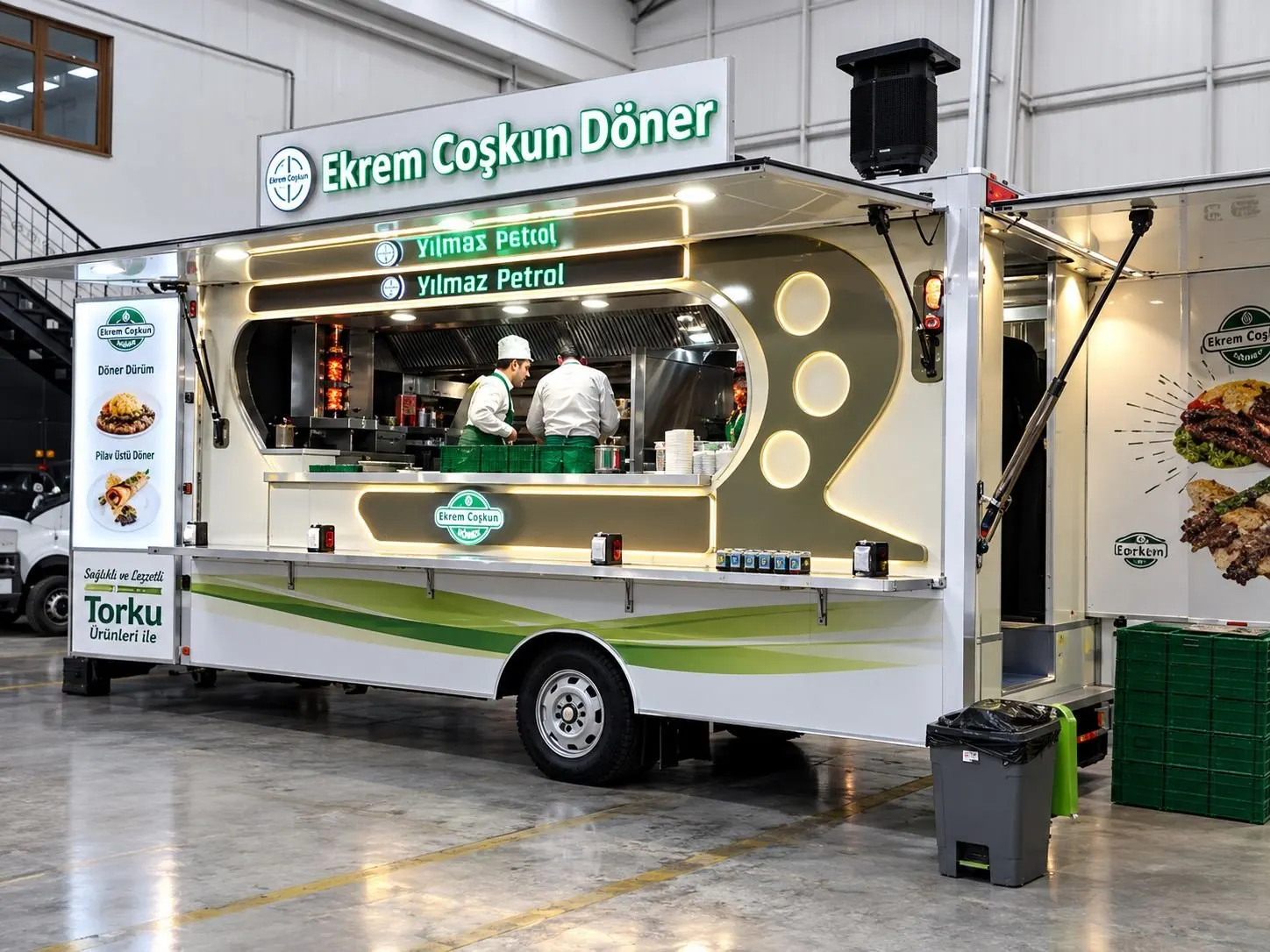
This guide covers the Turkish side from the Ministry of Trade (Ticaret Bakanlığı), the Turkish Exporters Assembly (TİM) and Turkish law, the sale terms from the ICC, and gives a short summary of the arrival checks in the US, the UK and the EU. Treat every document list here as the national baseline. Your authority may ask for more.
Checked on 29 September 2026.
What to settle before you order
Agree these in writing:
- The destination country, and whether the vehicle is a motorised truck or a towed trailer. The approval route at your end depends on both.
- The sale term. One Incoterms rule, with a named place, decides who pays for transport, who insures it and at which point the risk passes to you.
- Who clears customs at each end. The builder deals with Turkish export customs. You, or a broker you appoint, deal with import.
- Which certificate travels with the vehicle. It can be an A.TR, an EUR.1, an origin declaration on the invoice or a certificate of origin, depending on where it is going.
The Turkish export side
The builder must be a registered exporter
Under Turkish law, exporters have to be members of the relevant exporters' association. Law 5910, article 4, makes membership and the set payments compulsory. TİM describes the full path: a firm becomes an exporter once it is registered with the tax office, the trade registry, the chamber of commerce and an exporters' association.
Our reading: you can ask the builder for proof. TİM says a member can request a membership document from its association by giving its tax or registry number.
The export declaration
Goods leaving Turkey are declared to the competent customs office on an export customs declaration. The ministry's customs FAQ says firms can lodge declarations themselves or through a customs broker (gümrük müşaviri). Using a broker is not compulsory. Licensed brokers hold a permit issued by the ministry.
The declaration also records the sale term. Box 20 of the Turkish customs declaration takes the Incoterms code and the place of delivery. So the term in your contract should match what the builder writes on the declaration.
One rule matters once the declaration is registered. Goods count as exported only if they leave Turkish customs territory in the same state and condition they were in when the declaration was registered. The carrier then gives customs a summary declaration at exit.
Our reading: anything packed inside the trailer, such as spare parts or loose equipment, should be on the invoice and the declaration before it is registered. CBP applies a similar rule at the US end: the entire contents of an imported car must be declared.
A.TR, EUR.1 or a certificate of origin
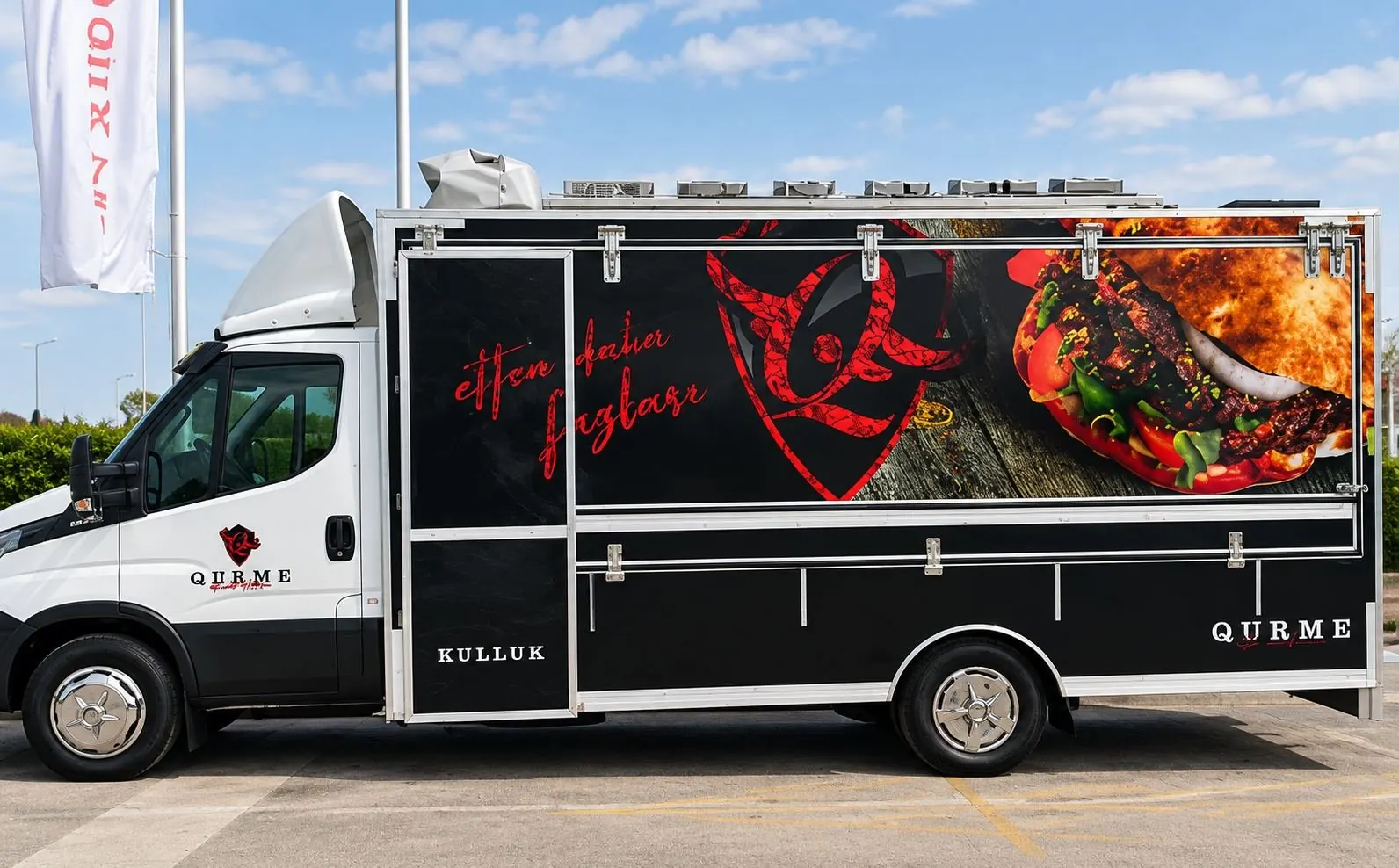
This is the most Turkey-specific part of the order. The document depends on your country, and it affects the duty you pay on arrival.
| Destination | Document | What it proves | Who checks it |
|---|---|---|---|
| EU member states | A.TR movement certificate | The goods are in free circulation under the EU-Turkey Customs Union. It does not show origin. | Filled in by the exporter online, approved by the exporters' association, endorsed by customs |
| United Kingdom | Origin declaration on the invoice or another commercial document | Preferential origin under the UK-Turkey free trade agreement | Made by the exporter. No authority approval |
| Other countries with a Turkish free trade agreement | EUR.1 or EUR-MED, or another proof the agreement sets | Origin under the agreement's rules | Filled in by the exporter, checked by a chamber of commerce or exporters' association, endorsed by customs |
| United States and other countries without an agreement | Certificate of origin, only if the importing country asks for it | Non-preferential origin. It gives no reduced tariff | Approved by the exporters' association |
A few details behind the table:
- The A.TR is issued under the Customs Union rules (Decision 2006/10895). It covers industrial products in free circulation, including goods partly made from third-country materials whose import formalities were completed in Turkey or the EU. It does not apply where the duties were fully or partly refunded.
- The UK is no longer on the A.TR route. The Ministry of Trade's Brexit FAQ says A.TR use ended on 31 December 2020. GOV.UK confirms that UK importers now declare a statement of origin "instead of an EUR1 or an ATR". Goods that do not meet the agreement's rules of origin can still be imported, but may pay the standard tariff.
- The ministry's list of free trade agreements in force includes the UK, EFTA, the UAE, Qatar, Georgia and South Korea, among others. The United States is not on it.
- A certificate of origin is not compulsory for export. The ministry says it is issued when the importing country asks for one for that product.
Our reading: a food truck or trailer may use imported parts, such as the chassis, axles or appliances. An A.TR works on free-circulation status, so parts that were cleared through Turkish customs can still travel under it, unless a duty refund applied. An EUR.1 or a UK origin declaration is different: the finished vehicle has to meet the agreement's origin rules. Ask the builder which document it can issue for your build, and ask your import broker whether you need it.
Incoterms: who ships, insures and clears
Incoterms are the ICC's eleven three-letter trade terms. They set out "the tasks, costs and risks involved in the delivery of goods from sellers to buyers." The current edition, Incoterms 2020, came into force on 1 January 2020.
The ICC's own pages give four useful points for a food truck order:
- Every rule has an article on export and import clearance (A7), and every cost under the rule is listed together in article A9/B9. Read those two before you sign.
- CIF is reserved for sea transport, with Institute Cargo Clauses (C) as the default insurance. CIP requires the higher Clauses (A) cover.
- Under DAP the seller does not unload the goods. Under DPU it does.
- The rules "do not affect tariff rates or customs procedures". They only decide who handles them.
Shipping itself can go by road or by sea. Ask the carrier before loading whether gas cylinders can travel with the vehicle, and don't assume they can.
What your country checks on arrival
The approval rules at your end are set by your own authorities, and they do not change because the builder is in Turkey. Our guide to buying a food trailer from overseas covers them step by step. In short:
- United States. A trailer counts as a motor vehicle in federal law. It needs the manufacturer's permanent FMVSS certification label, and the importer files DOT form HS-7 when it is offered for import. CBP asks for the bill of lading and the bill of sale, and a customs broker can make the entry for you. CBP's car import page also lists EPA form 3520-1 on emissions, so ask your broker if it applies. A foreign manufacturer cannot import vehicles until it has appointed a US agent (49 CFR 551.46). CBP's page warns: "Be skeptical of claims by a foreign dealer or other seller that a vehicle meets these standards." Registration is a matter for your state DMV.
- United Kingdom. You need a GB EORI number, and a shipping company or customs agent makes the import declaration. HMRC must hear within 14 days through NOVA. Then comes vehicle approval (IVA also covers trailers) and, for a truck, DVLA registration. HSE says gas work in mobile catering must be done by a Gas Safe-registered business.
- European Union. Imports need an EORI number. Under Regulation (EU) 2018/858, a type-approved vehicle comes with a certificate of conformity. Otherwise the route is EU or national individual approval, based on information the applicant supplies.
Our reading: the origin paperwork above affects duty, not approval. An A.TR does not replace an IVA inspection or an FMVSS label. Plan both.
How Ozan Food Truck handles export orders
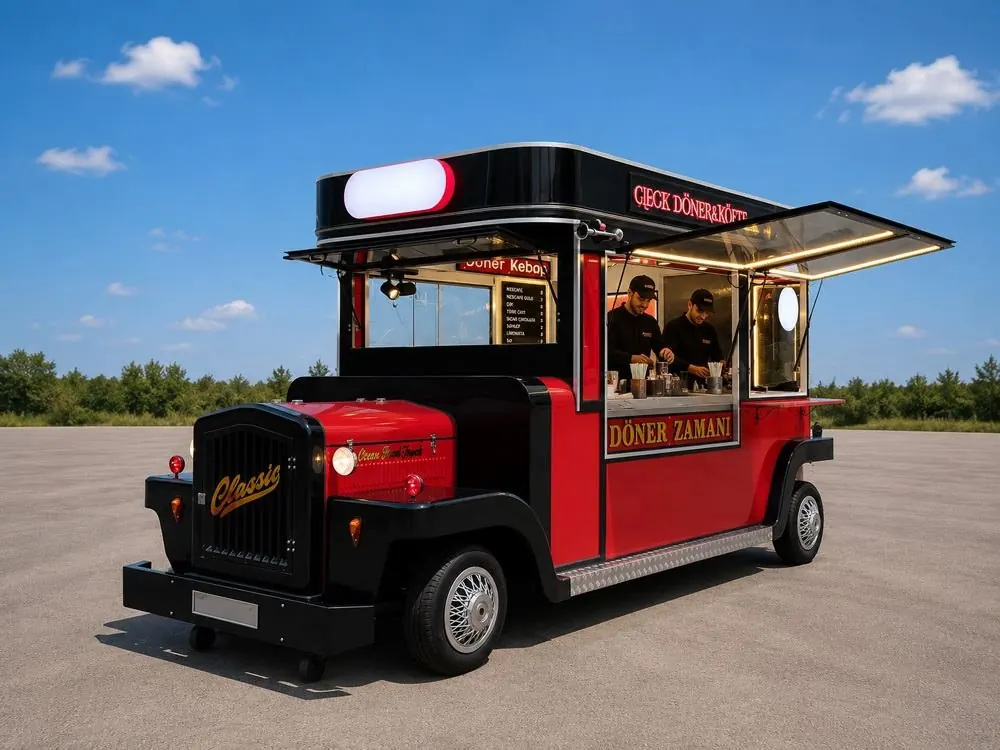
Ozan Food Truck was founded in Konya, Turkey in 1995 and builds custom food trucks and food trailers. Besides projects across Turkey, the company exports food trucks and food trailers worldwide. For export projects, each build is engineered to the electrical and gas standards of the destination country, and shipping is planned by road or sea.
Bodywork and chassis work, insulation, stainless steel fabrication, electrical and gas installation and kitchen equipment fitting are all done in the company's own factory. For international projects, the destination's technical and legal requirements are assessed at the design stage. The layout, exterior design and equipment list go to you for approval before manufacturing starts, and progress is shared with you during the build. Restaurant chains and franchise brands can order series builds to the same approved design. You can read more about the company and see the food trucks and trailers we build.
We cannot approve a vehicle for your roads. Only your authority can. Still comparing builders? See our guide to choosing a food truck builder.
What to send for a quote
Put these in your first message:
- The delivery country and city, and whether you want a truck or a trailer.
- Quantity, and whether later orders should match the first build.
- Your menu and equipment list, with any drawings or reference photos.
- The Incoterms rule and place you prefer, or ask for the options.
- Who will act as importer and customs broker at your end.
- The documents your approval authority wants from the builder, for example a certification label and VIN (US), technical documents for IVA (UK) or evidence for individual approval (EU).
- The certificate your broker expects: A.TR, EUR.1, origin declaration or certificate of origin.
- Whether gas cylinders, spare parts or loose equipment will ship with the vehicle.
Frequently asked questions
How much does a food truck from Turkey cost?
Each build is quoted individually. The factors are project type, size and quantity, equipment including power and water systems, branding, and the destination country. Duty at your end depends on your country's tariff and on the origin paperwork, which is why the certificate question matters.
Can I buy a food truck from Turkey for use in the US?
It can be, if it meets US federal vehicle rules and your state will register it. The builder must certify the vehicle with a permanent FMVSS label and appoint a US agent, and you file the HS-7 on import. The US is not on Turkey's list of free trade agreements in force. Our reading: a US order has no EUR.1 or A.TR route, and a certificate of origin is issued only if it is asked for.
Do I need an A.TR or an EUR.1?
For the EU, the A.TR is the Customs Union document, and it proves free circulation, not origin. For the UK, the exporter's origin declaration on the invoice replaced it from 31 December 2020. For other agreement countries, the agreement sets the proof. Check with your import broker before the trailer ships.
Who handles customs in Turkey?
The builder, as the exporter, lodges the export declaration itself or through a licensed customs broker. Certificates are approved by its association or a chamber and endorsed by customs where required. Import clearance at your end is yours or your broker's.
To start an export order, send the destination and the build details through the quote form. The destination's requirements are then considered at the design stage. See our food trucks and trailers for the range.
Related guides
- Buying a Food Truck or Trailer for the UK: Registration, Gas and Council Rules
- Food Trucks in Dubai and the UAE: Permits and Vehicle Questions for Buyers
- Shipping a Food Trailer Overseas: RoRo, Flat Rack or Container
- Food Trucks in Saudi Arabia: Licensing and Vehicle Questions for Buyers
Sources
- Law No. 5910 on the Turkish Exporters Assembly and Exporters' Associations (mevzuat.gov.tr)
- TİM, Sıkça Sorulan Sorular (exporter registration, membership, documents)
- TİM, Dolaşım ve Menşe İspat Belgeleri (A.TR, EUR.1, certificate of origin)
- T.C. Ticaret Bakanlığı, customs FAQ: İhracat
- T.C. Ticaret Bakanlığı, customs FAQ: Menşe
- T.C. Ticaret Bakanlığı, customs FAQ: Gümrük Müşavirleri
- T.C. Ticaret Bakanlığı, Teslim Şekline İlişkin Kodlar (customs declaration box 20)
- T.C. Ticaret Bakanlığı, Yürürlükte Bulunan STA'lar
- T.C. Ticaret Bakanlığı, BREXIT ve Birleşik Krallık STA, and Brexit SSS
- GOV.UK, Trade with Turkey
- ICC, Incoterms rules
- ICC, Incoterms 2020
- ICC, Using the Incoterms 2020 rules to manage tariff risk
- 49 CFR Parts 551, 567, 571 and 591 (US agent, certification, trailer definition, HS-7)
- U.S. Customs and Border Protection, Importing a Motor Vehicle
- GOV.UK, Importing vehicles into the UK
- GOV.UK, Vehicle approval
- HSE, Catering Information Sheet 23, Gas safety in catering and hospitality
- European Commission, EORI number
- Regulation (EU) 2018/858

By
Ozan Food Truck
This guide is based on the laws, regulations, official guidance and manufacturer documents linked in the text. It is general information, not legal or engineering advice. Rules differ by country, state and city, so confirm the details with your local authority before you build or buy.