
Markets
Importing a Food Van or Trailer into Australia: Approval and Compliance
To bring a food trailer into Australia, you need an import approval from the Department of Infrastructure before it ships, and the trailer must be on the Register of Approved Vehicles (RAV) before it is first supplied or, almost always, registered. For up to four trailers of 4.5 tonnes ATM or less a year, the department offers a concessional RAV entry approval, which also counts as the import approval. A motorised food van needs approval too, and must meet the Australian Design Rules or fit a concessional category, so settle the pathway with the department before you order.
By Ozan Food TruckPublished 10 min read
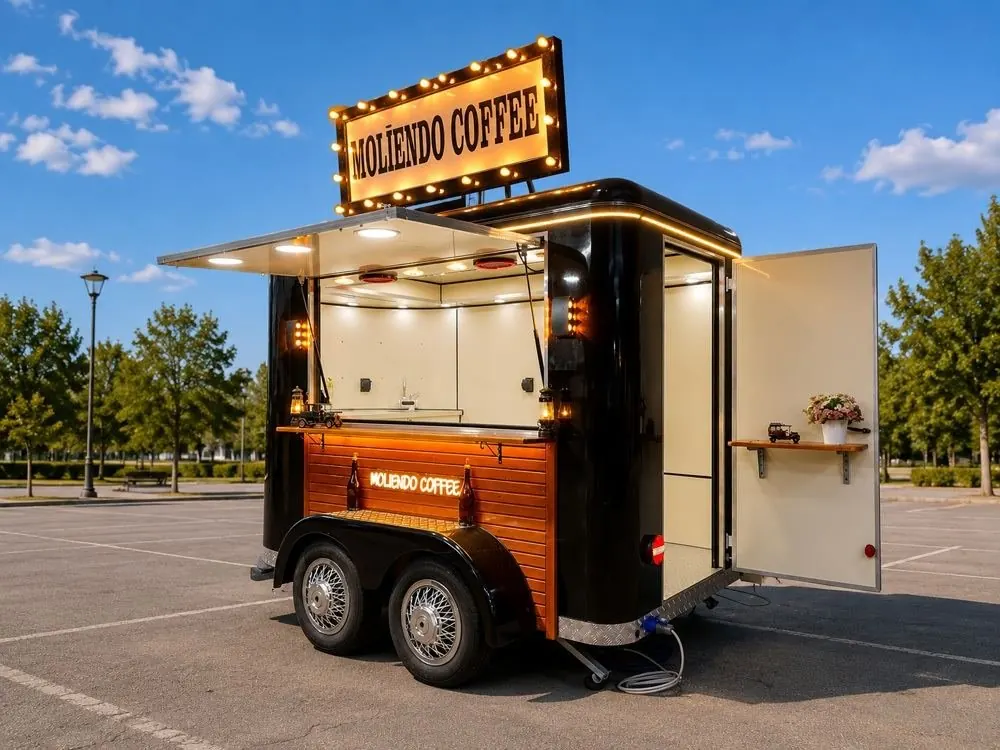
This guide uses the Road Vehicle Standards Act 2018, the department's pages and bulletins, the Australian Border Force, Food Standards Australia New Zealand and, as one state example, the NSW Food Authority. Treat every list here as the national baseline. Registration belongs to each state and territory and food approval to your council, so rules vary and your authority may ask for more.
Checked on 29 September 2026.
Trailer or van: decide this first
In the Act, a road vehicle includes "a trailer or other vehicle" designed to be towed on a public road, so a food trailer needs approval just as a truck does. Our food truck vs food trailer guide compares the two formats.
For motor vehicles, the ABF says it is an offence to import, sell or present imported road motor vehicles to the Australian market for the first time "unless they meet the Australian Design Rules". The concessional routes for motor vehicles cover set categories, such as older vehicles, special purpose vehicles and vehicles to be modified by a registered automotive workshop.
Our reading: a trailer is the simpler import. If you want a motorised food van, ask the department which pathway applies to that exact vehicle before you pay a deposit.
The approval comes before the ship
Section 22 of the Act makes it an offence to import a road vehicle without being permitted to. For a buyer, that means an import approval applied for through ROVER, the department's online portal.
The ABF says not to arrange transport until the approval is issued. A trailer that arrives without one stays under customs control. Storage costs are yours. You may even have to export or destroy it. The department says a decision can take up to 60 business days.
Low ATM trailers (4.5 tonnes or less)
There are two routes:
| Route | Numbers | Who it suits |
|---|---|---|
| Concessional RAV entry approval | Up to 4 trailers in a 12-month period | Individually built trailers, including ones that have never had a VIN |
| Vehicle type approval | Unlimited, for one trailer type | A supplier with control of design and production, whose factory can be inspected |
A concessional RAV entry approval "is also taken to be an import approval for that vehicle." Any person or company can apply, or an agent with a signed authority to act. The application declares that the trailer complies, or will comply, with the national standards when it is entered on the RAV. Without full compliance, you must add supporting information, such as a letter from your state or territory transport authority.
Trailers over 4.5 tonnes ATM use the same two routes, and ROVER also asks for a braking calculation report.
Our reading: if you are importing one food trailer, you or your agent will usually apply for the concessional approval, and the builder supplies the evidence of compliance. The department decides eligibility.
What the Australian Design Rules mean for the build

For trailers of 4.5 tonnes ATM or less, the department publishes Vehicle Standards Bulletin 1 (VSB1), a plain guide to the Australian Design Rules. Where the two differ, the ADRs win. One line is aimed at importers: "most trailers not built specifically for the Australian market will not be compliant without modification (e.g. to lights and couplings)." For trailers built to your specification, VSB1 says to build to the bulletin.
VSB1 files mobile kitchens under caravans. That brings in caravan rules:
- Doors must open outwards or slide, and at least one must be on the left-hand side or the rear.
- At least one fire extinguisher, rated 1A:5B or higher for a single compartment. A fire blanket is recommended where cooking appliances are installed.
- Unless otherwise approved, LPG installations must meet the Code Governing the Installation in Caravans of LPG Equipment and Appliances. VSB1 also points to AS/NZS 5601.1:2013 and to state and territory authorities.
Points to check on the drawings:
- Width. The maximum is 2,500 mm, and overall width includes mudguards and awnings. Ask the builder how the serving awning is counted when closed, and confirm with the department.
- Height. The maximum is 4,300 mm.
- Number plate. The rear needs a mount for a 372 x 136 mm plate, no higher than 1,300 mm from the ground, with a plate light.
- Plugs. Trailers up to 3,500 kg ATM use 7 or 12-pin plugs to AS 4177.5-2004.
- Mains power. An installation meant to connect to an AC supply other than the tow vehicle's must comply with AS/NZS 3001:2008.
Lamps, couplings, brakes, tyres, safety chains and drawbars can carry component type approvals, which VSB1 accepts as evidence of compliance if the parts are fitted to the maker's instructions.
ATM, GTM, brakes and the vehicle plate
ATM (aggregate trailer mass) is the total mass of the trailer carrying the maximum load the manufacturer recommends, including the weight on the towbar. GTM (gross trailer mass) is the part carried by the trailer's own tyres. Both are manufacturer ratings set by engineering calculation, not weighbridge readings.
Brakes depend on GTM:
| GTM | What VSB1 requires |
|---|---|
| 750 kg or less | No brakes required |
| Over 750 kg | An efficient service brake system; over-run brakes allowed up to 2,000 kg, and brakes on one axle allowed up to 2,000 kg |
| Over 2,000 kg | Brakes on all wheels, plus breakaway brakes that stay on for at least 15 minutes |
Tare mass is taken with the trailer ready for service, all standard equipment and options fitted. ATM minus tare is the most the trailer can carry.
Every trailer needs a vehicle plate. It must be durable, permanently attached (for example welded or riveted), and show the make, VIN, ATM, GTM and tare mass in English, with characters at least 2.5 mm high. Those details must match the RAV. VSB1 says an offence occurs if an actual specification, such as tare mass, does not.
The VIN must have 17 characters. If an overseas trailer builder cannot provide one, the department issues a VIN starting "6ZZ" under a concessional approval, to be permanently marked on the trailer as your state's registration authority requires. Some states want the VIN stamped on the drawbar, and VSB1 recommends a second VIN besides the plate.
Customs, biosecurity, gas and asbestos
Once transport has started, you lodge an Import Declaration with the ABF. The trailer is released only after you show a valid import approval and pay customs duty, GST and any other charges that apply.
Three things can hold a food trailer at the border:
- Dirt. The vehicle must be clean inside and out before it arrives, and the department says to steam clean it before shipping. Biosecurity officers inspect it on arrival, at your cost.
- Refrigerant gas. Vehicles with air conditioning or refrigeration may need an import licence for ozone depleting substances and synthetic greenhouse gases. You must know the type and quantity of gas before importing.
- Asbestos. Importing it is prohibited. The department names gaskets, brake pads, seals and clutch linings as high-risk parts. The ABF says a declaration on its own, even from the manufacturer, is not evidence. Our reading: ask the builder for component-level evidence, not just a signed statement.
Our guides to buying a food trailer from overseas and shipping a food trailer cover the freight side.
Registration and the food rules

Entry on the RAV makes a trailer available for registration, but the ABF says an import approval "is not a guarantee" that it meets state or territory registration and insurance requirements. Ask the registration authority in your state what it will inspect.
FSANZ says mobile food businesses, including food vans, trucks and trailers, must meet the same food safety requirements as any other food business. Before you start, you must notify the council where the vehicle is garaged, and possibly the other councils you work in. Standard 3.2.3 and the FSANZ guidance put these into the build:
- A permanent hand basin used only for hand washing, with warm running water.
- Sinks and dishwashers plumbed in to an adequate supply of potable water.
- Fridges that hold 5°C or colder, and hot-holding equipment for 60°C or above.
- Ventilation that removes fumes, smoke, steam and vapours.
- Surfaces that can be cleaned easily, and a way to store and dispose of waste water.
One state example: NSW
The NSW Food Authority's guideline (December 2023) goes further. Councils generally approve mobile food vending vehicles, and the consent of every council where you store, prepare or sell food may be required. The guideline asks for a wastewater tank of at least 50 litres and hot and cold water through a single outlet to the hand basin. It adds a separate sink for reusable dinnerware, a 300 mm splashback, and a fire extinguisher and blanket where you cook. Gas should be installed by a licensed gasfitter, with a compliance plate on the vehicle. Electrical work should be done by a licensed electrician.
Other states and councils set their own details. NSW advises approaching the council before building. Our reading: do that with the drawings, and plan for a licensed gasfitter and electrician in your state to check the installation after delivery.
What to send the builder for an Australian quote
- Trailer or motorised van, the state you will register in, and the councils you plan to trade in.
- Target ATM, GTM and fitted tare mass, and the brakes that follow from the GTM.
- Overall width within 2,500 mm including awnings, and height within 4,300 mm.
- A permanently attached vehicle plate, a 17-character VIN and a second VIN on the drawbar.
- Doors that open outwards or slide, with one on the left-hand side or rear.
- AS 4177.5 plugs, AS/NZS 3001 mains wiring, and your LPG plan.
- Hand basin, sinks, tank sizes and fridge gas types.
- Component type approval certificates and asbestos evidence for each part.
Ozan Food Truck, founded in Konya, Turkey in 1995, builds food trucks, panel van conversions and towable food trailers in its own factory. For international projects, the destination country's technical and legal requirements are assessed at the design stage. We can't grant approval: that comes from the department, registration from your state and food approval from your council. See our food trucks and trailers page for the types we build.
Frequently asked questions
Can I import a food trailer into Australia?
Yes, with an import approval through ROVER before it ships. For up to four trailers of 4.5 tonnes ATM or less a year, a concessional RAV entry approval also serves as the import approval.
Do food trailers need brakes in Australia?
Above 750 kg GTM, yes. Over 2,000 kg GTM, brakes must work on all wheels and breakaway brakes are needed.
Does a food trailer need to be registered?
Yes, to use it on a public road. You apply in your state or territory. RAV entry is almost always a prerequisite, and each state sets its own requirements.
How much does a food trailer cost in Australia?
We don't publish a figure. The price follows the specification: size, kitchen equipment, power, gas, water and freight. The ABF also lists import costs such as steam cleaning, inspection, duty and GST.
If you are planning a food trailer for Australia, send the checklist above through the quote form. We reply with questions first, then drawings and a quote.
Related guides
- Buying a Food Truck or Trailer for the UK: Registration, Gas and Council Rules
- Ordering a Food Truck from Turkey: Documents, Shipping and Approvals
- Food Trucks in Dubai and the UAE: Permits and Vehicle Questions for Buyers
- Food Trucks in Saudi Arabia: Licensing and Vehicle Questions for Buyers
Sources
- Road Vehicle Standards Act 2018, sections 6, 22 and 24
- Department of Infrastructure, Importing a road vehicle into Australia
- Department of Infrastructure, 8 steps to importing a vehicle
- Department of Infrastructure, Road Vehicle Standards laws (RAV)
- Department of Infrastructure, Low ATM trailers
- Department of Infrastructure, High ATM trailers
- Department of Infrastructure, Concessional RAV entry approvals
- Department of Infrastructure, Vehicle Identification Numbers
- Department of Infrastructure, Asbestos in vehicles
- Department of Infrastructure, Vehicle Standards Bulletin 1 (Revision 6), trailers with an ATM of 4.5 tonnes or less
- Australian Border Force, Importing a motor vehicle
- Australian Border Force, Asbestos
- Food Standards Australia New Zealand, Mobile food business
- Australia New Zealand Food Standards Code, Standard 3.2.3 Food Premises and Equipment
- NSW Food Authority, Mobile food vendors
- NSW Food Authority, Guidelines for mobile food vending vehicles (December 2023)

By
Ozan Food Truck
This guide is based on the laws, regulations, official guidance and manufacturer documents linked in the text. It is general information, not legal or engineering advice. Rules differ by country, state and city, so confirm the details with your local authority before you build or buy.