
Markets
Importing a Food Truck or Trailer into Canada: What Transport Canada Asks
A food trailer or food truck less than 15 years old can only be imported into Canada if it met the Canada Motor Vehicle Safety Standards (CMVSS) on the day its main assembly was finished, and you have to show that before it reaches the border. Where it comes from decides the route. A trailer sold at retail in the United States goes through the Registrar of Imported Vehicles. A new trailer bought directly from a builder elsewhere must be built to CMVSS and carry a bilingual Canadian compliance label. Unless it comes in through Transport Canada's Appendix G program, which is for Canadian commercial importers buying from listed manufacturers, you need a case-by-case authorization.
By Ozan Food TruckPublished 10 min read
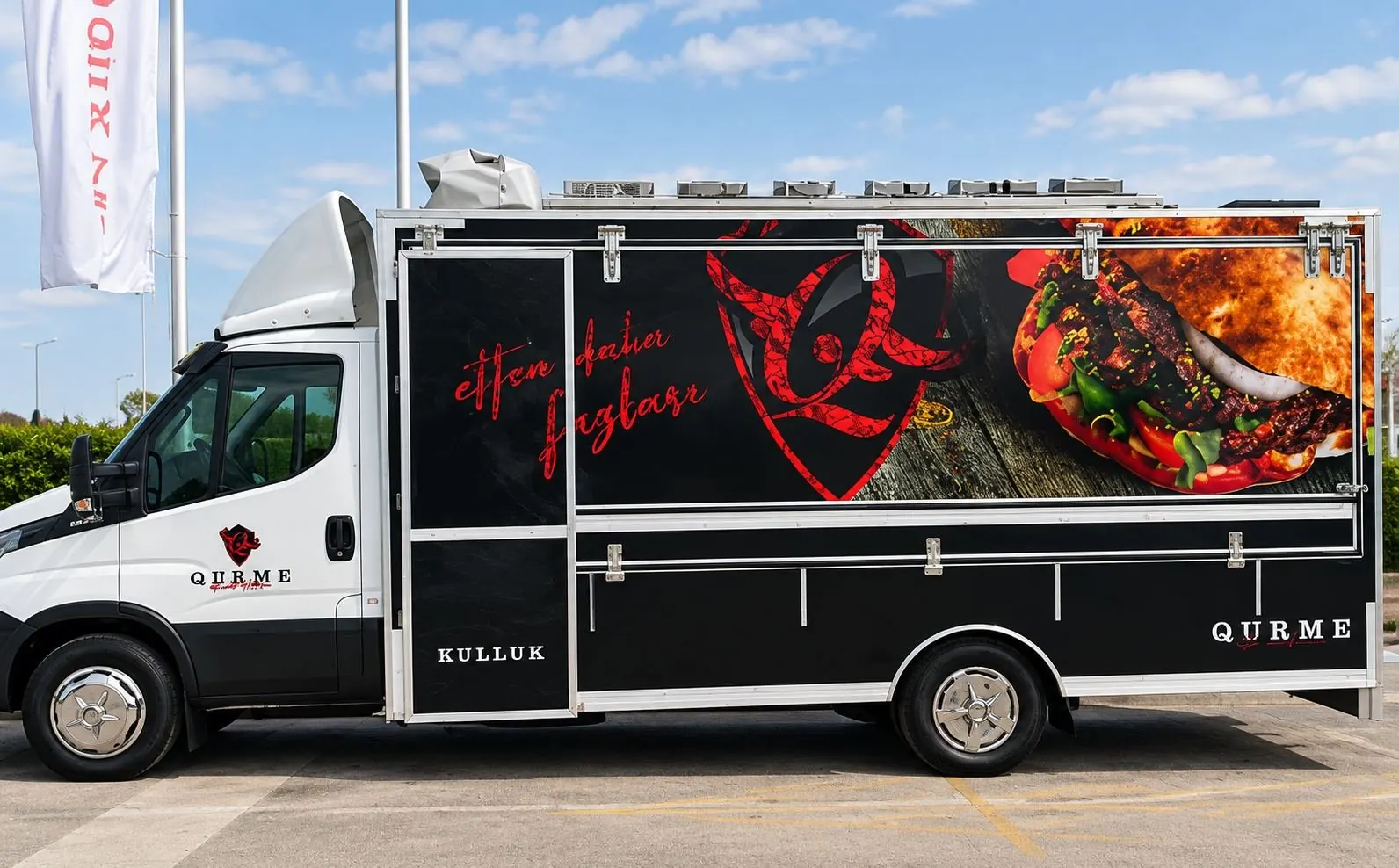
This guide covers the federal rules from Transport Canada, the Motor Vehicle Safety Act and Regulations and CBSA, plus one provincial example from Ontario. Provincial and municipal rules vary. Treat every list here as the national baseline, because your province, public health office or city may ask for more.
Checked on 29 September 2026.
Three questions to settle before you order
- Trailer or truck? Each is its own vehicle class with its own standards. Our food truck vs food trailer guide compares the two.
- Where is it built or bought? The US, or anywhere else.
- New from the manufacturer, or used? Canada treats these very differently.
Is a food trailer a regulated vehicle?
Yes. The Regulations define a trailer as a vehicle "designed to carry or accommodate persons or property and to be drawn behind another vehicle". CBSA's list of regulated classes includes "trailer of any type including utility trailers, cargo trailers, trailers with mounted equipment". Our reading: a trailer with a kitchen built in is a trailer with mounted equipment.
Using it as a food business does not change that. Transport Canada says how you plan to use a vehicle "does not determine" whether it is regulated.
The core rule sits in section 5 of the Act. The vehicle must conform to the standards for its class "at the time the main assembly of the vehicle was completed". Evidence of that has to be produced, the required information marked on the vehicle, and the required documents sent with it.
A new trailer built outside the US
Transport Canada warns that "most vehicles sold in countries other than the United States (U.S.) and Mexico cannot be imported into Canada." A vehicle built to another country's standards cannot be modified later to meet CMVSS. The Act does not allow it.
For a new build, the vehicle has to meet all Canadian standards and be bought new, directly from the manufacturer. A dealer purchase does not count. Your purchase documents must show you bought at the manufacturing level.
Then comes pre-clearance:
- Appendix G. If the foreign manufacturer and that vehicle class are listed on Transport Canada's Appendix G, a Canadian commercial importer can use the streamlined entry.
- Case-by-case. If the builder is not listed, you apply to Transport Canada for a case-by-case authorization tied to the vehicle's VIN. Review takes four to six weeks once Transport Canada has everything it asked for. Incomplete applications go back.
Transport Canada's FAQ says: "All responsibility for compliance lies with the Canadian importer." So ask the builder two things before you sign: whether it is on Appendix G for trailers, and which CMVSS evidence it will hand you.
Our guide to buying a food trailer from overseas covers the contract and shipping terms.
What the builder has to put on the trailer

The Regulations list what the compliance label must show:
- the name of the manufacturer
- the month and year of manufacture
- the national safety mark with the authorization number, or the conformity statement
- the VIN
- the GVWR and the GAWR for each axle, in kilograms
- the vehicle type, "TRA/REM" for a trailer or "TRU/CAM" for a truck
On a trailer it goes on "the forward half of the left side", readable from outside.
The national safety mark is granted to manufacturers in Canada. For an imported vehicle, the Regulations let the mark's drawing be replaced by a bilingual statement that the vehicle "CONFORMS TO ALL APPLICABLE STANDARDS PRESCRIBED UNDER THE CANADIAN MOTOR VEHICLE SAFETY REGULATIONS". Our reading: a builder abroad will normally use that statement.
Which standards apply to a trailer
Schedule III marks these standards for the trailer class. Transport Canada says to read each marked standard and check whether it applies. Some apply only above or below a set weight.
| CMVSS | Subject |
|---|---|
| 106, 116, 121 | Brake hoses, brake fluid, air brakes |
| 108 | Lighting and reflective devices |
| 110, 120 | Tires and rims (up to and over 4,536 kg GVWR) |
| 115 | Vehicle identification number |
| 205 | Glazing |
| 223 | Rear impact guards (trailers of 4,536 kg GVWR or more, with exceptions) |
| 901 | Axles |
| 905 | Cargo anchoring devices |
Two of these shape the design. Under 901, the GAWR of each axle cannot exceed the rated capacity of the springs, axle, hubs, wheels or tires. Under 108, every trailer needs tail, stop and turn lamps, rear reflectors, a plate lamp and side markers. At 2,032 mm wide or more, it also needs clearance lamps and exactly three rear identification lamps. At 9.1 m long or more, intermediate side markers are added. Transport Canada adds that importers "must have the proper certification test records" for the lighting.
Food trucks: built in stages
A food truck built on a chassis cab is made in stages. The Regulations call the chassis an incomplete vehicle. The company that turns it into a finished truck is the final-stage manufacturer. It must:
- add an addendum to the chassis maker's incomplete vehicle document describing every change,
- complete the truck so it conforms to CMVSS for its class,
- apply the compliance label,
- keep the documents for at least five years.
The chassis maker's document lists the standards that apply and the conditions for conformity. Ask for it before the body is designed. We could not confirm whether a chassis built for a non-North-American market can be completed to CMVSS. Given the rule against modifying foreign-market vehicles, ask Transport Canada before you order.
A trailer or truck bought in the US
For a vehicle sold at retail in the US, the route is the Registrar of Imported Vehicles (RIV):
- Check the RIV compatibility list first. Transport Canada says its information is voluntary and not guaranteed.
- The vehicle must be clear of recalls and pass an RIV inspection in Canada within 45 days.
- If it fails, it cannot stay in Canada, even after duties are paid.
Food trucks are where this gets hard. Transport Canada says "a vehicle modified from its original state will not qualify", and one of its examples is a van with a "modified interior". A vehicle built by more than one manufacturer, such as a vocational truck or a van conversion, "must meet extra requirements". CBSA asks for proof of certification from the final-stage manufacturer. Our reading: a used American food truck converted by a second company needs that proof in hand before you buy it.
For trailers, RIV certification checks lighting under CMVSS 108, and a trailer over 4,536 kg GVWR must also meet CMVSS 905. You also need the original US title or its equivalent. For a new vehicle sold at retail in the US, CBSA says it may be accompanied by the manufacturer's certificate of origin with a bill of sale.
Used trailers from outside the US
CBSA puts it plainly: tariff item 9897.00.00 of the Customs Tariff "prohibits entry of used or second hand vehicles", regardless of Transport Canada's rules. The exemptions are in CBSA Memorandum D9-1-11. Vehicles 15 years or older fall outside Transport Canada's import rules, but Transport Canada warns that this is "not a guarantee that they can be licensed for driving". The customs prohibition applies either way, so check the D9-1-11 exemptions with CBSA before you buy.
At the border
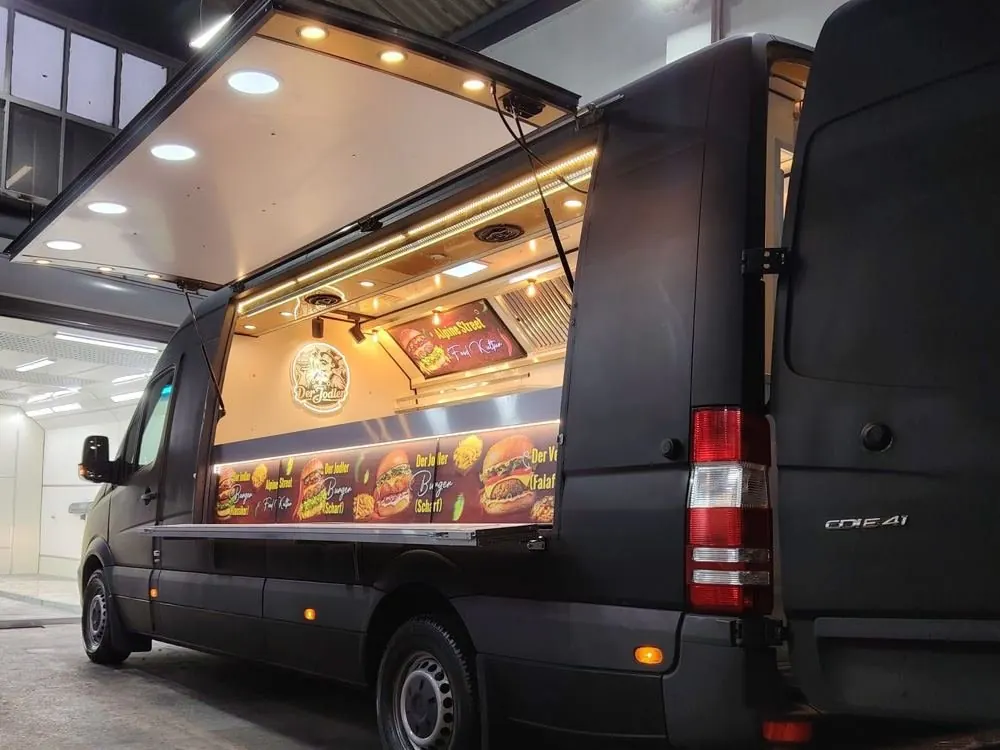
Before you declare, CBSA expects you to contact your insurer and your provincial or territorial licensing authority.
- Declaration. Form 1, the RIV e-Form, or an electronic Single Window declaration. A case-by-case authorization number has to be presented at the border or sent with the electronic declaration.
- Duty and tax. CBSA assesses duty on a vehicle made outside the US and Mexico, plus GST. In Ontario, British Columbia, Nova Scotia, New Brunswick and Newfoundland and Labrador, the provincial part of HST is paid when you licence it.
- Other departments. A food truck's engine may fall under Environment and Climate Change Canada emission rules. Ask ECCC. Used vehicles must arrive free of soil.
A vehicle that does not qualify can be detained, and storage is at the importer's cost. How the trailer travels is covered in shipping a food trailer overseas.
After import: provincial and city rules
Once the trailer is in the country, food safety rules come from the province and local public health, and your city may have its own vending rules. They vary across Canada. Ontario is one example.
Ontario Regulation 493/17 defines a mobile food premise as "a trailer, cart or vehicle-mounted food premise". In every one:
- food must be prepared inside and served by people working inside,
- only single-service articles may be used to serve,
- potable water and waste water need separate holding tanks,
- each tank needs "an easily readable gauge".
The tank rules do not apply if you sell only pre-packaged or non-hazardous food. Every food premise also needs adequate potable water, hot and cold running water under pressure where food is prepared or utensils are cleaned, and enough handwashing stations. Before you start trading, the Health Protection and Promotion Act requires notice to the local medical officer of health.
The regulation gives no tank sizes or sink counts. Ask your local public health office, and check vending permits with your city's licensing office.
What to send the builder for a Canadian quote
- Trailer or truck, and the province where it will be registered and trade.
- Built to CMVSS from the first drawing, with a bilingual compliance label stating GVWR, GAWR, VIN and type.
- Whether the builder is on Appendix G for this class, and whether you import as a Canadian commercial importer. If not, the documents you will need for a case-by-case request.
- Width and length, so the lighting under CMVSS 108 is planned, and lighting test records.
- Axle, spring, wheel and tire ratings that cover the GAWR.
- For a truck: the chassis maker's incomplete vehicle document and the final-stage addendum.
- Separate fresh and waste water tanks with gauges, handwashing stations and hot and cold running water, or your public health office's list.
- An invoice showing a direct purchase from the manufacturer.
Ozan Food Truck builds food trucks, panel van conversions and towable food trailers in its own factory in Konya, Turkey. For international projects, the destination country's technical and legal requirements are assessed at the design stage. Approval comes from Transport Canada, CBSA and your provincial and local authorities, not from us. See our food trucks and trailers page for the types we build.
Frequently asked questions
Can I import a food trailer into Canada from overseas?
A new one can be, if you buy it directly from the manufacturer and it is built to CMVSS with a bilingual compliance label. Unless it comes in through the Appendix G program for commercial importers, you need a VIN-specific case-by-case authorization first. A trailer built to another country's standards cannot be modified to comply.
Does a food trailer from the US go through the RIV?
Yes, if it was sold at retail in the US. It must be recall-free and pass an RIV inspection within 45 days.
How long does Transport Canada approval take?
A case-by-case review takes four to six weeks once Transport Canada has all the information it asked for.
What does a food trailer cost in Canada?
We don't publish a figure. The price follows the specification, driven by trailer size and axles, kitchen equipment, water and power, lighting and labelling to CMVSS, and shipping and duty.
If you are planning a food trailer or truck for Canada, send the checklist above through the quote form. We reply with questions first, then drawings and a quote.
Related guides
- Buying a Food Truck or Trailer for the UK: Registration, Gas and Council Rules
- Ordering a Food Truck from Turkey: Documents, Shipping and Approvals
- Food Trucks in Dubai and the UAE: Permits and Vehicle Questions for Buyers
- Food Trucks in Saudi Arabia: Licensing and Vehicle Questions for Buyers
Sources
- Transport Canada, Importing a vehicle
- Transport Canada, Importing a vehicle from countries other than the United States and Mexico
- Transport Canada, Importing a vehicle from the United States and Mexico
- Transport Canada, Pre-clearing a vehicle as a commercial importer (Appendix F and G)
- Transport Canada, Pre-clearing new vehicles using the case-by-case process
- Transport Canada, Case-by-case vehicle importation FAQs
- Transport Canada, Importing non-regulated vehicles
- Transport Canada, Safety standards for vehicles
- Transport Canada, Vehicle manufacturers and the National Safety Mark FAQ
- Transport Canada, Trailers: Federal Lighting Equipment Location Requirements
- Motor Vehicle Safety Act, S.C. 1993, c. 16
- Motor Vehicle Safety Regulations, C.R.C., c. 1038 (ss. 2, 4, 5, 6, 6.1 to 6.6, 11, 12.1; Schedule III; Schedule IV ss. 223, 901)
- Canada Border Services Agency, Memorandum D19-12-1, Importing Vehicles into Canada
- Ontario Regulation 493/17, Food Premises
- Health Protection and Promotion Act, R.S.O. 1990, c. H.7, s. 16

By
Ozan Food Truck
This guide is based on the laws, regulations, official guidance and manufacturer documents linked in the text. It is general information, not legal or engineering advice. Rules differ by country, state and city, so confirm the details with your local authority before you build or buy.