
Buying guide
Horsebox Bars and Vintage Trailer Conversions: What to Know First
A horsebox bar starts life as a horse trailer, with a plated weight, brakes and lights designed around horses. Once it serves drinks, it is also a food business and, if it sells alcohol, it needs a licence or other authorisation. So before you buy a trailer to convert, check what its plate allows, whether its running gear and lights suit the finished bar, and who will license the bar where you want to trade. Then compare that with building the vintage look new.
By Ozan Food TruckPublished 10 min read
This guide covers towed horse trailers and older trailers used in Great Britain. It draws on GOV.UK, DVSA, FSA and HSE guidance, the lighting regulations on legislation.gov.uk and one UK trailer maker's specification. Treat each list as the national baseline. DVSA, your council or your licensing authority may ask for more.
Checked on 29 September 2026.
Horsebox or horse trailer: know which one you have
The word covers two different things. DVSA's guide for owners treats a horsebox as a vehicle in its own right, with a yearly MOT and, above 3,500 kg, an HGV licence. A horse trailer is something you tow. Ifor Williams, a UK maker, calls its towed models horseboxes too, so a listing may mean either.
This guide is about the towed kind. If yours has an engine, GOV.UK lists radically altering a vehicle and modifying a goods vehicle among the reasons to apply for vehicle approval. Talk to DVSA before you start.
Start with the plate
The maximum authorised mass (MAM) is the weight of the trailer including the most it can carry safely on the road. It is normally shown on a plate or sticker. When you convert a horse trailer, you inherit that figure.
Here is what one maker publishes for its current range:
| Ifor Williams model | Gross weight | Unladen weight | Internal length x width | Overall width |
|---|---|---|---|---|
| HBX403 | 1,600 kg | 720 kg | 3.19 x 1.30 m | 1.77 m |
| HBX506 | 2,600 kg | 865 kg | 3.26 x 1.67 m | 2.14 m |
| HBX511 | 2,700 kg | 950 kg | 3.63 x 1.79 m | 2.27 m |
On those figures, an HBX506 has 1,735 kg between its unladen and gross weight. An older or different trailer will have its own plate, so read the one on the trailer you are buying.
Our reading: that gap is everything the bar can add. The counter, fridges and ice machine come out of it, and so do water, ice, stock and any gas cylinders. Ask whoever does the conversion to weigh the finished trailer, not to estimate it. And if the plate looks too low, ask the trailer's maker before you plan on more weight than it shows.
The tow car sets limits of its own. With a braked trailer, car and loaded trailer together must stay within the second weight on the car's plate. With a licence gained on or after 1 January 1997, GOV.UK says you can tow a trailer of up to 3,500 kg MAM, with a combined MAM of up to 7,000 kg. Check your own licence on GOV.UK.
Brakes and running gear on a used trailer
In Great Britain, a trailer that weighs over 750 kg loaded must have a working brake system. Below that, brakes are optional, but any fitted must work. Either way you need a breakaway cable or a secondary coupling.
Our reading: if you start from a small vintage trailer or caravan without brakes, check the finished weight early. An unbraked trailer that ends up over 750 kg once the bar is fitted and stocked needs a working brake system. Whether that particular chassis can take one is a question for the builder and for DVSA.
DVSA's pre-tow checks for any trailer:
- tyres inflated to the maker's figure for the load, with at least 1.6 mm of tread;
- mudguards fitted and secure;
- lights undamaged and working;
- the 7 or 13 core cable and plug undamaged.
The horse guide adds one check that matters when you buy. It tells owners to check the floor regularly, including under matting or plates. Our reading: lift the mats before you pay. DVSA also points to authorised repairers through the maker's website, and says the National Trailer and Towing Association offers a free safety check for trailers of 3,500 kg or less.
Approval after the conversion
DVSA says you must apply to get a trailer approved if it has been built, rebuilt, radically altered or imported. Neither the DVSA page nor the GOV.UK approval guide we read says where a bar conversion falls. Ask DVSA before you cut into the body, with a drawing of what you plan.
If you want to take the bar to events on the continent, GOV.UK says trailers over 750 kg must be registered to drive to or through most European countries. Ireland, Cyprus, Malta and Spain are exceptions. A registered trailer carries its own plate and a registration certificate.
Lights: the trailer's age changes the list
The Road Vehicles Lighting Regulations 1989 list the lamps a trailer must carry, with exceptions by size and by date of manufacture. For an older trailer, the dates matter:
| Lamp or reflector | Not required on a trailer made before |
|---|---|
| Direction indicators | 1 September 1965 |
| Rear fog lamp | 1 April 1980 |
| Front position lamps (if no longer than 2,300 mm, drawbar excluded) | 1 October 1985 |
| End-outline marker lamps | 1 October 1990 |
| Front retro reflectors | 1 October 1990 |
Table VI gives rear position lamps and rear retro reflectors no exception. Size matters too. Front position lamps are required once a trailer is wider than 1,600 mm, and end-outline marker lamps once it is wider than 2,100 mm. The regulations have further exceptions we have not listed.
Our reading: at 2.14 m, an HBX506 is over both widths, so a trailer of that width made on or after 1 October 1990 needs both sets of lamps. Keep proof of your trailer's date of manufacture, and ask DVSA before you rely on an older exception. If the conversion adds width or length, the list can change. Our catering trailer guide has the size-based table.
Our reading: the road lights run from the car's 7 or 13 core plug, and the bar's own power for fridges, ice and glass washing is a separate system, fed from a site hook-up, a generator or batteries. Plan and wire it on its own. The Electricity at Work Regulations require every system to be built to prevent danger, so far as is reasonably practicable.
What changes when it trades as a bar
Food registration. The FSA's registration rules apply to businesses that sell food and drink, including those trading from a stall or van. In England, Wales and Northern Ireland you register with your council at least 28 days before you start trading. It is free and can't be refused.
Alcohol. In England and Wales, selling alcohol needs a licence or other authorisation from a licensing authority, usually the council. The Licensing Act 2003 counts a vehicle or moveable structure as premises. For single events there is the Temporary Event Notice. Nothing we read says a trailer can arrive licensed. Our mobile bar trailer guide covers licences, glass washing and ice.
Street trading. Where a council runs street trading consents, a consent covers trading from a vehicle only if the council includes that permission. Our UK food truck and trailer guide explains the council side.
The premises. In food preparation areas, the FSA asks for floors and walls that are smooth, hard-wearing and washable, and ceilings free from condensation and mould. You need washbasins with hot and cold running water for everyone working, and insect-proof screens on openings to the outside. You must carry out a fire risk assessment. The FSA suggests asking your council for advice before making changes to premises.
Our reading: check whether the floor, walls and ramp of a body built for horses meet those points as they are, or need refinishing. Ask your council's environmental health team before the build, not after it.
Gas, if the bar uses it
If the bar uses gas, HSE's catering gas guidance applies. HSE says mobile caterers usually use LPG from cylinders, and that gas work must be done by someone Gas Safe-registered. Changing cylinders can be done by a competent person who is not registered.
HSE also says second-hand equipment with burners should have flame supervision devices, which cut the gas if the flame goes out. HSE's summary of the vehicle rules says the vehicle must be adequately ventilated, and pilot lights should not be lit while it moves. HSE treats an annual inspection as a reasonable minimum. Our reading: a bar that only pours drinks may need no gas at all. Decide before the layout is drawn.
Convert, or build the vintage look new
Our reading: a conversion gives you a known shape, but you inherit its plate, brakes and age. A new build lets you set those from the drawing. It still goes to DVSA if it will be towed on UK roads, because a built trailer needs approval too.
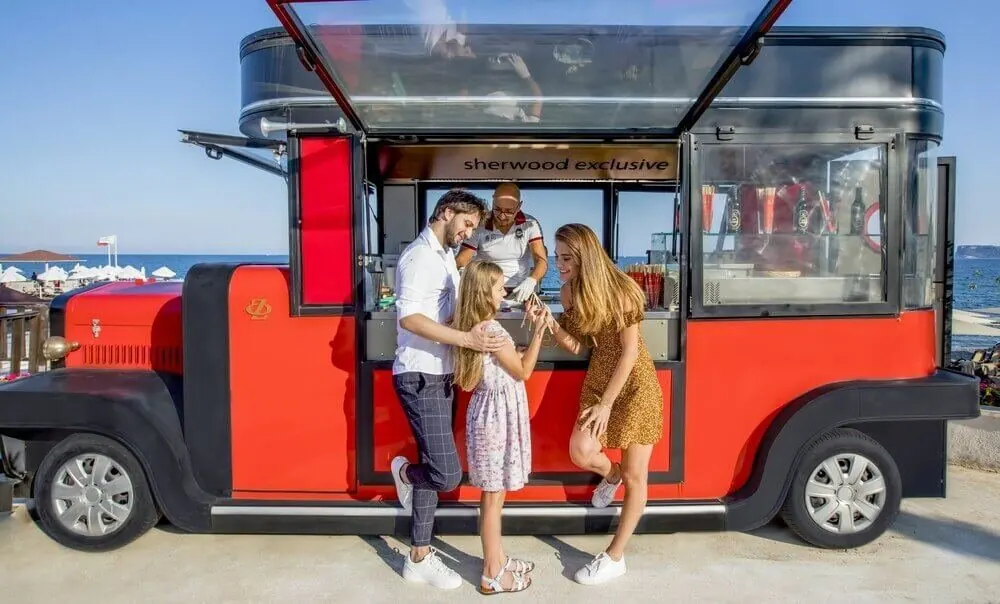
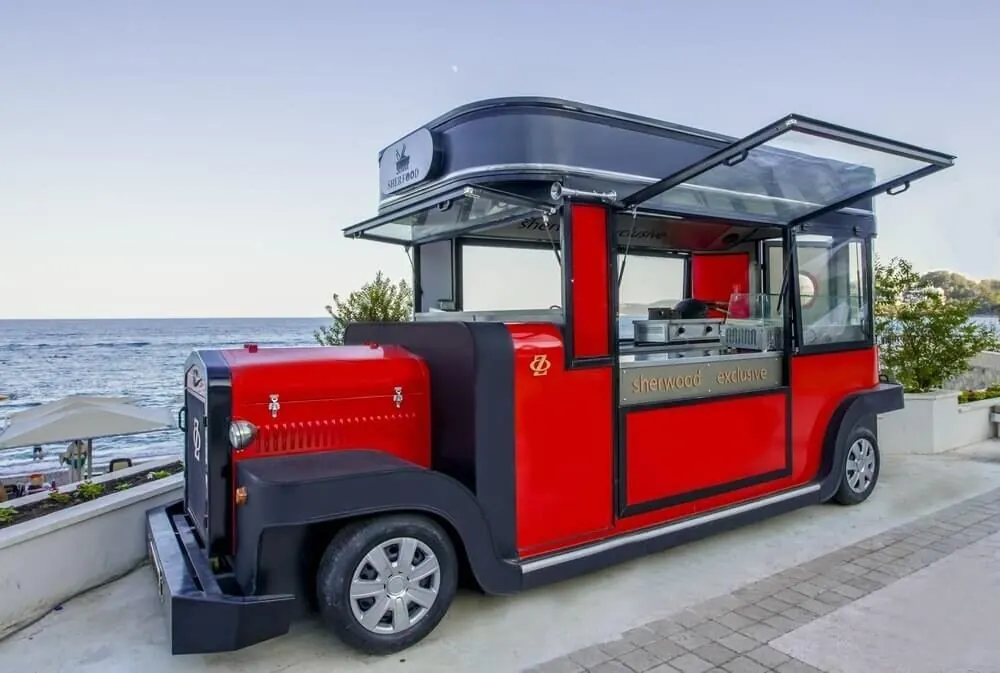
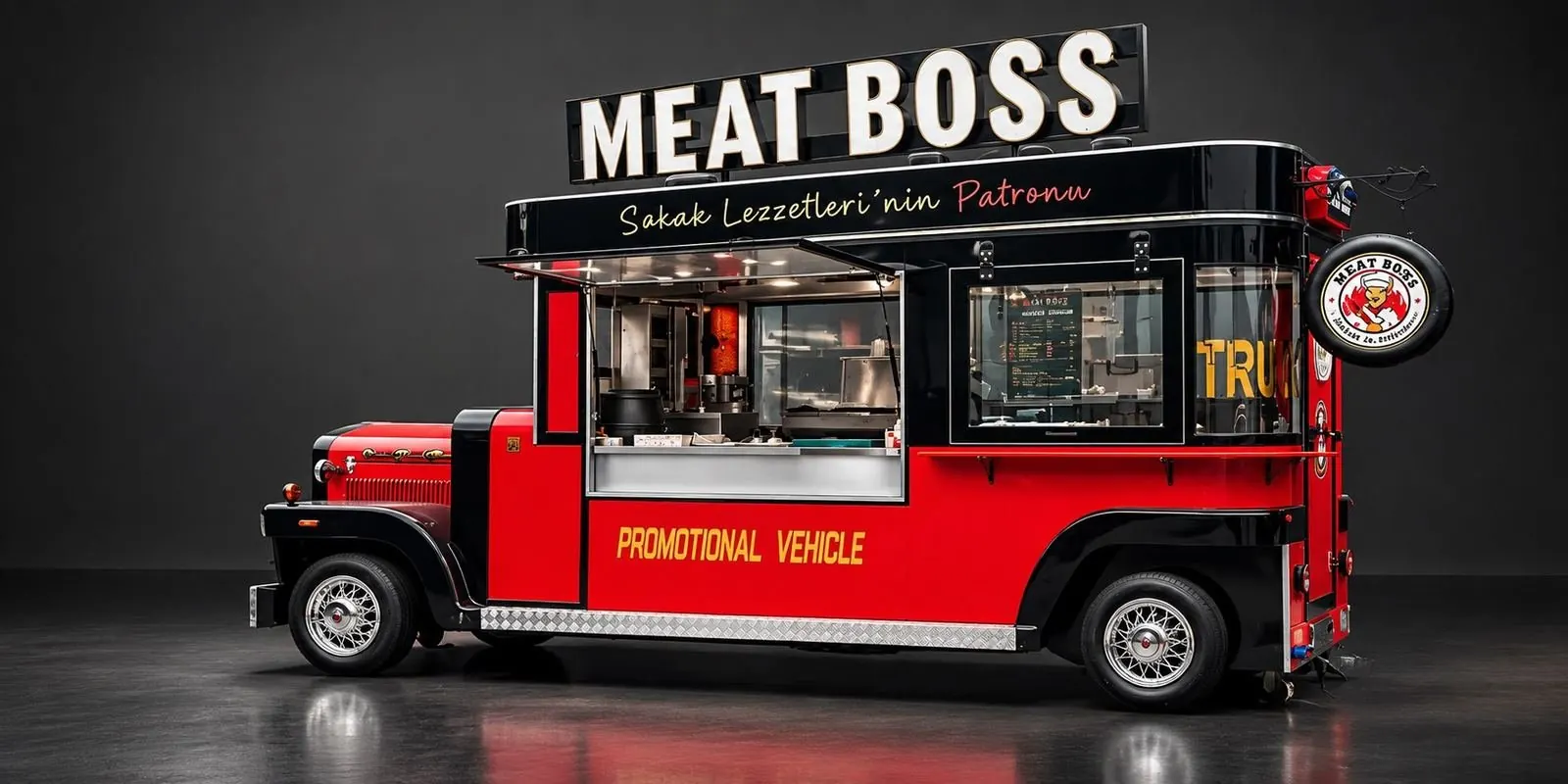
Our vintage food trucks are the new-build route. In the site's words, they have "no engine" and are "built on a steel frame and steel cladding", shaped "with a classic front, grille and wheel arches". Colours, signage, lighting and graphics come from your identity. The Sherwood Exclusive on that page is a vintage bar truck. Each one is delivered and positioned on site at hotels, resorts, shopping centres, seafronts and events. If you need yours towed on the road, say so at the start, and ask DVSA how a motorless vintage body is classed.
What to send for a quote
- Where the bar will trade: one venue, events, a street pitch, or abroad.
- The drinks menu and the busiest hour you expect.
- If you are converting: the make, model, plate figures and year of the trailer, with photos of the floor under the mats.
- If you are building new: the look you want, the brand and any references.
- The tow car: its MAM, gross train weight and 7 or 13 core socket, plus the date you passed your test.
- Power: site hook-up, generator or batteries, and the equipment it must run.
- Water: a washbasin with hot and cold water, sinks for glasses, and tank sizes.
- Gas or no gas.
Frequently asked questions
Do you need a licence to run a horsebox bar?
In England and Wales, selling alcohol needs a licence or other authorisation from the licensing authority, usually the council, or a Temporary Event Notice for single events. You also register the business with your council at least 28 days before trading. Street trading may need a consent that covers a vehicle. Check each step with your council.
How do you turn a horse trailer into a mobile bar?
Read the plate first, then check the brakes, tyres, lights and the floor under the mats. Ask DVSA whether the conversion needs approval. Plan the interior to the FSA's premises points, and talk to environmental health before the work starts. Weigh the finished trailer.
Does a converted horsebox need approval?
DVSA says a trailer that has been radically altered must be approved. The guidance we read does not say whether a bar conversion counts. Ask DVSA with your drawings before you start.
How much does a horsebox bar conversion cost?
We don't give prices. The cost follows the choices in the checklist above: a conversion or a new build, then the fit-out, power, water, gas and any refinishing.
Send your plans through the quote form, or see our vintage food trucks. We reply with questions first, then drawings and a quote.
Related guides
- New vs Used Food Truck: What to Check Before You Buy
- Taco Trucks: Kitchen Line, Holding and Service Window Planning
- How Much Does a Food Truck Cost to Build? The Parts That Drive the Price
- Hot Dog Carts vs Hot Dog Trailers: What Changes for the Buyer
Sources
- DVSA, Rules for transporting horses in horseboxes and trailers
- Ifor Williams Trailers, HBX Range specification
- GOV.UK, Towing with a car
- DVSA, Tow a trailer or caravan with a car: safety checks
- GOV.UK, Driving licence categories
- GOV.UK, Vehicle weights explained
- GOV.UK, Vehicle approval
- DVSA, Apply for Individual Vehicle Approval (IVA): trailers
- GOV.UK, Check if you need to register a trailer before towing it abroad
- The Road Vehicles Lighting Regulations 1989, Schedule 1
- The Electricity at Work Regulations 1989, regulation 4
- Food Standards Agency, Food business registration
- Food Standards Agency, Starting a food business
- GOV.UK, Alcohol licensing
- Licensing Act 2003, section 193
- GOV.UK, Temporary Event Notice
- Local Government (Miscellaneous Provisions) Act 1982, Schedule 4
- HSE, Catering Information Sheet 23, Gas safety in catering and hospitality

By
Ozan Food Truck
This guide is based on the laws, regulations, official guidance and manufacturer documents linked in the text. It is general information, not legal or engineering advice. Rules differ by country, state and city, so confirm the details with your local authority before you build or buy.