
Buying guide
Buying a Food Trailer: The Specification to Settle Before You Pay a Deposit
Before you pay a deposit on a food trailer, get eleven things in writing: the weight and axle ratings, the brakes and hitch, the body, the serving hatch, the kitchen line, the water tanks, the power supply, the gas, the delivery documents, the acceptance inspection and the warranty. Each one is tied to a rule, a label or a paper you will need later.
By Ozan Food TruckPublished 10 min read
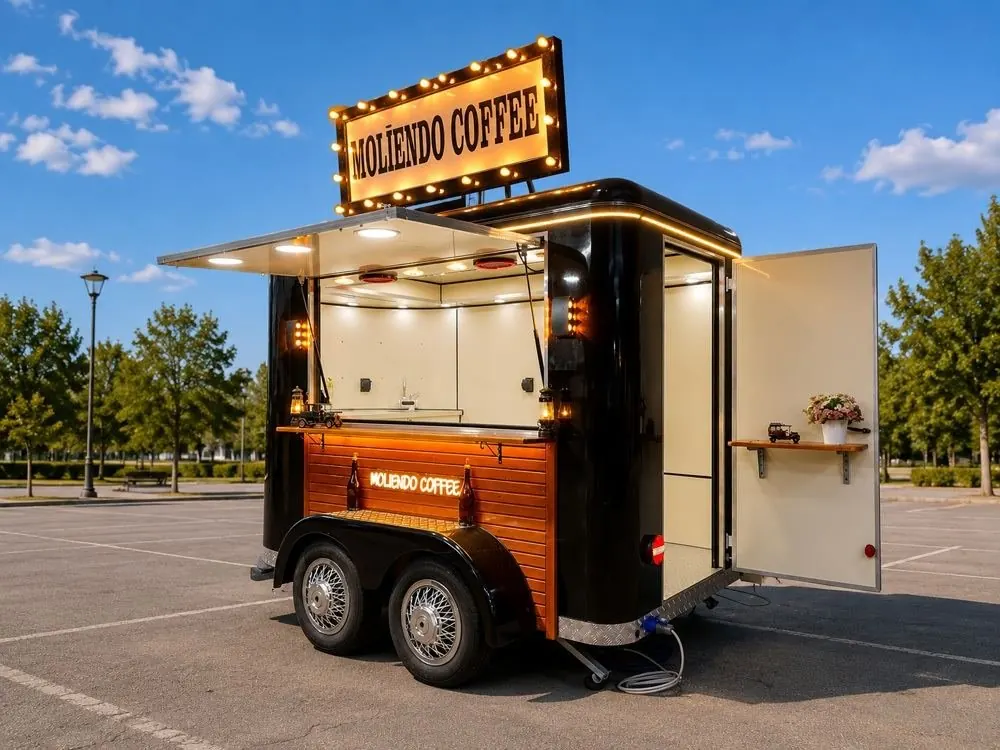
This is the checklist. The longer explanations sit in our guides on truck vs trailer, sizes and layout and buying from overseas. The rules come from the FDA Food Code, federal vehicle rules, GOV.UK and EU law, plus local examples.
Checked on 29 September 2026.
Why a trailer needs its own spec
Under the federal safety rules, a trailer is "a motor vehicle with or without motive power". So the VIN, label and lighting rules reach it. The kitchen rules don't change either: the Food Code's definition of a mobile food establishment covers vehicles that are motor-driven or "otherwise propelled".
What changes is the road side. A trailer has no engine, so its ratings, brakes and coupling have to fit a tow vehicle you already have or will buy. On our food trucks and trailers page the base is "a box body on a chassis cab, a converted panel van or a towable trailer". For coffee, the options include "a single or tandem-axle trailer".
1. Weight and axle ratings
In the US, the GVWR is the loaded weight the maker sets for the trailer, and each axle has its own GAWR. Both go on the certification label.
For a trailer rated at 10,000 lb or less, FMVSS 110 says the load ratings of the tyres on an axle must add up to at least that axle's GAWR. Passenger car tyres count for less: their rating is divided by 1.10 first. FMVSS 120 sets a similar rule above 10,000 lb.
In the UK the figure is the MAM, shown on a plate. An unbraked trailer must not weigh over 750 kg loaded, and GOV.UK says it should not weigh more than half the car. In the EU, the maximum mass decides whether a light trailer is category O1 or O2.
Our reading: what you can load is the rating minus the finished weight. Water, gas, stock and staff all count, and where they sit decides the load on each axle. Ask for the expected weight as delivered, next to the rating.
Licences depend on these ratings too. In the UK, a licence gained from 1 January 1997 lets you tow up to 3,500 kg MAM, with 7,000 kg combined. California's Class C lets you tow a single vehicle of 10,000 lb GVWR or less.
2. Brakes and hitch
California is one example. A trailer made and first registered after 1 January 1966 with a gross weight of 3,000 lb or more needs brakes on at least two wheels. Power brakes must apply by themselves on breakaway and hold the trailer for at least 15 minutes. A safety chain, cable or equal device is required as well as the hitch. Other states set their own rules, so ask your DMV.
In the UK, a trailer over 750 kg loaded needs working brakes, plus a breakaway cable or secondary coupling. A 2011 Department for Transport sheet on American trailers lists what European rules expect: every wheel must brake, a parking brake must hold on an 18% slope, and no in-cab manual brake controller. It also notes that an American ball hitch is usually 2 inches and the UK ball 50 mm. Confirm the current rules with DVSA.
Our reading: the brake and coupling rules that count are those of the place you tow. Tell the builder the tow vehicle, its tow ball and its plug. GOV.UK's pre-tow check names a 7 or 13 core cable and the coupling height.
3. Body and insulation
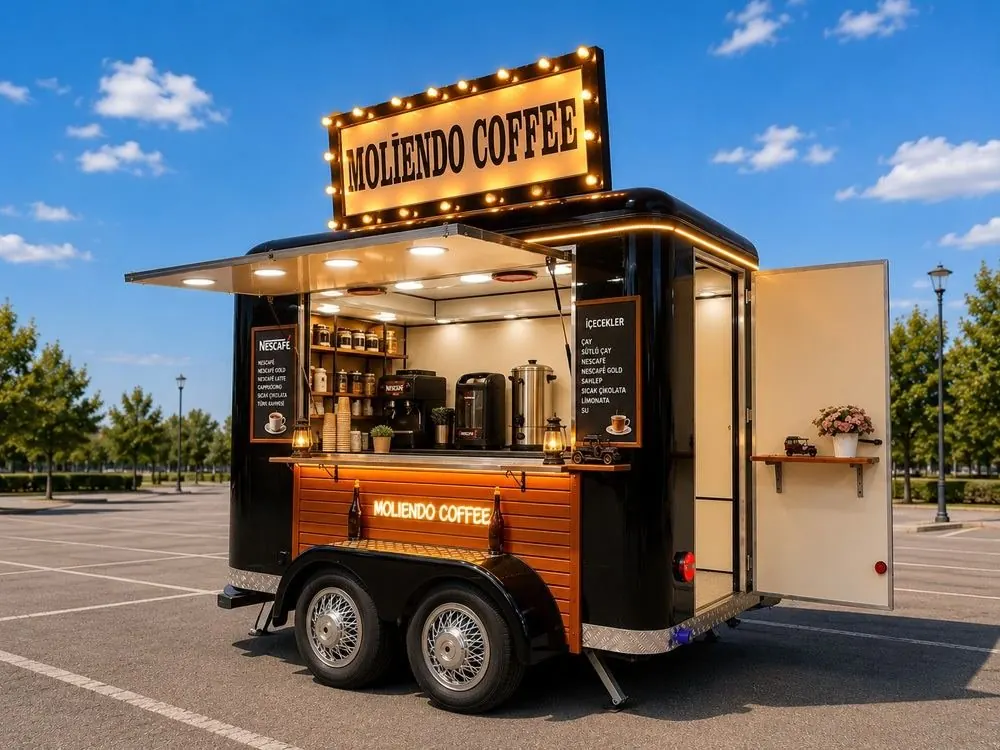
The Food Code asks for floors, walls and ceilings that are smooth, durable and easy to clean, and nonabsorbent where food is prepared or dishes are washed. EU hygiene law asks for food-contact surfaces that are smooth, washable, corrosion-resistant and non-toxic.
In our factory, insulation, stainless fabrication, electrics and gas are all done in-house.
Get the outside sizes in writing too. The UK caps trailer width at 2.55 m and, behind a vehicle of 3,500 kg or less, length at 7 m without the A-frame. In the US, ask your state about length.
4. Serving hatch
Our trucks and trailers use "lift-up hatches on gas struts, counters and menu panels placed for the way your customers queue". Settle the side, length and counter height.
A hatch that stays open all service is an opening. The Food Code asks for openings kept open to be protected by 16-mesh screens, air curtains or other effective means, unless pests are absent. Our reading: ask your health department whether your hatch needs a screen before the frame is built.
5. The kitchen line
Where the Food Code applies, you submit plans before construction. They can include the menu, the layout, the finishes and each piece of equipment by maker and model number. The requirements follow the menu, so start there.
Expect at least one handwashing sink placed for the prep, serving and washing-up areas. Plan a three-compartment sink for washing up unless your authority approves an alternative. Hoods must keep grease and condensation off food and equipment.
Ask the builder for a scaled drawing and an equipment list with model numbers early, so you can take them to plan review.
6. Water tanks and the 15% rule

Food Code 5-401.11 says the waste tank must be "sized 15 percent larger in capacity than the water supply tank". It must also slope to a drain of at least 1 inch with a shut-off valve. A 40-gallon fresh tank means a waste tank of at least 46 gallons.
The fresh tank must be enclosed and slope to drain. Its inlet must be 3/4 inch or less, with a hose connection that fits nothing else, and a cap or other approved cover for the inlet, outlet and hose. The system must also cover peak demand, hot water included.
Local permit pages can go further. Tacoma-Pierce County's lists at least a 35-gallon fresh tank and a 42-gallon waste tank. State and local regulators use the Food Code as a model for their own rules, so ask yours.
7. Electrical supply and hook-up
We found no single official wiring standard for food trailers, so ask your local authority what it inspects. Austin, Texas, asks new permit holders for an electrical report by a master electrician. Tacoma-Pierce County says that if you use a generator, it must be installed on board and approved by Washington's Department of Labor and Industries.
La Marzocco's manuals say the rating plate must match the supply, and ask for fixed wiring with a residual current device of no more than 30 mA.
Cummins puts a 30-amp shore cord at 120 V and 3,600 watts, and a 50-amp cord at 240 V and 12,000 watts. Our reading: the inlet caps what a site hook-up can give you, so size it from your equipment list, and say whether you'll run on a generator, shore power or batteries. For export, we build to the electrical and gas standards of the destination country.
8. Gas
In Great Britain, HSE says gas work in mobile catering should only be done by a competent, Gas Safe-registered engineer. HSE also says a vehicle with LPG must be ventilated, with pilot lights not lit while moving. Our reading: unless your builder is itself Gas Safe-registered, plan for a UK engineer to check the system before you trade.
In the EU, gas appliances are marked for a gas type and supply pressure, and must suit the local supply. In the US, Austin asks for a propane inspection by a licensed LPG plumber and shut-off valves at each appliance and at the supply. Tell the builder the country and who will commission the gas there.
9. Documents at delivery
| Where | What to expect |
|---|---|
| US | A 17-character VIN, and a certification label on the front half of the left side showing the maker, date, GVWR, a GAWR for each axle, the VIN and the safety statement |
| UK | A VIN or chassis number for the IVA application. Plating documents follow once the trailer passes |
| EU | A certificate of conformity, free, if the type is EU-approved. If not, technical papers to support an individual approval |
An overseas builder selling into the US needs its own maker code, NHTSA identification and a US agent, and CBP tells buyers to be sceptical of foreign sellers' claims. Our builder checklist lists the questions to ask first.
10. The acceptance inspection
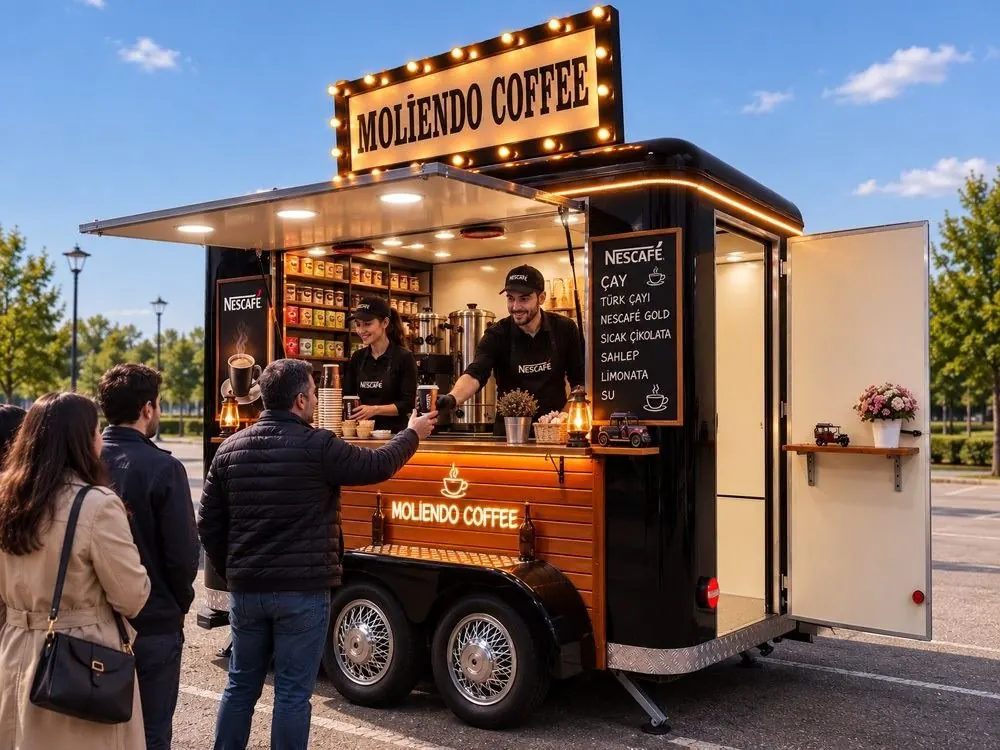
Under the UK Sale of Goods Act, the seller must, on request, give you a reasonable chance to examine the goods. You are not taken to have accepted them before that chance. Keep them for a reasonable time without rejecting, though, and you are. Asking for a repair is not acceptance on its own.
Our reading: those rules help only where UK law governs the contract. Agree the place, date and checklist of the inspection in writing.
Read the label against the order. Check tyres, lights, breakaway cable and coupling. Fill the tanks and look for leaks. Run every appliance on the power you will use. Our builds follow the approved drawings, and the trailer is delivered "once all checks are complete". For a second-hand trailer, the new vs used guide covers title and history checks.
11. The warranty
The US federal warranty act covers consumer products only. The FTC says it "does not apply to warranties on products sold for resale or for commercial purposes". Implied warranties, it adds, are "created by state law".
In the UK, goods sold in the course of business carry an implied term of satisfactory quality. The Unfair Contract Terms Act's limits don't apply to international supply contracts.
Our reading: for a trailer you will trade from, the written contract does most of the work, next to whatever state law implies. Get the scope, the length, who ships parts abroad and the governing law in writing. Check with a lawyer in your state or country.
What to send for a quote
The same list drives the price, as our cost guide explains:
- Your menu and the busiest hour you expect.
- The tow vehicle, its tow rating, ball and plug.
- Single or tandem axle, and the country where you'll tow.
- The outside sizes you need, and the side and length of the hatch.
- Your equipment list, with models where you have them.
- The fresh and waste tank sizes your health department expects.
- Power: generator, shore power or batteries, and the supply voltage.
- Gas or all-electric, and who will commission the gas.
- The documents your registration office will ask for.
- How and where you want to inspect the trailer on delivery.
Frequently asked questions
What is the best place to buy a food trailer?
We know of no official ranking of builders. Pick one that will put the ratings, the tank sizes and the delivery documents in writing before you pay.
Can I buy a food trailer from overseas?
Yes, but the rules of the country of use apply. For the US, the importer usually declares that the trailer meets the safety standards and carries the maker's certification label.
Can I tow a 3,500 kg trailer?
In the UK, with a licence from 1 January 1997, you can tow up to 3,500 kg MAM, with 7,000 kg combined. Your car's gross train weight must also allow it. Check with your licensing authority.
Should I buy a used food trailer instead?
You can, but under the Food Code a health permit does not pass to a new owner, and NMVTIS's list of vehicle types does not name trailers.
Send the list above through the quote form. We reply with questions first, then drawings and a quote. You can see our builds on the food trucks and trailers page.
Related guides
- Taco Trucks: Kitchen Line, Holding and Service Window Planning
- Hot Dog Carts vs Hot Dog Trailers: What Changes for the Buyer
- Pizza Food Truck or Pizza Trailer: Oven, Weight and Layout Questions Before You Order
- Ice Cream Van or Ice Cream Trailer: What to Specify Before You Buy
Sources
- 49 CFR 571 (definitions in 571.3; FMVSS 108, 110 and 120)
- 49 CFR 565 (VIN)
- 49 CFR 567 (certification label)
- 49 CFR 566 (manufacturer identification)
- 49 CFR 551 (agent of a foreign manufacturer)
- 49 CFR 591 (import declaration)
- U.S. Customs and Border Protection, Importing a Motor Vehicle
- California Vehicle Code 26302
- California Vehicle Code 26304
- California Vehicle Code 29004
- California DMV, Driver's Licenses
- GOV.UK, Towing with a car
- GOV.UK, Tow a trailer or caravan with a car: safety checks
- GOV.UK, American caravans and trailers: brakes and couplings (2011)
- GOV.UK, Driving licence categories
- GOV.UK, Vehicle approval
- GOV.UK, Apply for Individual Vehicle Approval
- Regulation (EU) 2018/858
- Regulation (EC) No 852/2004
- Regulation (EU) 2016/426 on gas appliances
- FDA Food Code 2026 (sections 1-201.10, 4-204.11, 4-301.12, 5-103.11, 5-204.11, 5-302.11, 5-303.12, 5-303.13, 5-401.11, 6-101.11, 6-202.15, 8-201.11, 8-201.12, 8-304.20, Annex 7 Chart 4-D)
- FDA, Food Code page
- Tacoma-Pierce County Health Department, mobile food permits
- City of Austin Fire Department, Mobile Food Vending Fire Inspections
- HSE, Catering Information Sheet 23, Gas safety in catering and hospitality
- Cummins, RV Generator Power Basics
- La Marzocco, Linea PB operating manual
- La Marzocco, Linea Mini operating manual
- Sale of Goods Act 1979, sections 14, 34 and 35
- Unfair Contract Terms Act 1977, section 26
- 15 U.S.C. 2301 (Magnuson-Moss definitions)
- FTC, Businessperson's Guide to Federal Warranty Law
- NMVTIS, Frequently asked questions

By
Ozan Food Truck
This guide is based on the laws, regulations, official guidance and manufacturer documents linked in the text. It is general information, not legal or engineering advice. Rules differ by country, state and city, so confirm the details with your local authority before you build or buy.